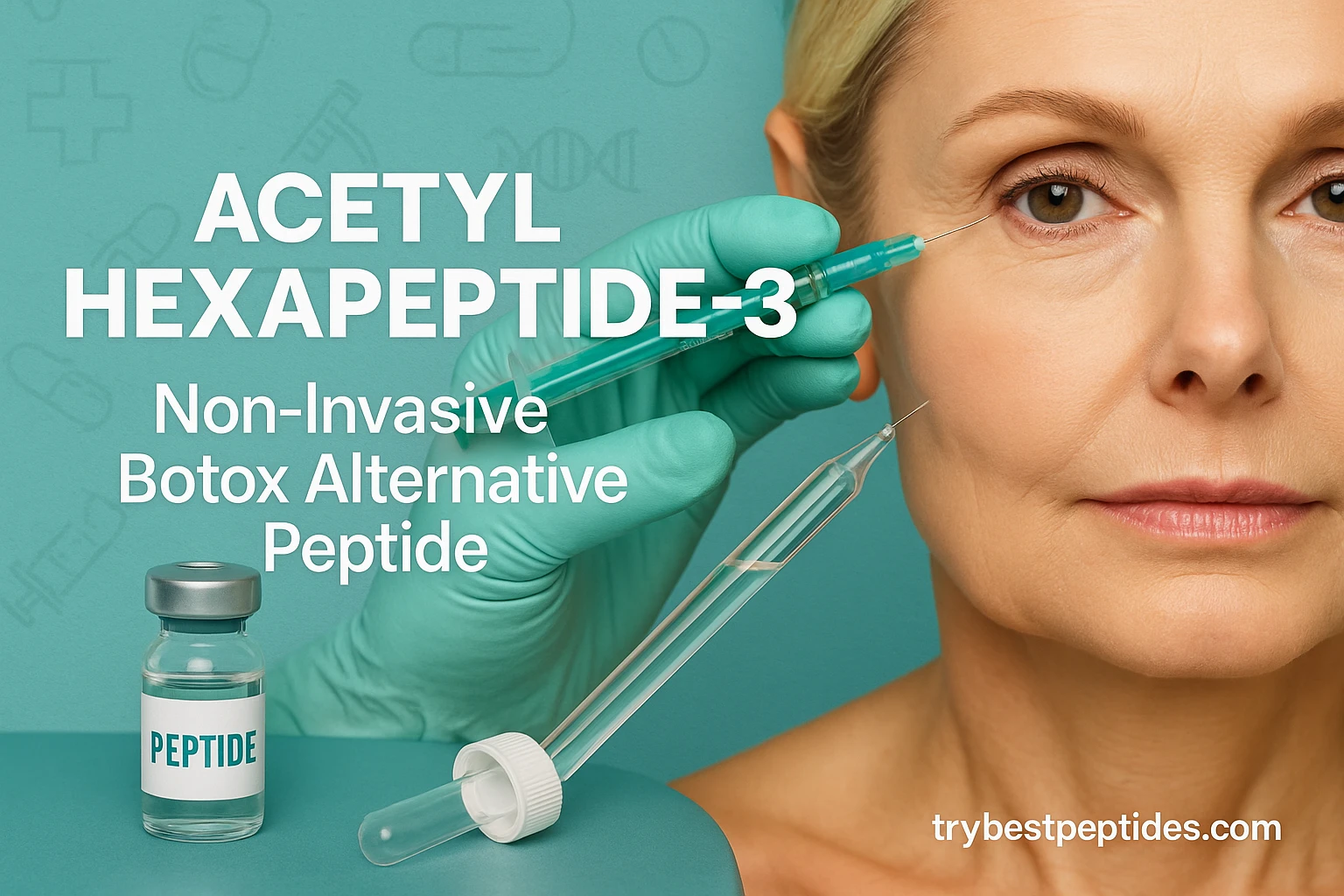
Acetyl Hexapeptide-3 has emerged as one of the most innovative peptide solutions in the anti-aging skincare industry. Often referred to as a "Botox alternative," this remarkable peptide compound works by mimicking the effects of botulinum toxin without requiring injections or invasive procedures. By targeting the neuromuscular junction, Acetyl Hexapeptide-3 helps reduce the appearance of fine lines and wrinkles, particularly on the forehead and around the eyes. This peptide has gained significant popularity among skincare professionals and consumers seeking effective, non-invasive approaches to maintaining youthful skin. Whether you're exploring peptide therapy for personal use or professional application, understanding this compound's mechanisms and benefits is essential for making informed decisions about your anti-aging strategy.
What is Acetyl Hexapeptide-3?
Acetyl Hexapeptide-3 is a synthetic peptide compound composed of six amino acids with an acetyl group attached to its N-terminus. This specific molecular structure allows it to function as a neurotransmitter inhibitor, effectively reducing muscle contractions that lead to expression lines and wrinkles.
The peptide was first developed as a cosmetic ingredient and has since become a cornerstone of modern skincare formulations. Unlike invasive procedures, Acetyl Hexapeptide-3 works topically or through targeted delivery systems, making it accessible for broader applications. The compound is also known by several other names in the industry, including Argireline and SNAP-8, though each variant may have slight differences in formulation and efficacy.
The scientific foundation of this peptide lies in its ability to interfere with the release of acetylcholine, a neurotransmitter responsible for muscle contraction. By modulating this process, the peptide creates a relaxing effect similar to Botox, but through a completely different mechanism that's both safer and non-invasive.
How Does Acetyl Hexapeptide-3 Work?
Understanding the mechanism of action is crucial to appreciating why Acetyl Hexapeptide-3 has become such a popular ingredient in the anti-aging market.
The Neurotransmitter Blocking Mechanism
Acetyl Hexapeptide-3 operates by inhibiting the formation of the SNARE complex, a protein structure essential for acetylcholine release at the neuromuscular junction. When acetylcholine is released in lower quantities, the muscles responsible for facial expressions contract less frequently and with less intensity. This reduction in muscle contraction directly translates to fewer visible wrinkles and a smoother facial appearance.
The beauty of this mechanism is its specificity. Unlike systemic medications that might affect the entire body, Acetyl Hexapeptide-3 works locally at the application site, minimizing systemic side effects. The effect develops gradually over time, typically becoming noticeable after 2-4 weeks of consistent application.
Comparison with Botulinum Toxin
While both Acetyl Hexapeptide-3 and botulinum toxin (Botox) target the same neuromuscular pathway, they differ significantly in their approach. Botox is administered through injections and works by permanently blocking acetylcholine release until the toxin is metabolized (typically 3-4 months). In contrast, Acetyl Hexapeptide-3 is non-invasive, reversible, and can be applied topically or through more convenient delivery methods.
This distinction makes Acetyl Hexapeptide-3 an attractive option for individuals seeking wrinkle reduction without downtime, bruising, or the commitment of repeated injections.
Key Benefits of Acetyl Hexapeptide-3
The growing popularity of this peptide is rooted in its diverse range of benefits for skin health and appearance.
Non-Invasive Application: The primary advantage is that it requires no needles or injections. Users can incorporate it into their daily skincare routine without special preparation or recovery time.
Reversible Effects: Unlike some cosmetic procedures, the effects of Acetyl Hexapeptide-3 are fully reversible. If a user discontinues use, the skin will gradually return to its baseline condition.
Broad Applicability: The peptide can be used on various facial areas prone to expression lines, including the forehead, between the eyebrows, and around the eyes.
Minimal Side Effects: When formulated and applied correctly, Acetyl Hexapeptide-3 typically produces minimal adverse reactions compared to more invasive alternatives.
Cost-Effectiveness: While premium formulations exist, Acetyl Hexapeptide-3-based products are generally more affordable than regular Botox treatments over time.
Gradual, Natural-Looking Results: The peptide produces subtle improvements that develop progressively, avoiding the dramatic "frozen" appearance sometimes associated with excessive Botox use.
Clinical Evidence and Research
The efficacy of Acetyl Hexapeptide-3 has been supported by numerous peer-reviewed studies conducted over the past two decades.
Study Findings
Multiple clinical trials have demonstrated that topical application of Acetyl Hexapeptide-3 leads to measurable reductions in wrinkle depth and severity. One notable study involving volunteer participants showed visible improvements in periorbital (around the eye) wrinkles after eight weeks of twice-daily application. Another research initiative found that the peptide significantly reduced the appearance of forehead lines when incorporated into a cream formulation.
Dermatologists have documented that consistent use of Acetyl Hexapeptide-3 products can achieve results comparable to less frequent Botox injections, though the onset is slower. The research suggests optimal results emerge between 4-12 weeks of regular use, with continued improvement possible with extended application.
Safety Profile
Clinical investigations have consistently shown that Acetyl Hexapeptide-3 is well-tolerated with a favorable safety profile. Adverse reactions are rare and typically mild, including occasional temporary redness or sensitivity at the application site. The peptide has not demonstrated systemic toxicity or significant absorption into the bloodstream when applied topically, making it suitable for long-term use.
Applications and Uses
Acetyl Hexapeptide-3 has found its way into numerous formulations and applications within the cosmetic and skincare industry.
Premium Serums and Creams: Many high-end skincare brands feature this peptide as a star ingredient in anti-wrinkle serums and moisturizers designed for mature skin.
Eye Creams: Specialized formulations targeting the delicate eye area leverage Acetyl Hexapeptide-3's proven effectiveness at reducing crow's feet and periorbital lines.
Face Masks: Sheet masks and overnight masks increasingly incorporate this peptide for intensive anti-aging treatments.
Professional Skincare Treatments: Dermatologists and estheticians use Acetyl Hexapeptide-3-based products in professional facials and skincare protocols.
Combination Formulations: The peptide is frequently combined with other beneficial ingredients like hyaluronic acid, retinol, and vitamin C to enhance overall anti-aging efficacy.
Choosing Quality Acetyl Hexapeptide-3 Products
Not all products containing Acetyl Hexapeptide-3 deliver equal results. Selecting high-quality formulations is essential for achieving desired outcomes.
Concentration Matters: Effective products typically contain Acetyl Hexapeptide-3 at concentrations of 5-10%, though some premium formulations may include higher percentages.
Formulation Stability: The peptide should be formulated in a stable vehicle that prevents degradation. pH-neutral or slightly acidic formulations generally work best.
Third-Party Testing: Reputable manufacturers conduct independent testing to verify peptide content and purity.
Credible Sources: Purchase from established skincare companies with transparency regarding ingredient sourcing and manufacturing processes.
Storage Conditions: Proper storage in cool, dark conditions preserves peptide integrity and effectiveness.
Potential Side Effects and Considerations
While Acetyl Hexapeptide-3 is generally well-tolerated, users should be aware of potential considerations.
Some individuals may experience mild skin irritation, redness, or temporary sensitivity, particularly if they have naturally sensitive skin. Those with known allergies to peptides should conduct a patch test before widespread application. Pregnant or nursing individuals should consult healthcare providers before using any new cosmetic ingredient, though no evidence suggests systemic harm from topical application.
The peptide may interact with certain medications or supplements, though topical application minimizes this risk. Individuals taking anticoagulants or those with neuromuscular disorders should discuss Acetyl Hexapeptide-3 use with their healthcare provider.
The Future of Peptide-Based Anti-Aging
Acetyl Hexapeptide-3 represents part of a broader revolution in peptide-based skincare. As research continues, new peptide variants and delivery mechanisms are being developed to enhance efficacy and accessibility. The movement toward non-invasive, evidence-based anti-aging solutions aligns with growing consumer preference for natural, reversible treatments that respect the body's biological processes.
Future developments may include improved delivery systems, synergistic peptide combinations, and even more targeted compounds addressing specific aging concerns. The success of Acetyl Hexapeptide-3 demonstrates that effective anti-aging solutions don't require invasive procedures or synthetic chemicals—sometimes nature's building blocks, refined through science, offer the most elegant solutions.
Conclusion
Acetyl Hexapeptide-3 stands as a testament to how peptide science can deliver meaningful anti-aging benefits without the invasiveness, cost, or permanence of surgical alternatives. Its mechanism of reducing muscle contractions mirrors Botox while offering superior reversibility, accessibility, and safety. Supported by clinical evidence and embraced by skincare professionals worldwide, this peptide continues to help individuals achieve smoother, more youthful-appearing skin.
Whether you're beginning your anti-aging journey or seeking alternatives to invasive procedures, Acetyl Hexapeptide-3 represents a sophisticated, scientifically-backed option worthy of consideration. As with any skincare ingredient, consistency and patience are essential—the rewards of daily application often reveal themselves over weeks of dedicated use.
Key Takeaways
- Non-Invasive Solution: Acetyl Hexapeptide-3 delivers Botox-like results without injections, downtime, or bruising
- Proven Mechanism: The peptide inhibits acetylcholine release at the neuromuscular junction, reducing muscle contractions that cause wrinkles
- Clinical Support: Multiple peer-reviewed studies confirm measurable improvements in fine lines and wrinkles with consistent use
- Reversible Effects: Unlike permanent procedures, discontinuing use allows the skin to return to its baseline condition
- Safe and Accessible: With minimal side effects and broad applicability, it's suitable for most skin types and can be incorporated into daily skincare routines
- Optimal Results Timeline: Visible improvements typically emerge between 4-12 weeks of consistent, twice-daily application
- Quality Matters: Select products from reputable manufacturers with verified Acetyl Hexapeptide-3 concentrations of 5-10% for best results
-