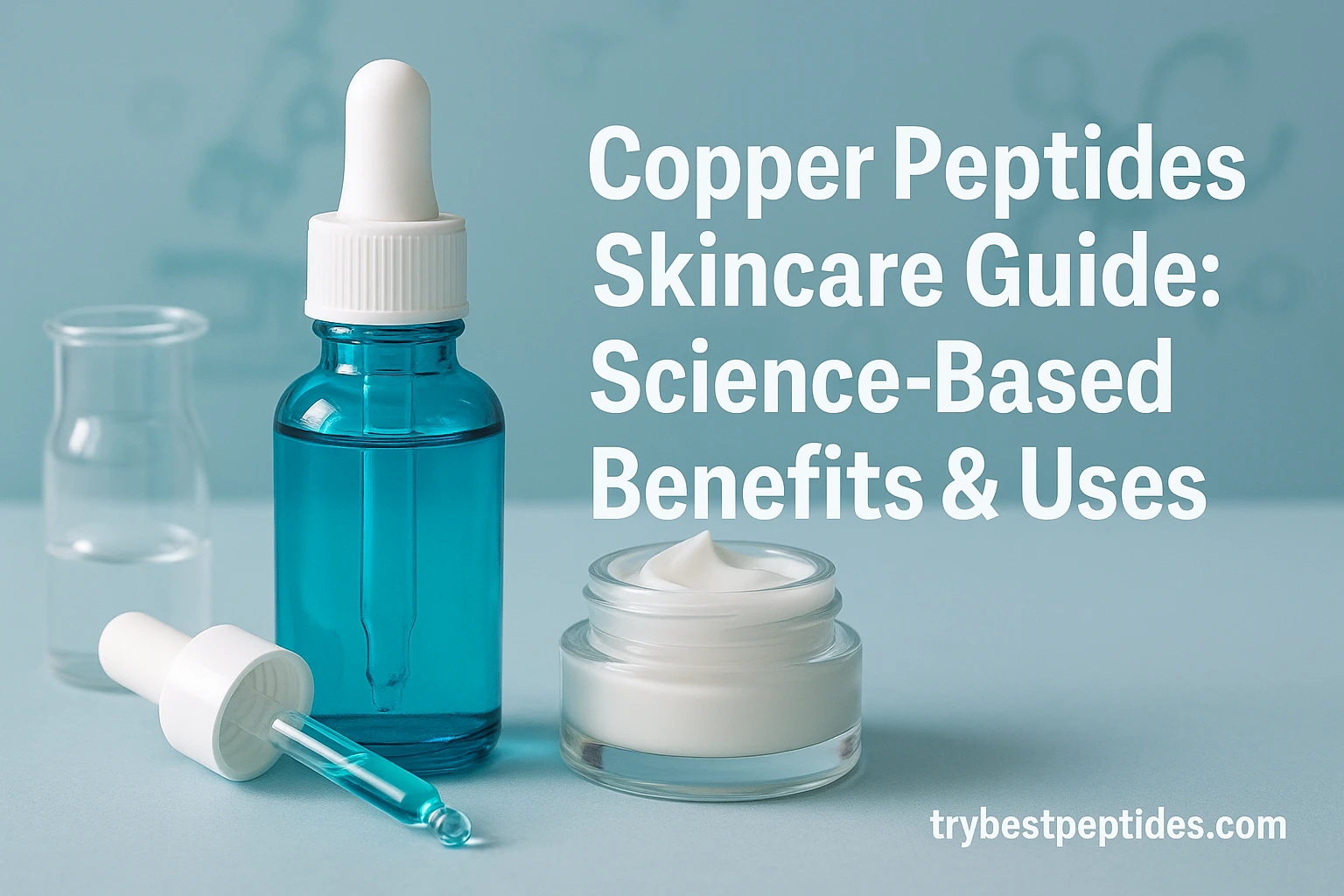
If you've spent time researching anti-aging skincare products, you've likely encountered copper peptides. These ingredients appear in serums, moisturizers, and creams, often with bold marketing claims about collagen production and skin regeneration. But what does the scientific evidence actually support? This comprehensive guide examines copper peptides—specifically the compound GHK-Cu—breaking down how they work, what research shows, and whether they deserve a place in your skincare routine. We'll separate marketing hype from genuine benefits, explore the mechanisms behind their effects, and provide practical guidance for anyone considering these peptides for their skin health. Whether you're a skincare enthusiast or someone skeptical of peptide claims, this evidence-based overview will help you make informed decisions about topical copper peptide products.
What Are Copper Peptides?
Copper peptides are short chains of amino acids bound to copper ions. The most studied form in skincare is GHK-Cu, a tripeptide complex consisting of glycine, histidine, and lysine combined with copper. This compound is naturally present in human plasma, though its concentration decreases with age.
GHK-Cu exists naturally in the body and plays various biological roles. When applied topically, copper peptides are marketed as a way to boost skin regeneration and restore youthful appearance. The compound has been researched for decades, with early interest stemming from its role in wound healing and tissue repair.
Unlike some skincare ingredients that merely sit on the surface, copper peptides can penetrate the skin barrier to some degree. This bioavailability is one reason they've attracted significant scientific attention. However, penetration levels vary based on formulation, concentration, and individual skin characteristics.
How Copper Peptides Work in Skin
Understanding the mechanism of action is crucial for evaluating copper peptide effectiveness. GHK-Cu operates through several biological pathways:
Collagen and Elastin Production
One primary mechanism involves stimulating fibroblasts—the cells responsible for producing collagen and elastin. Research suggests that GHK-Cu can increase the expression of genes involved in extracellular matrix synthesis. This theoretical improvement in skin structure forms the basis for anti-aging claims.
Antioxidant and Anti-Inflammatory Effects
Copper is an essential cofactor for several antioxidant enzymes, particularly superoxide dismutase. When delivered as GHK-Cu, the copper component may provide oxidative stress protection. Additionally, some studies indicate that copper peptides can reduce inflammatory markers in skin cells, which could benefit inflamed or irritated skin conditions.
Wound Healing and Tissue Repair
GHK-Cu has demonstrated effects on various stages of wound healing, including increased blood flow to affected areas and enhanced cellular migration. These properties suggest potential benefits for compromised skin barriers and post-procedure recovery.
Antimicrobial Properties
Limited research suggests copper peptides may have mild antimicrobial activity, though this effect is not pronounced compared to other antimicrobial skincare ingredients. This property shouldn't be considered a primary benefit.
Clinical Research on Topical GHK-Cu
The scientific evidence for copper peptides shows mixed but generally positive results for specific applications:
Collagen Induction Studies
Multiple cell culture studies have demonstrated that GHK-Cu stimulates collagen production in fibroblasts. However, it's important to note that cell culture results don't always translate directly to human skin outcomes. The concentration, formulation stability, and skin penetration remain variables that affect real-world effectiveness.
Human Skin Studies
Some human trials have shown improvements in skin firmness, elasticity, and overall appearance after using copper peptide formulations. A notable study found that products containing GHK-Cu improved skin firmness scores compared to placebo, though the effect sizes were modest.
Anti-Aging and Wrinkle Reduction
Evidence for wrinkle reduction specifically is less robust than collagen stimulation claims. While some studies suggest improvements in fine lines and skin texture, the results are typically subtle rather than dramatic. This gap between marketing claims and actual data is important to recognize.
Safety in Clinical Trials
The safety profile of topical GHK-Cu appears favorable in most studies. Adverse events are generally minimal, with occasional reports of mild irritation. This contrasts with more aggressive anti-aging ingredients and contributes to copper peptides' appeal as a gentler option.
How to Use Copper Peptides in Skincare
Maximizing the benefits of copper peptides requires proper application and integration into your routine:
Concentration Matters
Not all copper peptide products contain the same concentration of active ingredient. Products typically contain between 0.1% and 5% GHK-Cu, though higher concentration doesn't necessarily mean better results. Mid-range concentrations (around 1-3%) often provide the optimal balance between efficacy and irritation potential.
Product Type Selection
Copper peptides work best in serums and lightweight moisturizers where they can penetrate effectively. Heavier creams and oils may create a barrier that limits skin penetration. Many users find serums the most effective delivery format.
Application Protocol
Apply copper peptide products to clean, dry skin before heavier moisturizers. Using morning and evening provides consistency, though some people introduce the ingredient gradually. Allow the serum to absorb for a few minutes before applying other products.
Combination with Other Ingredients
Copper peptides pair well with most skincare ingredients. They complement vitamin C, niacinamide, and hyaluronic acid. However, some users report better results when using copper peptides as a standalone treatment without competing active ingredients in the same step.
Patience and Consistency
Results from copper peptides develop gradually. Most studies show improvements after 4-12 weeks of consistent use. Expecting dramatic changes after a few applications sets unrealistic expectations. Sustained use is necessary to evaluate true effectiveness.
Safety and Side Effects
Topical copper peptides are generally considered safe for most people:
Potential Irritation
Mild irritation, redness, or sensitivity can occur, particularly in people with reactive skin. Starting with lower concentrations and introducing the product gradually minimizes these risks.
Copper Accumulation Concerns
A common question involves copper toxicity from topical application. Current evidence suggests that topical GHK-Cu at cosmetic concentrations doesn't cause harmful copper accumulation. The amount absorbed through intact skin is minimal and well within safe ranges.
Skin Type Considerations
Copper peptides work for most skin types. Those with very sensitive or compromised skin barriers should patch test first. People with active dermatitis or severe rosacea may want to consult a dermatologist before use.
Stability Issues
GHK-Cu stability can be problematic in certain formulations. Copper is reactive in some conditions, and poorly formulated products may degrade the active compound. Choosing reputable brands with stable formulations ensures you're getting an effective product.
Frequently Asked Questions
Do copper peptides really increase collagen production?
Cell studies show they stimulate collagen gene expression, but human results are more modest. Evidence supports some collagen-boosting effects, but dramatic increases are unlikely with topical application alone.
How long does it take to see results?
Most studies show measurable changes after 4-8 weeks of consistent use. Individual results vary significantly based on age, skin condition, and overall skincare practices.
Can I use copper peptides every day?
Yes, daily use is generally safe for most people. Many studies involved daily application without adverse effects.
Are copper peptides suitable for sensitive skin?
Copper peptides are gentler than many active ingredients, but individuals with reactive skin should introduce them gradually and potentially patch test first.
Do copper peptides work better than retinol?
This depends on your priorities. Retinol has more robust evidence for anti-aging effects but causes more irritation. Copper peptides offer a gentler alternative with modest but measurable benefits.
The Bottom Line
Copper peptides represent a science-backed skincare ingredient with modest but genuine benefits. The research supports their ability to stimulate collagen production, provide antioxidant protection, and improve skin appearance when used consistently. However, they won't deliver dramatic transformation—they're better viewed as a supportive anti-aging ingredient rather than a skincare superhero.
The key advantages of GHK-Cu include safety, tolerability, and versatility in skincare routines. They work well for those seeking gentler alternatives to more aggressive actives or as complementary ingredients in comprehensive anti-aging protocols. Results are gradual but sustainable with continued use.
For anyone considering copper peptides, focus on product quality, proper formulation, and realistic expectations. Give the ingredient 8-12 weeks of consistent use before evaluating effectiveness. And remember: copper peptides work best as part of a comprehensive skincare approach that includes sun protection, hydration, and healthy lifestyle habits.
Key Takeaways
- GHK-Cu is a naturally occurring tripeptide with proven ability to stimulate collagen production in cell studies, though human results are more modest
- Safety profile is favorable for topical use with minimal adverse effects reported in clinical studies
- Results require patience—expect 4-12 weeks of consistent application before evaluating effectiveness
- Concentration and formulation matter—products with 1-3% GHK-Cu typically provide optimal results
- Copper peptides work best as complementary ingredients rather than standalone solutions in anti-aging routines
- Suitable for most skin types, including sensitive skin when introduced gradually
- Evidence supports modest improvements in skin firmness and texture, though dramatic wrinkle reduction claims are overstated
-