

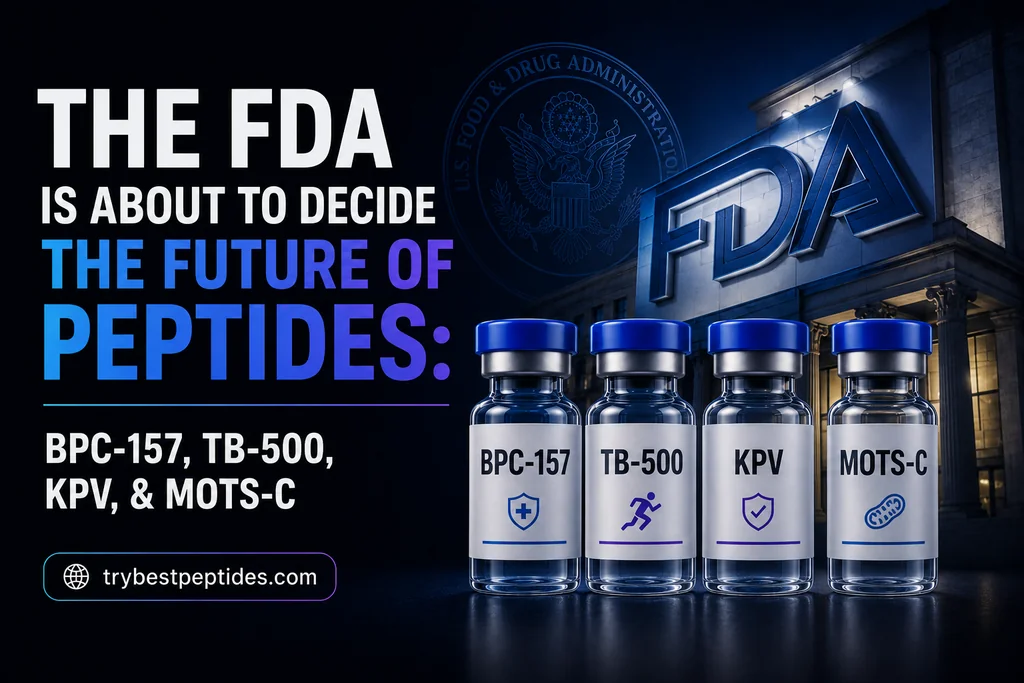
On July 23rd and 24th, the FDA's expert committee is convening to decide the regulatory fate of seven widely-used peptides—including BPC157, TB500, KPV, and Moti. If you've heard about the so-called "Wolverine blend" or noticed the buzz around these compounds, you're not alone. This meeting could significantly change how peptides are prescribed and accessed through legitimate medical channels. But here's what matters most: this isn't about whether these peptides work. It's about whether the scientific evidence supporting specific medical uses is strong enough for compounding pharmacies to legally manufacture them. This distinction is crucial because doctors retain prescribing freedom regardless of the outcome. Understanding what the committee will actually review—and what the science currently shows—is essential whether you're considering peptides through a physician or simply curious about this evolving regulatory landscape.
The FDA Committee's Role in Peptide Regulation
The committee convening in late July comprises medical experts tasked with advising the FDA on which substances can be legally compounded by specialty pharmacies like Empower or Olympia—not your standard CVS or Walgreens. This group will evaluate scientific data on each compound to determine whether clinical evidence justifies recommending it for specifically nominated therapeutic uses.
This is where nuance matters. An approval doesn't restrict how doctors use these compounds. If the FDA reviews BPC157 only for ulcerative colitis, a physician can still prescribe it off-label for tendon injuries or arthritis. The committee is essentially creating a list of what compounding pharmacies can legally prepare, not dictating the boundaries of medical practice. Many people misunderstand this distinction, assuming regulatory approval would somehow limit clinical applications. It wouldn't.
BPC-157: The Peptide Changing Medical Opinions
BPC157 stands as perhaps the most misunderstood peptide in this lineup. It's a fragment—specifically the 157th labeled fragment—of body protection compound naturally produced in the stomach. What makes it unusual is its remarkable stability in the gut, allowing oral administration as a pill or powder.
The FDA is specifically evaluating BPC157 for treating ulcerative colitis, an autoimmune condition causing ulcers anywhere from the rectum through the colon. Interestingly, most practitioners report different real-world applications. Anecdotal evidence suggests primary use for gastric reflux, gastritis, and IBS-related gut symptoms—not ulcerative colitis. The mechanism supports broader applications: BPC157 appears to trigger angiogenesis (new blood vessel formation) and activates cellular signaling cascades that alert the body to areas requiring healing—essentially an SOS signal.
This explains why many clinicians actually use it for soft tissue repair, strains, sprains, and arthritis. Some practitioners find optimal results when administering it during acute healing windows, such as immediately after surgery or PRP injections. The science and clinical practice diverge here, which raises questions about which applications the committee should prioritize.
TB500 (Thymosin Beta-4): The Healing Accelerator
TB500 functions through a distinctly different mechanism than BPC157, making the combination genuinely synergistic. This peptide regulates actin, essentially a cellular construction protein that acts like a foreman directing cells to migrate directly toward injury sites for tissue rebuilding.
Like BPC157, TB500 is used clinically for wound healing, joint pain, strains, and sprains. The FDA's evaluation for wound healing aligns more closely with actual clinical practice than the BPC157 ulcerative colitis indication. When you understand the underlying science, the combination of BPC157 and TB500—often called the "Wolverine blend"—makes compelling biological sense. These peptides work through complementary mechanisms: one triggers new blood vessel formation while the other recruits cellular construction machinery.
The Wolverine Stack and Additional Peptides
Practitioners frequently add KPV and GHK-Cu to this combination, creating what some call the "close stack." While GHK-copper isn't being evaluated in July, it deserves its moment in the spotlight separately. KPV, however, is simultaneously being reviewed for wound healing and inflammatory conditions—a broader application category that makes considerable sense given its mechanism.
KPV: Anti-Inflammation at the Molecular Level
KPV represents a three amino acid peptide fragment derived from alpha-MSH, a hormone your body naturally produces. Its anti-inflammatory mechanism is elegantly simple: it enters cell nuclei and deactivates what researchers call the "master switch" of inflammation—NF-kappa B.
Here's where the analogy matters. Steroids like prednisone achieve similar outcomes but devastate the immune system—dropping a nuclear bomb on your body's defenses. KPV is more like turning down the thermostat on an overheating oven. The practical applications align with this mechanism: practitioners use it for injury healing, arthritis, mast cell activation syndrome, histamine-related responses, and gut inflammation.
The FDA's evaluation for inflammatory conditions makes solid scientific sense. What's curious is why KPV wasn't selected for ulcerative colitis evaluation when the research literature shows promising results in animal models of inflammatory bowel disease. The regulatory logic doesn't always match the available science perfectly.
Moti: Exercise in a Vial
Moti represents the newest addition to this peptide panel and perhaps the most fascinating from a mitochondrial biology perspective. Your body naturally produces this peptide, particularly in response to genuine metabolic stress: intense exercise, cold exposure, fasting. It activates AMPK, a cellular pathway that triggers mitochondrial biogenesis—essentially telling your cells to build more energy factories.
The cascade of effects is impressive. Moti mobilizes fatty acids for energy utilization, increases angiogenesis (supporting the healing theme we've seen throughout), enhances insulin sensitivity, and boosts muscular endurance. Most practitioners describe it as "exercise in a vial," using it primarily for metabolic improvements, pre-workout enhancement, and fat loss rather than the obesity and osteoporosis indications the FDA is evaluating.
The science supports both applications. Research shows rats fed high-fat diets and given Moti completely avoided obesity, while another study demonstrated reversal of established obesity. The osteoporosis connection involves mitochondrial protection: when women experience menopause, they lose estrogen's protective effects on mitochondria, increasing osteoporosis risk. Animal studies show Moti reversing this decline.
What Happens After the Committee Vote?
This meeting carries genuine consequences. If these peptides are voted down, access to clean, third-party tested, pharmacy-grade options disappears. Users would be forced back toward research-only gray market sources—companies operating in legal ambiguity.
The FDA's intended purpose is clear: bringing peptides into legitimate compounding pharmacy channels while destabilizing unregulated gray market sales. There's also discussion of restricting mass telehealth prescriptions lacking proper medical oversight. Theoretically, this makes regulatory sense.
But here's the reality: the regulatory horse has essentially left the barn, kicked down the fence, and is halfway across the country. Compounding pharmacies are already taking regulatory risks to offer peptides. Research peptide websites proliferate like weeds. Venture-backed telehealth startups sit ready with figurative fingers on triggers, awaiting the green light to aggressively market peptides to consumers.
The Gray Market Reality
The gray market isn't shrinking—it's exploding. Why? When conventional medicine fails to address chronic pain, persistent gut issues, injuries, and similar conditions, people don't simply accept their situation. They search for solutions. The peptide gray market thrives precisely because the traditional medical system often leaves patients without answers.
Even if the FDA approves these compounds for compounding pharmacies, this fundamental dynamic won't disappear. Access to legitimate options might expand without actually shrinking unregulated alternatives. The market forces driving peptide adoption run deeper than regulatory approval.
Implications for Practitioners and Patients
Whether you access peptides through a qualified physician or navigate other channels, understanding the science matters. These compounds show genuine biological activity. The question isn't whether they're inert—it's whether regulatory oversight improves safety and efficacy, or simply redistributes market share.
A doctor prescribing peptides through legitimate compounding pharmacies gains quality assurance, third-party testing, and documented sourcing. The regulatory approval of specific indications doesn't restrict clinical application—it merely designates which medical uses compounding pharmacies can legally support. This distinction preserves medical freedom while improving ingredient quality.
For those currently using gray market peptides, this July meeting represents a potential inflection point. If approved, comparable options may become available through legitimate medical channels with superior quality control and professional oversight.
Conclusion
The FDA's July 23rd and 24th committee meeting represents a crucial moment for peptide regulation, but it's neither a comprehensive approval nor a blanket restriction. The committee will evaluate specific medical indications for four peptides—BPC157, TB500, KPV, and Moti—determining whether compounding pharmacies can legally manufacture them. The science supporting these peptides is genuinely interesting, though real-world clinical applications often diverge from proposed regulatory indications.
Regardless of the committee's vote, peptides aren't disappearing. The fundamental human desire to address chronic conditions when conventional medicine falls short proves stronger than regulatory barriers. What matters most is understanding the science, respecting safety protocols, and—if you choose to use peptides—sourcing from reputable, third-party tested providers. Stay informed as this regulatory landscape evolves.
Key Takeaways:
- The FDA committee reviews specific medical uses, not whether peptides work overall—doctors retain prescribing freedom regardless of approval decisions
- BPC157, TB500, KPV, and Moti each work through distinct biological mechanisms supporting their actual clinical applications, though some FDA evaluations diverge from real-world practice patterns
- Regulatory approval aims to legitimize compounding pharmacy access while reducing gray market dependence, though market forces suggest both channels will likely coexist
- Quality sourcing and proper medical supervision matter more than regulatory status alone when considering peptide use
-