
Drug Delivery Peptides
Drug delivery peptides — primarily cell-penetrating peptides (CPPs) — are short sequences capable of translocating across biological membranes, carrying therapeutic cargo (drugs, proteins, nucleic acids, nanoparticles) into cells. They represent a key enabling technology for next-generation therapeutics.
Overview
Cell-penetrating peptides (CPPs) were discovered serendipitously in 1988 when researchers found that the HIV-1 TAT protein rapidly translocated into cells. Since then, over 1,000 CPP sequences have been identified or designed, spanning cationic, amphipathic, and hydrophobic structural classes.
The ability to shuttle therapeutic cargo across the cell membrane — and in some cases the blood-brain barrier — makes CPPs invaluable research tools and potential drug delivery vehicles. They can carry diverse payloads: small molecule drugs, proteins, siRNA, DNA, quantum dots, and nanoparticles.
Current research focuses on improving selectivity (cancer cells vs. normal cells), reducing toxicity at higher concentrations, avoiding endosomal entrapment after cellular uptake, and developing stimuli-responsive CPPs that release cargo only in pathological microenvironments.
Key Compounds
TAT Peptide
HIV-derivedDerived from HIV-1 Trans-Activator of Transcription protein. The first and most studied CPP. Highly cationic (RKKRRQRRR), rapidly internalised by virtually all cell types via macropinocytosis and direct translocation.
Penetratin (pAntp)
HomeodomainDerived from Drosophila Antennapedia homeodomain (residues 43-58). Amphipathic α-helical structure facilitates membrane interaction and translocation without membrane disruption at low concentrations.
Transportan
ChimericChimeric peptide combining galanin and mastoparan. Highly efficient cell uptake but cytotoxic at higher concentrations. Truncated TP10 analogue developed for improved safety.
R8 / Poly-Arginine
CationicOligo-arginine sequences (typically 8-12 arginines) that exploit guanidinium-phospholipid interactions for membrane translocation. Extensively used as conjugates for siRNA and antisense delivery.
MPG
AmphipathicA 27-residue amphipathic peptide designed for nucleic acid delivery. Forms stable non-covalent complexes with siRNA and plasmid DNA, enabling efficient cytoplasmic delivery without endosomal entrapment.
Mechanism of Action
Direct Membrane Translocation
Cationic CPPs interact electrostatically with anionic membrane phospholipids (phosphatidylserine, heparan sulfate proteoglycans), forming transient pores or using inverted micelle structures for membrane passage.
Macropinocytosis & Endocytosis
Many CPPs trigger macropinocytosis — large-scale plasma membrane ruffling and bulk fluid uptake — internalising large cargo complexes. Subsequent endosomal escape is critical for cytoplasmic delivery.
Blood-Brain Barrier Crossing
Selected CPPs (TAT, Penetratin) can cross the BBB through transcytosis in brain endothelial cells, opening new possibilities for CNS drug delivery of otherwise impermeable therapeutics.
Endosomal Escape
A key bottleneck: peptides that accumulate in endosomes face lysosomal degradation. Proton-sponge effects, membrane-active sequences, and photochemical approaches are studied to improve cytoplasmic delivery efficiency.
Research Applications
Intracellular Drug Delivery
Conjugating CPPs to drugs that cannot cross cell membranes, enabling access to intracellular targets.
Gene Therapy Research
CPP-mediated delivery of siRNA, antisense oligonucleotides, CRISPR components, and plasmid DNA.
CNS Therapeutics Research
Exploiting BBB-crossing ability of CPPs for brain tumour, neurodegeneration, and stroke drug delivery.
Targeted Cancer Therapy
Tumour-homing CPPs conjugated to cytotoxic agents for selective cancer cell killing with reduced systemic toxicity.
Related Articles
Research insights on Drug Delivery Peptides
Penetratin: The Antennapedia Cell-Penetrating Peptide
Penetratin is a 16-amino acid cell-penetrating peptide that revolutionizes drug delivery by enabling molecules to cross cellular membranes efficiently. Derived from Drosophila Antennapedia, it offers biocompatible solutions for cancer treatment, neurological therapies, and genetic medicine applications.
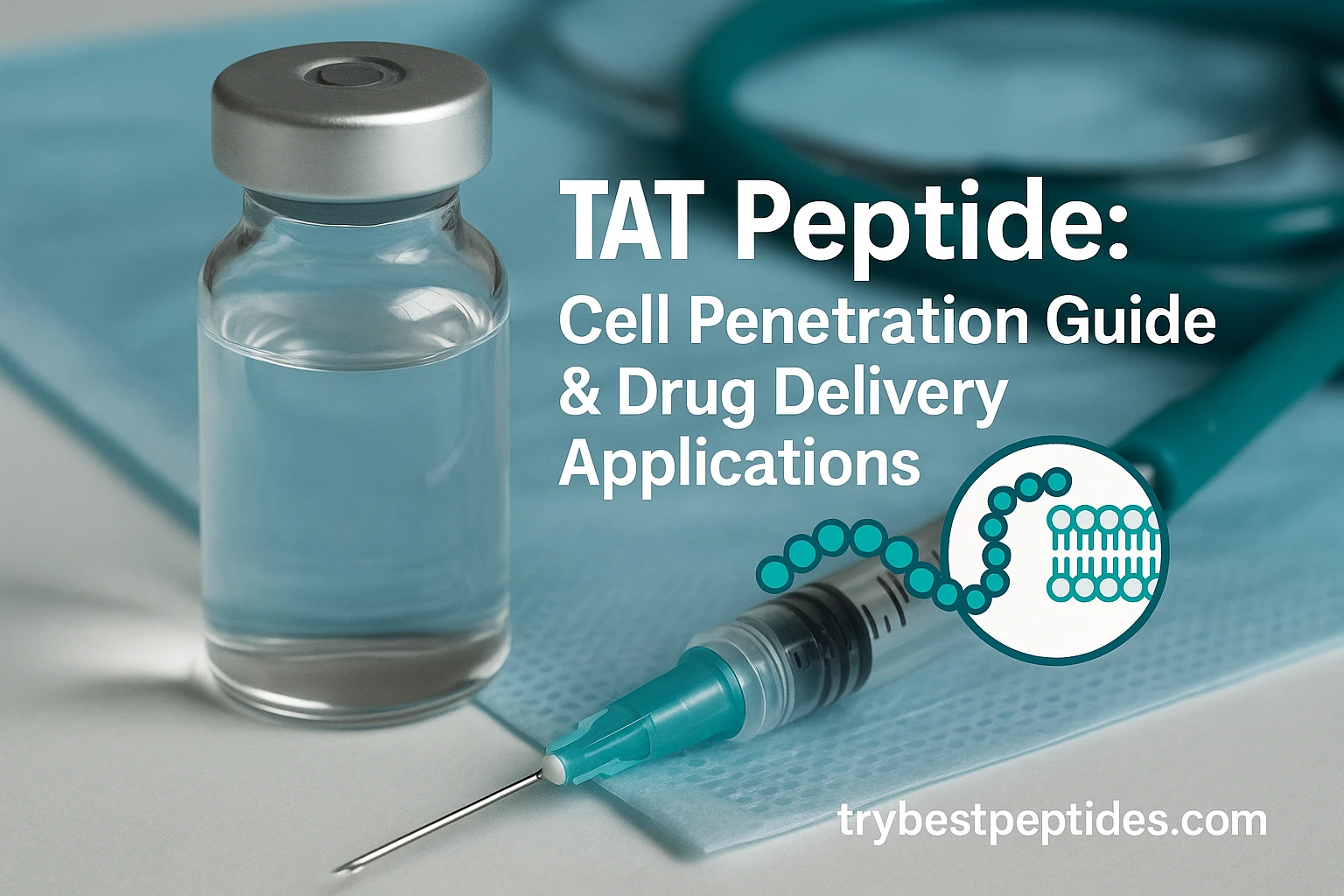
TAT Peptide: A Comprehensive Guide to Cell Penetration Technology
TAT peptide is a revolutionary cell-penetrating peptide enabling efficient transport of therapeutic molecules across cellular membranes. Learn about its mechanisms, applications in drug delivery, and transformative potential in modern medicine.
Frequently Asked Questions
How do cell-penetrating peptides (CPPs) cross the cell membrane?
Can TAT peptide cross the blood-brain barrier?
What is the difference between covalent and non-covalent CPP-cargo conjugation?
What limits the clinical translation of CPPs despite decades of research?
Research Information Only
This content is provided for educational and informational purposes only. It is not intended as medical advice, diagnosis, or treatment recommendations. Always consult a qualified healthcare professional before making any health-related decisions.