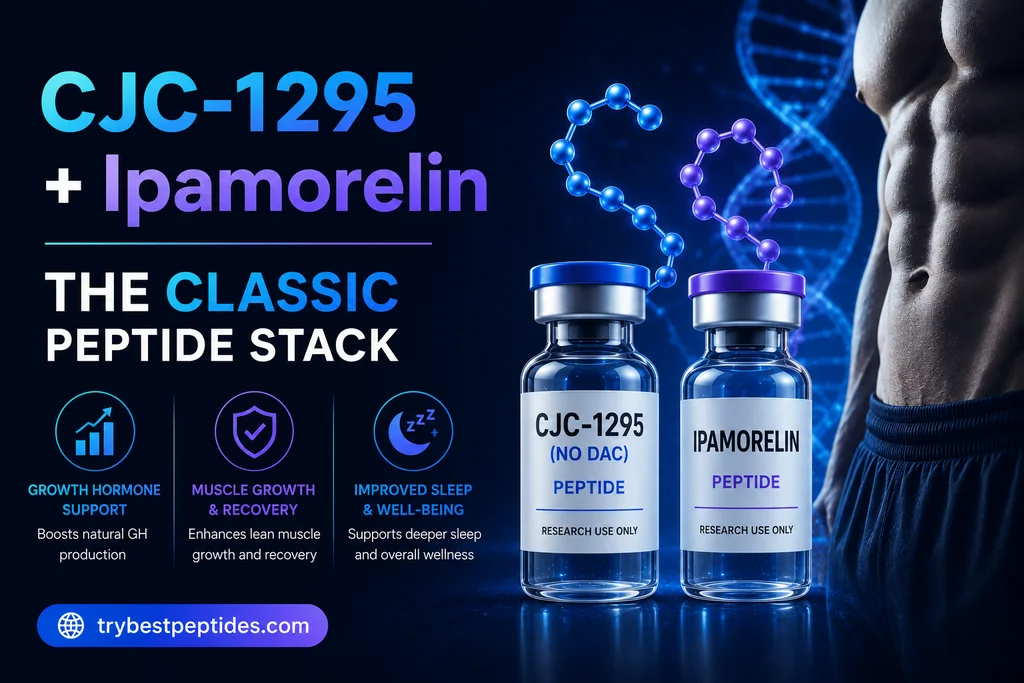
The CJC 1295 and Ipamorelin peptide stack has become a go-to combination in fitness and longevity circles, but most people don't truly understand how it works. These two peptides function through different biological mechanisms—one signals your pituitary to release growth hormone, while the other removes the natural "brakes" that keep growth hormone suppressed. When used together, they create a synergistic effect that's far more powerful than either peptide alone. In this guide, we'll break down the science behind each peptide, explain why they're paired together, explore the real research data, and highlight critical red flags and side effects you should know about before considering this stack.
Understanding CJC 1295: The Growth Hormone Signaler
CJC 1295 isn't growth hormone itself—it's a growth hormone-releasing hormone (GHRH) analog. Think of it as a messenger peptide that tells your pituitary gland to release more growth hormone into your bloodstream. This distinction matters because growth hormone influences far more than muscle growth: it affects recovery quality, sleep architecture, insulin sensitivity, and fat metabolism. The problem is that as we age and experience stress, our natural growth hormone pulses diminish significantly.
To understand how CJC 1295 works, imagine your pituitary as a sponge soaking in water. Throughout the day, your body naturally "squeezes" that sponge gently, and much more aggressively during sleep. Using CJC 1295 allows you to squeeze harder and release more growth hormone from that sponge. However—and this is where people make costly mistakes—there's a ceiling. Once the sponge is fully squeezed dry, additional pressure does nothing. Push too hard for too long without letting the sponge refill, and you get nothing at all.
Receptor Desensitization: The First Problem
This is where the physiology gets interesting. If you flood your pituitary with excessively high doses of CJC 1295, your body's receptors essentially "put on earplugs." The pituitary receptors downregulate—they become less sensitive to the signaling hormone. After a few weeks of high-dose use, the same dose that once caused a noticeable head rush produces nothing. This is receptor desensitization, and it's why more isn't always better with peptides.
The second major issue is the somatostatin snapback. Your body craves homeostasis. When growth hormone spikes too high, your brain panics and releases somatostatin—a hormone that acts like the brakes on growth hormone release. This is the key reason Ipamorelin becomes so valuable in this stack. But we'll get to that in a moment.
CJC 1295 With DAC vs. Without DAC
CJC 1295 comes in two distinct forms, and understanding the difference is essential. The "with DAC" version (drug affinity complex) binds to albumin in your blood and remains active for 6 to 8 days in your system. This creates what's called a "growth hormone bleed"—a baseline elevation of growth hormone that persists throughout the week. However, this prolonged elevation comes with increased risk of somatostatin backlash.
CJC 1295 without DAC lasts only 30 to 60 minutes in your body. It produces a sharp, natural pulse of growth hormone that resembles your body's normal rhythm more closely. You get lower receptor desensitization risk and less aggressive somatostatin interference. The downside? You need to time your injections more precisely if you want consistent results.
There's another critical consideration with the DAC version: growth hormone and insulin create problems when both are elevated simultaneously. When insulin levels are high, growth hormone pulses get blunted. This is why many users avoid eating immediately before bed if they're using CJC 1295 with DAC. The hormone dynamics between growth hormone and insulin are complex enough that it deserves its own deep dive—but the short version is that these two hormones don't cooperate well when their levels peak together.
Who Benefits Most From CJC 1295?
CJC 1295 tends to help people in their mid-30s and beyond who are experiencing somatopause—the age-related decline in growth hormone secretion where recovery simply doesn't feel the same anymore. Highly active individuals who need superior recovery also benefit, though it's worth noting that WADA bans CJC 1295 for competitive athletes. Some users pursue it specifically to improve visceral fat levels while preserving lean muscle mass.
Here's the catch: using CJC 1295 alone is like pressing the gas pedal while the parking brake remains engaged. You're stimulating growth hormone release, but your body's natural suppression mechanisms are still working against you. That's where Ipamorelin comes in.
Ipamorelin: Removing the Brakes
Ipamorelin is a ghrelin receptor agonist. Ghrelin is primarily known as the hunger hormone—it signals your brain that your body is in a fasted state and needs energy. But ghrelin does something more interesting: it directly triggers the pituitary to release growth hormone. Ipamorelin essentially mimics ghrelin, convincing your brain that you're in the perfect fasted state for maximum growth hormone release. You get the fat-burning benefits and metabolic advantages of a deep fast without the actual hunger pangs.
Now here's why Ipamorelin became the peptide of choice among fitness enthusiasts: it's selective. Unlike other ghrelin mimetics—hexarelin, GHRP-2, GHRP-6, and even MK-677—Ipamorelin specifically targets the GHSR1a receptor on the pituitary. The other ghrelin mimetics aren't as discriminating. They hit multiple receptors, triggering excessive hunger, elevated cortisol, and prolactin release. Ipamorelin avoids these side effects because it doesn't activate those pathways.
The Somatostatin Solution
Here's where the magic happens. Ipamorelin tells somatostatin—that growth hormone-blocking hormone we discussed earlier—to stand down. It allows growth hormone to be released more potently without triggering the aggressive suppression cascade. This is precisely why CJC 1295 plus Ipamorelin became such a popular stack. The two peptides work through completely different mechanisms:
- CJC 1295 walks to the front door of the pituitary and knocks, signaling it to open up and release growth hormone
- Ipamorelin walks to the garage door and cuts the lock on somatostatin's alarm system
Together, they're dramatically more effective than the sum of their parts. Other GHRH peptides like sermorelin and tesamorelin work similarly synergistic with Ipamorelin, though CJC 1295 is the most commonly researched combination.
What the Science Actually Shows
Most information about these peptides comes from gym forums, clinics trying to sell products, or internet personalities. Let's look at what actual research reveals. Animal studies demonstrate that both CJC-like peptides and Ipamorelin increase bone mineral content, which makes biological sense since growth hormone and IGF-1 (the downstream effect of growth hormone) are fundamentally involved in bone remodeling.
In human studies, researchers conducted a phase two trial with about 100 people recovering from bowel resection surgery to determine whether Ipamorelin could accelerate gut recovery—specifically, whether patients could resume normal bowel function sooner. The peptide did help, and remarkably, no significant safety concerns emerged from the trial. That's actually rare good news in peptide research.
Additional human studies showed interesting results:
- GHRH peptides alone produced modest growth hormone increases
- Ipamorelin alone also increased growth hormone pulses
- The combination produced dramatically amplified growth hormone results—far exceeding what A plus B would predict
Importantly, study participants still maintained natural growth hormone rhythms, with the most significant pulses occurring during sleep. None of these studies were large or long-term, so limitations exist. But they demonstrate something crucial: these peptides don't brute-force your endocrine system. They amplify your body's natural capacity for growth hormone release, which is genuinely encouraging from a safety perspective.
Side Effects and Safety Considerations
Most people experience a rapid head rush or facial flushing when using CJC 1295, caused by vasodilation. This usually lasts from seconds to several minutes and scales with dose. I've seen people accidentally overdose themselves by being careless with mixing—don't do that.
Beyond injection site irritation, common effects include:
- Water retention or tingling in the hands (from increased water retention related to aldosterone and cortisol secretion)
- Transient insulin resistance (from growth hormone's effect on insulin sensitivity—respect this, don't dismiss it)
- Occasional histamine reactions, including hives (if this happens, stop immediately)
The serious concern everyone mentions is cancer. There's no data or real-world evidence suggesting these peptides cause cancer. However, excessive growth hormone and IGF-1 can feed existing tumors. If you have any history of cancer or strong familial predisposition, growth hormone pathway manipulation isn't worth the risk. Cancer cells don't need encouragement.
Also critically important: bad sourcing ruins everything. People can execute these peptides perfectly but still get destroyed by poor-quality chemicals purchased from untrustworthy suppliers. The research chemical market is full of mislabeled, contaminated, or completely fake products. Source matters more than people realize.
When Results Aren't What You Expected
If you're using this stack and getting puffy instead of lean—carrying water weight instead of losing fat—something might be happening in your liver related to estrogen metabolism. High estrogen can completely derail your body composition results even when the peptides are legitimate. This deserves deeper exploration, but for now, recognize that liver health and estrogen balance matter.
The Future of These Peptides
It's becoming increasingly clear that CJC 1295 and Ipamorelin will eventually become prescribable medications. When that happens, it lowers barriers significantly—physicians like myself will be able to prescribe them directly, and compounding pharmacies will handle production and pricing. This could democratize access while also removing the sourcing risk entirely. Whether pricing becomes reasonable or prohibitively expensive remains to be seen, but legitimacy and medical oversight will change the landscape considerably.
Conclusion
The CJC 1295 and Ipamorelin stack works because it addresses growth hormone release from multiple angles simultaneously. CJC 1295 stimulates your pituitary to release stored growth hormone, while Ipamorelin suppresses the natural braking mechanisms that limit that release. The result is amplified growth hormone pulses that support recovery, sleep quality, metabolic health, and potentially body composition improvements—without artificially spiking hormones to dangerous levels. However, success depends on understanding the biology, using appropriate doses, maintaining good sourcing, and monitoring how your individual body responds. This isn't a shortcut to fitness; it's a tool that works best when combined with solid training, nutrition, and recovery practices. If you're considering this stack, educate yourself thoroughly, and ideally work with a knowledgeable practitioner who understands the nuances of peptide physiology.
Key Takeaways: - CJC 1295 and Ipamorelin work synergistically through different mechanisms—one stimulates growth hormone release, the other removes the somatostatin "brakes" that suppress it - CJC 1295 with DAC lasts 6-8 days and causes prolonged growth hormone elevation; without DAC it lasts 30-60 minutes and mimics natural pulses more closely - High doses and continuous use lead to receptor desensitization and somatostatin backlash, making moderate, pulsed protocols more effective than aggressive daily dosing - Human research shows dramatic amplification when both peptides are used together, with minimal safety concerns identified, though long-term studies remain limited