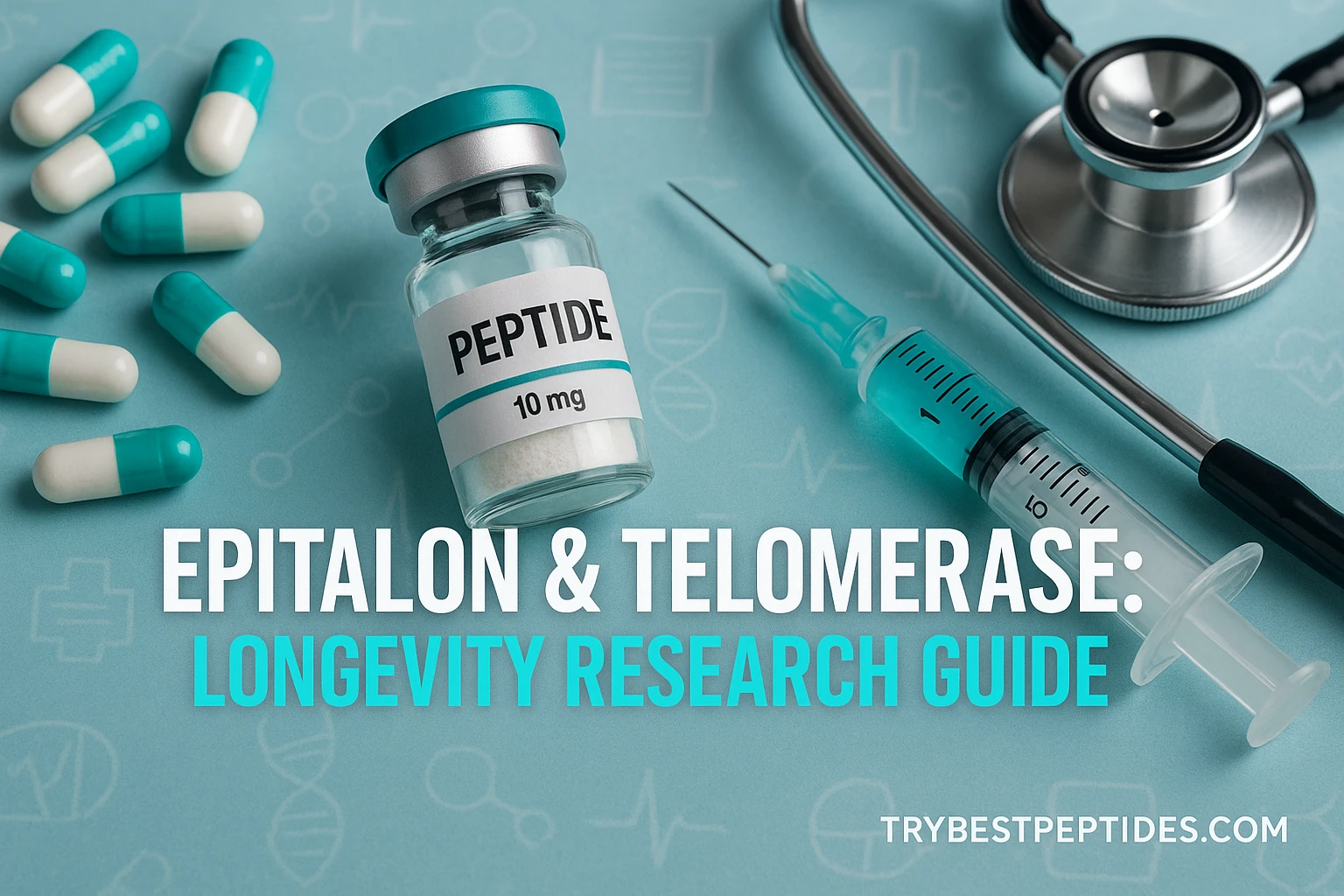
Epitalon represents a fascinating frontier in longevity science—a synthetic tetrapeptide engineered to reactivate telomerase, the enzyme responsible for rebuilding chromosome caps. As cellular aging remains one of biology's greatest puzzles, researchers have turned their attention to telomeres, the protective structures at chromosome ends that naturally shorten with each cell division. Epitalon emerged from this inquiry as a potential tool to extend telomere length and, theoretically, slow the aging process. While animal studies have demonstrated promising effects on lifespan extension and telomere restoration, human evidence remains limited and contested. This comprehensive guide examines the science behind epitalon, its mechanisms of action, current research findings, and what we know about its safety and efficacy in the context of longevity research.
What Is Epitalon?
Epitalon (also known as epithalon) is a man-made peptide composed of four amino acids: alanine, glutamic acid, aspartic acid, and glycine. Synthesized in the early 1990s by Russian researchers, epitalon was designed with a specific purpose: to stimulate the production and activity of telomerase, an enzyme that most somatic cells have essentially lost the ability to express during adulthood.
The peptide operates on the principle that restoring telomerase activity in aging cells might reverse one of the hallmarks of cellular senescence. Unlike cancer cells, which reactivate telomerase to achieve unlimited replication, epitalon aims to restore telomerase function within the constraints of normal, healthy cellular aging.
This distinction is critical. While telomerase activation in cancer cells drives tumor growth, the hypothesis surrounding epitalon suggests that brief, controlled reactivation of telomerase in normal cells could reset the cellular aging clock without triggering malignant transformation.
Understanding Telomere Biology and Cellular Aging
Before examining epitalon's effects, it's essential to understand the role telomeres play in aging. Telomeres are repetitive DNA sequences located at the ends of chromosomes that protect genetic material from degradation. With each cell division, telomeres naturally shorten—a phenomenon known as the "end-replication problem."
Once telomeres shrink below a critical threshold, the cell enters senescence (stops dividing) or undergoes apoptosis (cell death). This process, called the Hayflick limit, represents a fundamental biological clock that constrains cellular lifespan.
The Telomerase Connection
Telomerase is the enzyme responsible for adding telomeric sequences back to chromosome ends, effectively resetting this biological clock. Most cells lose telomerase activity after infancy, but germ cells, stem cells, and, problematically, cancer cells maintain telomerase expression throughout life.
This has led to a central question in longevity research: could selectively reactivating telomerase in somatic tissues extend healthspan without triggering cancer risk? Epitalon was developed to test this hypothesis.
How Epitalon Works: Mechanisms of Action
Epitalon's primary mechanism centers on telomerase reactivation. Research suggests the peptide influences the pineal gland and immune system, potentially triggering downstream effects that restore telomerase expression in aging tissues.
Pineal Gland Modulation
Several studies propose that epitalon acts through the pineal gland, a neuroendocrine organ that plays a crucial role in circadian rhythm regulation and melatonin synthesis. The pineal gland's function declines with age, contributing to disrupted sleep cycles and impaired immune function.
By potentially restoring pineal gland function, epitalon may indirectly enhance telomerase activity and improve circadian-dependent cellular repair mechanisms.
Antioxidant Effects
Beyond telomerase activation, epitalon appears to exhibit antioxidant properties. Oxidative stress accelerates telomere shortening, so reducing reactive oxygen species (ROS) could theoretically slow the rate of telomeric attrition and complement telomerase reactivation.
This dual mechanism—both directly extending telomeres and reducing the oxidative damage that shortens them—may explain some of the longevity effects observed in animal models.
Longevity Research: What the Studies Show
Animal studies form the backbone of current epitalon research, with most human evidence remaining preliminary. Here's what the data reveals.
Lifespan Extension in Animal Models
The most cited epitalon studies come from Russian researchers who observed lifespan extension in mice and fruit flies. In mice, epitalon administration was associated with increased mean lifespan and improved markers of cellular health.
These findings generated significant interest in the Western scientific community, though replication by independent laboratories has been limited. The gap between initial claims and independent verification remains a crucial limitation in the field.
Telomere Length and Cellular Aging
Research examining telomere dynamics suggests epitalon can increase telomere length in certain cell types. Some studies reported telomere elongation in immune cells following epitalon treatment, correlating with improved immune function in aging organisms.
However, the magnitude of these effects and their consistency across different experimental conditions remain subjects of debate among researchers.
The Epitalon Paradox: Telomeres and Cancer Risk
Perhaps the most critical unresolved question concerns cancer risk. Telomerase activation is a hallmark of cancer development, present in approximately 90% of human tumors. This raises a fundamental concern: could restoring telomerase function increase cancer susceptibility?
Proponents of epitalon argue that brief, controlled reactivation differs fundamentally from the constitutive telomerase expression seen in cancer cells. Animal studies have not consistently demonstrated increased tumor incidence, but long-term data in humans simply doesn't exist.
This remains the central limitation preventing broader adoption of epitalon as an anti-aging intervention. The theoretical risk, however unquantified, creates a significant safety barrier.
Human Evidence and Current Clinical Status
Human clinical trials examining epitalon remain extremely limited. A small number of studies, primarily from Russian institutions, have reported improvements in immune function markers and sleep quality in aging adults, but these trials typically involved fewer than 100 participants and lacked the rigorous controls expected in modern clinical research.
No large, randomized, placebo-controlled trials have been published in mainstream peer-reviewed journals. This absence of robust human evidence represents a critical gap in our understanding of epitalon's safety and efficacy in people.
Safety Considerations and Known Side Effects
Animal studies suggest epitalon possesses a favorable safety profile at research doses. However, human safety data remains sparse. Reported side effects in the limited human literature include minor gastrointestinal disturbances and occasional headaches, typically described as transient.
The long-term safety profile in humans is essentially unknown, particularly regarding cancer risk—the most theoretically concerning potential adverse effect.
Legal and Regulatory Status
Epitalon remains unregulated as a pharmaceutical agent in most countries, including the United States and European Union. It is not approved by the FDA or EMA for any therapeutic indication. In research contexts, epitalon is available through specialized suppliers serving the scientific community, though quality and purity standards vary considerably.
The lack of regulatory oversight creates additional concerns about product consistency and potential contamination when sourced outside of clinical research settings.
The Bottom Line
Epitalon represents an intriguing research direction in the study of cellular aging and longevity. The theoretical foundation—that telomerase reactivation could extend healthspan—is scientifically sound, and preliminary animal evidence shows promise.
However, the translation from animal models to human application faces substantial hurdles. The absence of large-scale human trials, the unresolved question of cancer risk, and the lack of regulatory approval mean epitalon remains firmly in the experimental category.
For researchers and practitioners, epitalon offers intellectual interest and potential areas for investigation. For healthy individuals seeking anti-aging interventions, currently approved, evidence-based approaches—including exercise, sleep optimization, caloric restriction, and stress management—remain far better-established alternatives.
The field would benefit enormously from independently-funded human clinical trials that could clarify epitalon's true potential and definitively address safety concerns.
Key Takeaways
-
What it is: Epitalon is a synthetic four-amino-acid peptide designed to reactivate telomerase, the enzyme that extends telomeres and may slow cellular aging.
-
How it works: Epitalon likely operates through pineal gland modulation and antioxidant activity, both contributing to telomerase reactivation and reduced oxidative stress.
-
Animal evidence: Studies in mice and fruit flies report lifespan extension and improved cellular markers, though independent replication remains limited.
-
Human evidence: Clinical trials in humans are sparse, small, and primarily from Russian research institutions; no large, rigorous trials exist in peer-reviewed literature.
-
Cancer concern: The central unresolved question involves whether telomerase reactivation increases cancer risk—a theoretical concern without definitive human evidence.
-
Regulatory status: Epitalon is not FDA or EMA approved and remains experimental; it is available through research suppliers but lacks standardized quality controls.
-
Current recommendation: For longevity-seeking individuals, established lifestyle interventions (exercise, sleep, stress management) offer better evidence than experimental peptides.
-