Introduction
Growth hormone optimization has long been a focus of research for those seeking to enhance physical performance, recovery, and metabolic function. Rather than relying on synthetic growth hormone replacement, scientists developed Growth Hormone Releasing Peptide-2 (GHRP-2)—a synthetic peptide that stimulates the body's natural hormone production pathways. This compound represents a fundamentally different approach to growth hormone enhancement, working synergistically with the body's existing endocrine systems rather than bypassing them entirely. GHRP-2 has become a subject of significant research interest due to its mechanism of action, efficacy profile, and potential applications in various physiological contexts. Understanding how GHRP-2 functions, its research-backed benefits, and its safety considerations is essential for researchers and clinicians exploring peptide-based interventions.
What Is GHRP-2?
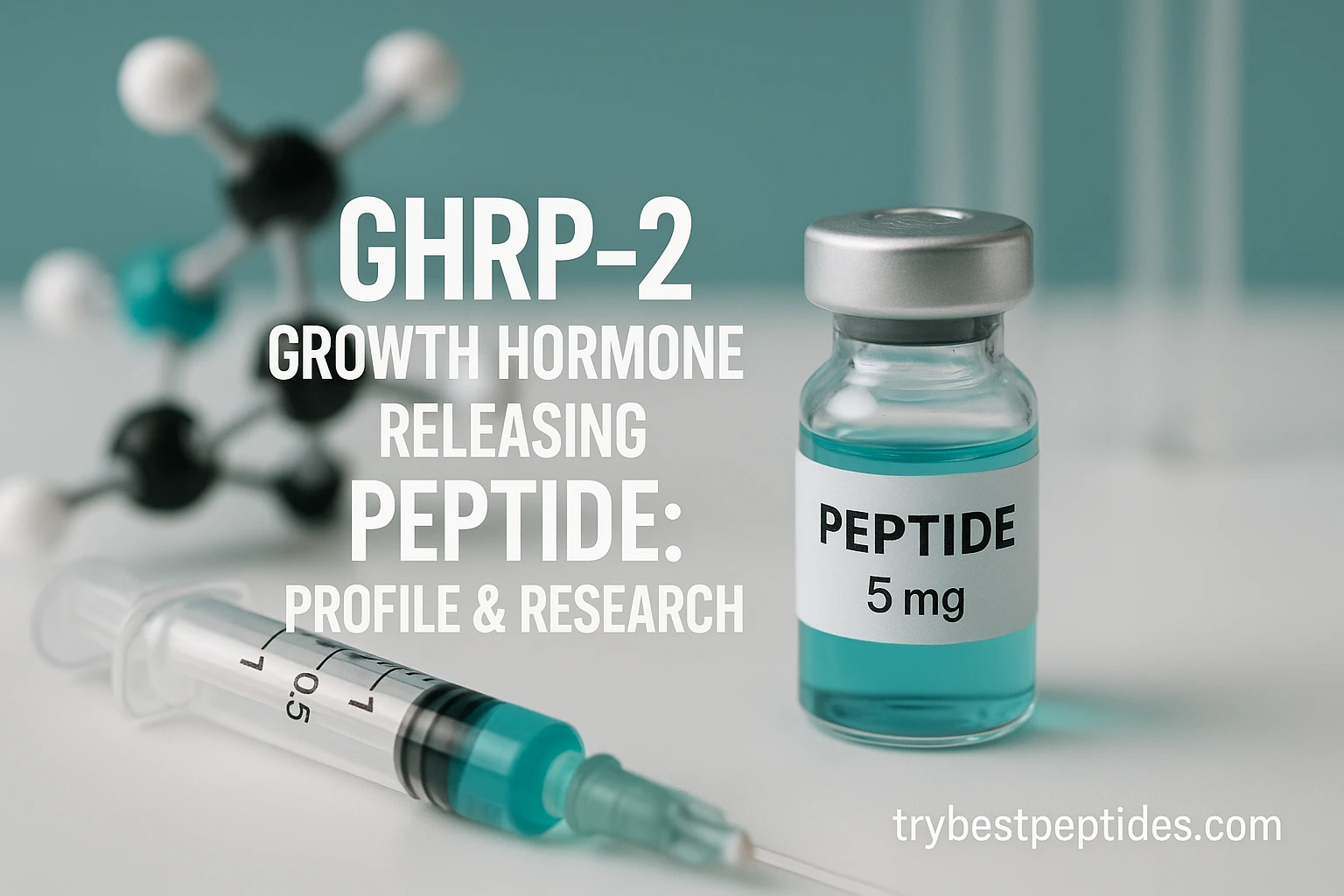
GHRP-2, also known as Growth Hormone Releasing Peptide-2 or pralmorelin in clinical contexts, is a synthetic hexapeptide belonging to the growth hormone secretagogue family. Developed through peptide chemistry research, GHRP-2 was designed to mimic ghrelin, the body's natural hunger hormone that also plays a crucial role in growth hormone regulation.
The peptide consists of six amino acids arranged in a specific sequence that allows it to interact with ghrelin receptors throughout the body. Unlike exogenous growth hormone injection, GHRP-2 stimulates the pituitary gland to produce and release endogenous growth hormone. This distinction is significant because it leverages the body's natural regulatory mechanisms rather than overriding them with external hormone supplementation.
GHRP-2 has been the subject of numerous clinical and research studies examining its potential applications in growth hormone deficiency, metabolic disorders, and age-related decline in growth hormone production. Its development marked an important advancement in understanding how peptide chemistry could be harnessed to modulate endocrine function through specific receptor interactions.
How GHRP-2 Works: Mechanisms of Action
Understanding the mechanism of action is fundamental to appreciating how GHRP-2 produces its effects on growth hormone secretion.
Ghrelin Receptor Activation
GHRP-2 functions as a ghrelin receptor agonist, binding to growth hormone secretagogue receptors (GHS-R) located primarily on somatotroph cells within the anterior pituitary gland. When GHRP-2 binds to these receptors, it triggers a cascade of intracellular signaling events that culminate in growth hormone synthesis and release into the bloodstream.
This mechanism differs fundamentally from direct growth hormone administration. Rather than introducing exogenous GH that can suppress the pituitary's natural production (a phenomenon known as negative feedback), GHRP-2 stimulates the gland to produce its own hormone.
Hypothalamic-Pituitary Axis Engagement
GHRP-2 engages multiple levels of the hypothalamic-pituitary-somatotropic axis. The peptide stimulates growth hormone-releasing hormone (GHRH) secretion from the hypothalamus while simultaneously reducing somatostatin (the inhibitory hormone) release. This dual action creates a particularly robust stimulus for growth hormone secretion.
Research has demonstrated that GHRP-2's effects can be potentiated when combined with GHRH, as these compounds work through complementary mechanisms—GHRH stimulates GH release through one pathway while GHRP-2 acts through ghrelin receptors, creating a synergistic effect.
Pulse Frequency and Amplitude
One of the notable characteristics of GHRP-2 is its ability to enhance both the frequency and amplitude of growth hormone pulses. The body normally releases growth hormone in a pulsatile manner throughout the day and night, with larger pulses occurring during sleep. GHRP-2 increases both the size of these pulses and their frequency, resulting in higher overall circulating growth hormone levels.
Research Evidence and Clinical Applications
Scientific literature supports GHRP-2's efficacy in stimulating growth hormone secretion across various populations.
Growth Hormone Deficiency
Clinical studies have documented GHRP-2's effectiveness in individuals with documented growth hormone deficiency. Patients administered GHRP-2 demonstrated significant increases in circulating growth hormone levels compared to placebo, with effects measurable within minutes of administration and sustained over longer dosing intervals.
The peptide has shown particular promise in cases where synthetic growth hormone therapy may be contraindicated or where alternative approaches to stimulating endogenous production are preferred.
Metabolic and Body Composition Effects
Research examining GHRP-2's broader metabolic effects has explored changes in body composition, lipolysis (fat breakdown), and protein synthesis. Growth hormone plays a central role in metabolic function, and enhanced GH secretion via GHRP-2 administration may influence these processes.
Several studies have investigated whether GHRP-2-induced increases in growth hormone correlate with meaningful changes in lean muscle mass, fat distribution, and metabolic rate in both healthy subjects and those with metabolic dysfunction.
Comparison With Other GHRPs
The GHRP family includes multiple compounds with varying potency and characteristics. Understanding how GHRP-2 compares to related peptides provides important context for its position within the broader landscape of growth hormone secretagogues.
GHRP-6 represents one of the earliest compounds in this class. While structurally similar to GHRP-2, GHRP-6 is generally considered to have slightly lower potency and produces more pronounced appetite stimulation—a consequence of its ghrelin receptor agonism.
Ipamorelin is a more selective ghrelin receptor agonist with a structure differing from the traditional GHRP compounds. It demonstrates high selectivity for growth hormone secretion with reduced effects on appetite and prolactin compared to GHRP-2.
GHRP-1 was developed as an alternative with potentially different pharmacological properties. Researchers have noted variations in how these peptides interact with different tissues and their relative potencies in stimulating growth hormone secretion.
GHRP-2 occupies a middle position in this spectrum—more potent than GHRP-6 in some contexts but producing notable effects on appetite and other hormones like prolactin and cortisol, distinguishing it from more selective compounds like ipamorelin.
Safety Profile and Side Effects
As with all bioactive compounds, understanding GHRP-2's safety profile is essential for appropriate research and clinical application.
Common Responses
Research participants receiving GHRP-2 have reported increased appetite—a predictable consequence of ghrelin receptor agonism. This effect is typically transient and manageable but represents an important consideration for study design and participant guidance.
Some individuals experience mild facial flushing, water retention, or transient elevation in cortisol levels following GHRP-2 administration. These responses generally diminish with continued use as the body adapts to the peptide's presence.
Long-Term Safety Considerations
Longer-term studies examining chronic GHRP-2 use have generally demonstrated acceptable safety profiles in research contexts. However, the peptide's effects on prolactin and cortisol—hormones that can have complex physiological roles—warrant monitoring in extended research protocols.
The body's development of tolerance to repeated GHRP-2 doses represents another consideration. Some research suggests that desensitization can occur with continuous exposure, potentially reducing efficacy over time. Dosing protocols that incorporate breaks or cycling may mitigate this effect.
Legal and Regulatory Status
GHRP-2's regulatory classification varies significantly by jurisdiction and application context.
In most countries, GHRP-2 remains classified as a research chemical or investigational compound rather than an approved pharmaceutical. This status reflects its development stage and the ongoing nature of clinical research evaluating its safety and efficacy.
Within the United States, GHRP-2 is not FDA-approved for human therapeutic use, though clinical trials examining its potential applications continue. In research contexts, GHRP-2 is typically supplied as a research peptide with labeling indicating "for research purposes only."
Different regulatory bodies maintain varying positions on GHRP-2's classification, and researchers must verify applicable regulations within their specific jurisdiction before conducting studies involving this compound.
Key Takeaways
-
GHRP-2 is a synthetic hexapeptide that stimulates natural growth hormone secretion by activating ghrelin receptors on pituitary somatotroph cells, rather than replacing growth hormone directly.
-
The mechanism involves multi-level engagement of the hypothalamic-pituitary axis, increasing both the frequency and amplitude of growth hormone pulses throughout the day.
-
Research demonstrates efficacy in growth hormone deficiency conditions and metabolic contexts, with measurable increases in circulating GH levels within minutes of administration.
-
Comparative efficacy varies among GHRP compounds, with GHRP-2 occupying a middle ground in potency and showing notable effects on appetite, prolactin, and cortisol compared to more selective alternatives.
-
Safety profiles are generally acceptable in research contexts, though increased appetite, potential cortisol effects, and potential tolerance development require monitoring and consideration in study design.
-
Regulatory status remains investigational in most jurisdictions, with GHRP-2 classified as a research compound rather than an approved therapeutic agent.
-