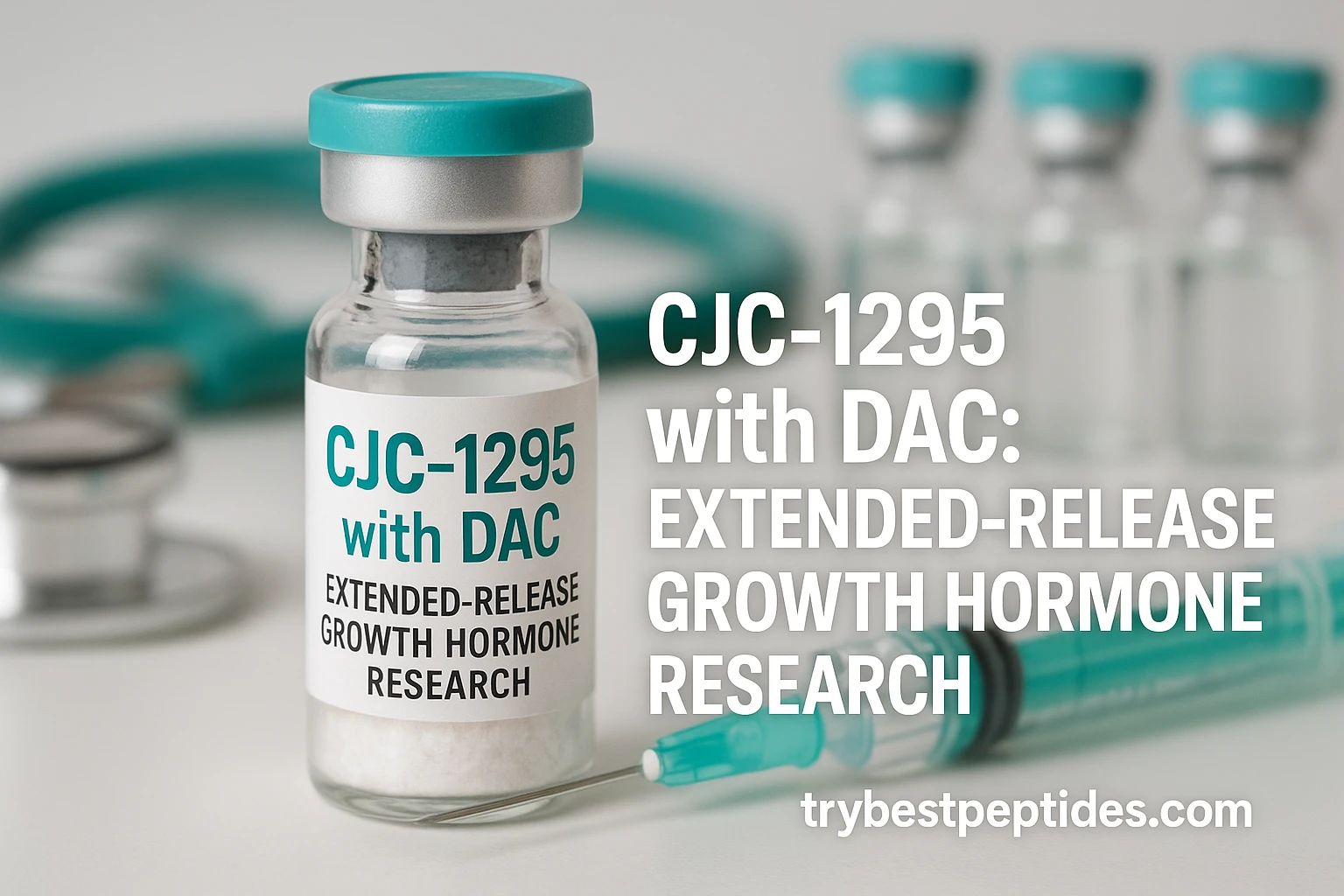
CJC-1295 with DAC (Drug Affinity Complex) represents a significant advancement in peptide-based growth hormone modulation technology. This extended-release variant builds upon the original CJC-1295 compound by incorporating a DAC mechanism that substantially prolongs its biological half-life and efficacy window. Unlike its non-DAC counterpart, which requires frequent injections, the DAC-modified version allows for less frequent dosing schedules while maintaining consistent hormone stimulation. This comprehensive guide explores the scientific mechanisms, research evidence, practical applications, and regulatory considerations surrounding CJC-1295 with DAC. Whether you're researching peptide therapeutics for academic purposes or evaluating clinical applications, understanding this compound's profile is essential for informed decision-making.
What Is CJC-1295 with DAC?
CJC-1295 with DAC is a synthetic peptide analog designed to stimulate the release of growth hormone-releasing hormone (GHRH). The compound consists of 30 amino acids and functions as a growth hormone secretagogue—a substance that triggers the body's natural production and release of growth hormone from the anterior pituitary gland.
The DAC component is a critical distinction. DAC (Drug Affinity Complex) uses albumin-binding technology that tethers the peptide to serum albumin in the bloodstream. This attachment mechanism dramatically extends the compound's circulating half-life from approximately 30 minutes (for CJC-1295 without DAC) to roughly 7-8 days. This extended half-life translates to sustained GHRH-receptor activation and more consistent growth hormone elevation throughout the dosing interval.
The peptide was originally developed as a research compound and has been the subject of numerous clinical investigations examining its potential applications in growth hormone insufficiency, age-related decline, and metabolic dysfunction. Its sophisticated mechanism differentiates it from simpler growth hormone secretagogues like GHRP-6 or GHRP-2, which operate through distinct receptor pathways.
How CJC-1295 with DAC Works
The mechanism of action relies on fundamental endocrinology principles. CJC-1295 with DAC mimics the natural hormone GHRH, which is produced by the hypothalamus and released in a pulsatile pattern. The peptide binds to GHRH receptors on somatotroph cells within the anterior pituitary gland, stimulating growth hormone synthesis and secretion.
The DAC technology provides the critical advantage of extended duration. Here's the functional sequence:
Albumin Binding and Circulation: Upon injection, the DAC component immediately binds to circulating serum albumin. This attachment protects the peptide from rapid enzymatic degradation and glomerular filtration, which would normally eliminate growth hormone secretagogues within minutes.
Sustained GHRH Receptor Activation: The albumin-bound complex maintains a steady concentration of bioavailable CJC-1295, providing continuous stimulation of pituitary GHRH receptors. This differs from pulsatile natural GHRH release but achieves sustained hormone elevation.
Growth Hormone Amplification: The prolonged GHRH signaling leads to increased growth hormone synthesis and secretion. Unlike direct growth hormone injections, this mechanism preserves the body's natural neuroendocrine feedback loops and maintains the pulsatile nature of GH release to some degree.
Metabolic Effects: Elevated growth hormone levels subsequently increase insulin-like growth factor 1 (IGF-1) production, primarily in the liver. This cascade triggers the downstream metabolic effects associated with growth hormone elevation, including increased protein synthesis, lipolysis, and cellular proliferation.
CJC-1295 with DAC vs. Without DAC
Understanding the differences between DAC and non-DAC variants clarifies why the extended-release formulation has gained prominence in research applications.
| Characteristic | CJC-1295 without DAC | CJC-1295 with DAC |
|---|---|---|
| Half-life | ~30 minutes | ~7-8 days |
| Dosing Frequency | Multiple injections weekly | Single weekly injection |
| Albumin Binding | Minimal | Albumin-bound complex |
| Plasma Concentration | Rapid peaks and troughs | Sustained levels |
| Injection Volume | Smaller per injection | Larger concentration |
| Research Applicability | Acute response studies | Chronic protocol investigations |
The non-DAC version allows researchers to examine acute growth hormone response dynamics and receptor sensitivity with greater temporal resolution. However, the DAC-modified compound better reflects physiological growth hormone patterns observed in natural hormone secretion and offers practical advantages for sustained therapeutic applications.
The choice between variants depends on research objectives. Acute mechanistic studies may favor non-DAC versions, while investigations of chronic hormonal effects and clinical applications typically utilize the extended-release DAC formulation.
Research Evidence and Clinical Applications
Scientific literature examining CJC-1295 with DAC has demonstrated several consistent findings regarding its efficacy and physiological effects.
Growth Hormone Elevation
Multiple peer-reviewed investigations have documented significant increases in serum growth hormone levels following CJC-1295 with DAC administration. Research protocols typically demonstrate GH elevation lasting throughout the dosing interval, with peak concentrations occurring 2-4 hours post-injection and maintaining elevated levels for 7 days between weekly doses.
IGF-1 and Metabolic Effects
As growth hormone elevations translate downstream, serum IGF-1 concentrations increase correspondingly. Studies have documented IGF-1 increases ranging from 20-100% depending on baseline status, age, and body composition. These elevations trigger metabolic cascades including enhanced protein synthesis, reduced fat oxidation rate, and improved cellular recovery markers.
Therapeutic Potential
Research examining CJC-1295 with DAC in growth hormone-deficient populations has suggested clinical utility in restoring hormonal balance. Investigations in aging populations have explored its potential for addressing age-related growth hormone decline, though long-term safety outcomes in this population remain an active area of investigation.
Neuroendocrine Considerations
Unlike direct growth hormone replacement, CJC-1295 with DAC preserves hypothalamic-pituitary-somatotroph axis functionality. This mechanism maintains the body's natural feedback mechanisms and avoids some complications associated with exogenous growth hormone therapy, particularly regarding pituitary suppression.
Dosing and Administration
Research protocols and clinical investigations have employed varying dosing strategies, though consensus dosing parameters have emerged from the literature.
Standard Research Dosing: Most investigations have utilized weekly injections ranging from 2-3 micrograms (mcg) per kilogram of body weight, administered subcutaneously. A typical dose for a 70-kilogram individual would fall in the 140-210 microgram range per week.
Administration Methods: Subcutaneous injection is the standard route, typically administered in the abdominal area, upper arm, or thigh. Intramuscular injection has been used in some protocols but is less common in research settings.
Reconstitution and Stability: As a lyophilized peptide, CJC-1295 with DAC requires reconstitution with bacteriostatic water prior to injection. Properly reconstituted solutions maintain stability for extended periods when refrigerated, typically 2-4 weeks depending on storage conditions.
Dosing Duration: Research protocols have ranged from 8-week acute studies to 12-24 week chronic investigations. Extended protocols allow assessment of sustained effects and potential adaptation or tolerance development.
Safety and Side Effects
Scientific examination of CJC-1295 with DAC safety profile has identified both well-documented and theoretical adverse effects requiring consideration.
Common Observations
Research participants have reported mild injection site reactions, including transient erythema, edema, or minimal discomfort. These reactions typically resolve within hours to days and rarely necessitate intervention.
Mild headaches, flushing, and sensations of warmth have been documented in some participants, generally correlating with peak growth hormone elevation following injection. These effects are typically self-limited and diminish with continued use as physiological adaptation occurs.
Theoretical Considerations
Growth hormone elevation carries theoretical risks requiring monitoring. Hyperglycemia potential exists, particularly in individuals with glucose metabolism abnormalities. Similarly, fluid retention, joint pain, and carpal tunnel-like symptoms have been documented in direct growth hormone replacement but remain less common with GHRH secretagogue approaches.
Monitoring Recommendations
Research protocols typically incorporate periodic assessment of fasting glucose, IGF-1 levels, and general metabolic panels. Blood pressure monitoring and joint function assessment may be warranted in extended investigations.
Legal and Regulatory Status
The regulatory landscape surrounding CJC-1295 with DAC differs significantly across jurisdictions and research contexts.
In most countries, CJC-1295 with DAC remains classified as a research chemical without approved therapeutic indication. This status restricts its use to scientific investigation in regulated laboratory settings and clinical research protocols approved by institutional review boards or equivalent oversight bodies.
The compound is not approved by the FDA or equivalent regulatory agencies in most nations for human therapeutic use. Some pharmaceutical companies have investigated related compounds within regulatory frameworks, but CJC-1295 with DAC itself has not achieved standard pharmaceutical approval.
For research purposes, acquisition must occur through licensed peptide research suppliers who maintain appropriate certifications and quality control standards. Purity, sterility, and potency verification through third-party testing is essential for research integrity.
Frequently Asked Questions
How does CJC-1295 with DAC differ from growth hormone injections?
CJC-1295 with DAC stimulates the body's natural growth hormone production, preserving endogenous feedback mechanisms. Direct growth hormone injections bypass this system, potentially suppressing natural GH production.
What is the typical onset of effect?
Growth hormone elevation begins within hours of injection, peaks within 2-4 hours, and maintains elevation throughout the 7-day interval. Steady-state IGF-1 elevation typically develops over 2-4 weeks of consistent dosing.
Can CJC-1295 with DAC be used alongside other peptides?
Research protocols have investigated combination approaches, though interactions and safety profiles of such combinations require careful investigation and oversight.
What storage conditions are necessary?
Reconstituted solutions require refrigeration (2-8°C) and protection from light. Lyophilized powder remains stable at room temperature in sealed, desiccated containers.
Is tolerance development a concern?
Research examining extended-use protocols has not documented significant tolerance development, though individual variation exists and ongoing monitoring remains important.
Bottom Line
CJC-1295 with DAC represents a sophisticated advancement in growth hormone modulation technology, offering extended-release characteristics that distinguish it from its non-DAC counterpart. Scientific investigation has documented its efficacy in elevating growth hormone and IGF-1 levels through preserved physiological mechanisms. The extended half-life achieved through albumin-binding technology provides practical advantages for research applications and potential future therapeutic use.
However, the compound remains primarily within research contexts, and its regulatory status limits approved applications. For researchers and clinicians considering its use, thorough understanding of mechanisms, evidence base, and appropriate monitoring protocols is essential. As investigation continues, CJC-1295 with DAC may contribute meaningfully to therapeutic approaches addressing growth hormone insufficiency and age-related endocrine decline.
Key Takeaways
- Extended-Release Technology: DAC (Drug Affinity Complex) technology extends CJC-1295's half-life from 30 minutes to 7-8 days through albumin binding
- Natural Mechanism: The peptide stimulates endogenous growth hormone production via GHRH receptor activation, preserving neuroendocrine feedback
- Research Evidence: Peer-reviewed investigations document significant growth hormone and IGF-1 elevation with sustained metabolic effects
- Practical Dosing: Weekly subcutaneous injections (2-3 mcg/kg) provide sustained hormone elevation with reduced injection frequency
- Safety Profile: Generally well-tolerated with mild, transient side effects; requires monitoring of glucose metabolism and growth hormone-related parameters
- Regulatory Status: Remains a research compound without approved therapeutic indication in most jurisdictions
- Clinical Potential: Demonstrates promise for growth hormone insufficiency and age-related decline, pending continued investigation
-