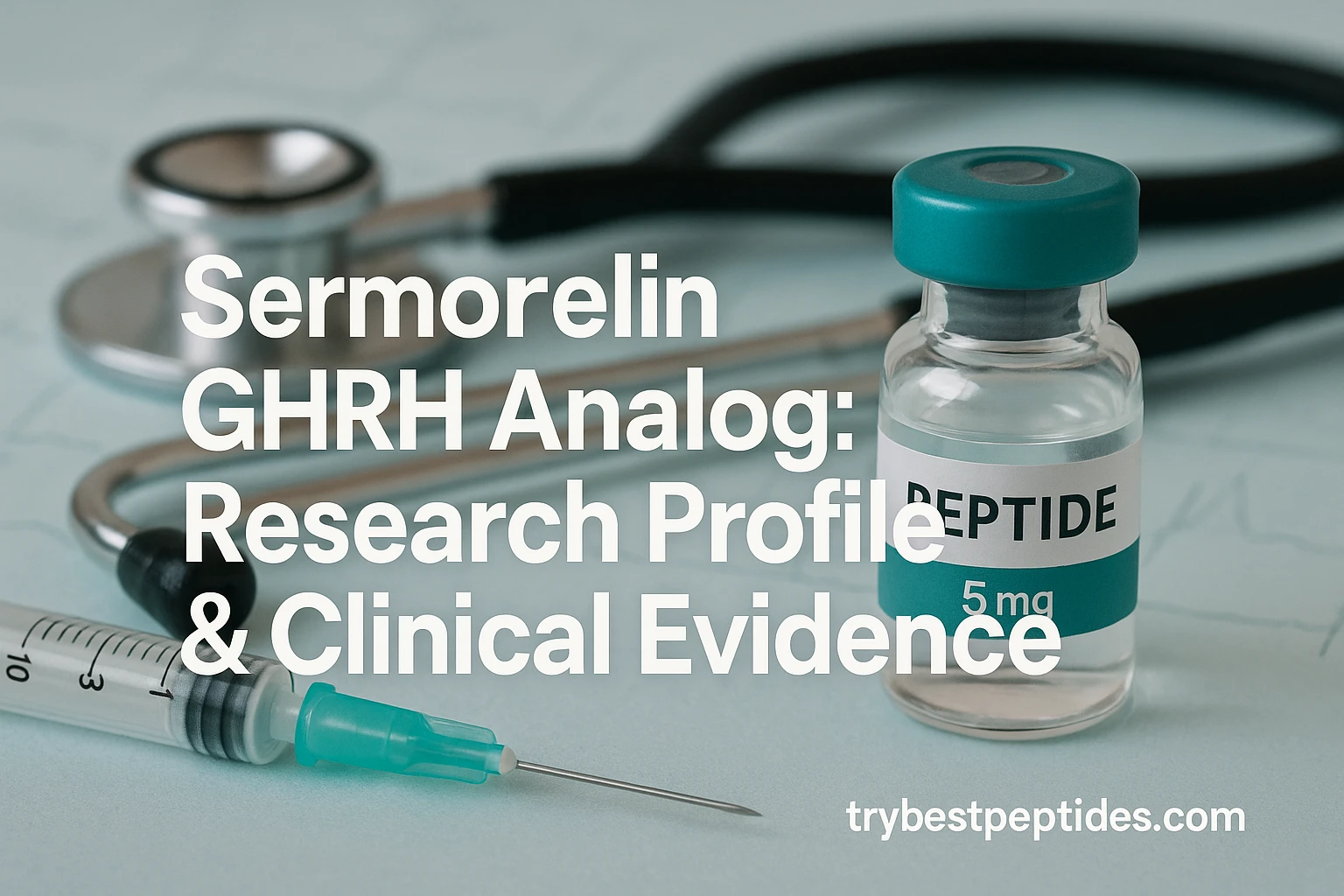
Sermorelin represents a distinctive chapter in peptide therapeutics and pharmaceutical history. As one of the few peptides to achieve full FDA approval, undergo extensive clinical trials, and see genuine mainstream medical use before its discontinuation, sermorelin offers valuable insights into growth hormone regulation and therapeutic peptide development. This comprehensive research profile examines sermorelin's mechanism of action, clinical evidence, safety profile, and regulatory journey—providing both researchers and informed individuals with an evidence-based understanding of this significant peptide compound.
What Is Sermorelin?
Sermorelin is a synthetic 29-amino acid peptide that functions as a growth hormone-releasing hormone (GHRH) analog. The compound was developed to stimulate the pituitary gland's natural production of growth hormone, distinguishing it fundamentally from exogenous growth hormone replacement therapies.
The peptide was originally approved by the FDA under the brand name Geref (sermorelin acetate) in 1997 for treating growth hormone deficiency in children with growth failure. This approval represented a significant milestone—sermorelin became one of the rare peptides to obtain full regulatory clearance and integration into mainstream clinical practice. The medication remained available for several decades before being discontinued in 2008, a decision driven primarily by commercial factors rather than safety concerns.
Understanding sermorelin's structure is essential for comprehending its function. The peptide comprises the first 29 amino acids of native GHRH, making it a truncated but highly functional analog of the natural hormone-releasing factor produced by the hypothalamus.
How Sermorelin Works: Mechanism of Action
Sermorelin operates through a well-characterized biological pathway that mimics the body's natural growth hormone regulation system. When administered, sermorelin binds to specific GHRH receptors located on somatotroph cells within the anterior pituitary gland.
This receptor binding triggers a cascade of intracellular signaling events that culminate in the synthesis and secretion of growth hormone (somatotropin) from these specialized pituitary cells. Critically, sermorelin stimulates the pituitary's own production of growth hormone rather than providing exogenous hormone replacement.
The Physiological Advantage
This mechanism offers a distinct physiological advantage. By preserving the body's natural feedback loops and endocrine regulation systems, sermorelin maintains more physiologically normal growth hormone secretion patterns compared to direct growth hormone injection. The peptide essentially reminds the pituitary gland to do what it's naturally designed to do—produce and release growth hormone according to the body's needs.
The effects of sermorelin administration are not instantaneous. Growth hormone levels typically begin elevating within 15-30 minutes of injection, peak within 30-60 minutes, and return toward baseline over several hours. This temporal profile mirrors natural growth hormone secretion patterns more closely than sustained exogenous hormone administration.
Clinical Research and Evidence
The clinical evidence supporting sermorelin accumulated over more than a decade of legitimate medical use. Research documented sermorelin's efficacy in multiple patient populations, most notably in children with growth hormone deficiency and growth failure.
Clinical trials demonstrated that sermorelin therapy effectively increased growth velocity in children who had documented growth hormone insufficiency. Growth rates improved significantly during treatment periods, with many pediatric patients achieving normal growth trajectories. Additionally, sermorelin showed utility in addressing the metabolic consequences of growth hormone deficiency, including improvements in body composition and bone metabolism markers.
Beyond pediatric applications, research explored sermorelin's potential in aging-related growth hormone decline. Some studies suggested that sermorelin might help address age-related decrements in growth hormone secretion, though this application remained more investigational than the pediatric use cases.
Sermorelin vs. Newer GHRH Analogs
The peptide landscape has evolved considerably since sermorelin's development. Newer GHRH analogs and growth hormone secretagogues have emerged, including compounds that function through different mechanisms—particularly ghrelin receptor agonists.
Sermorelin maintains certain advantages: its mechanism is well-understood from decades of research, its safety profile was extensively documented through clinical use, and its natural GHRH-mimetic action preserves endocrine system integrity. However, some newer compounds claim greater potency or different pharmacokinetic profiles.
The comparison between sermorelin and other growth hormone secretagogues depends heavily on specific research objectives. Sermorelin's established safety record and extensive clinical data provide confidence for research purposes, while newer analogs may offer different experimental variables.
Safety Profile and Side Effects
During its years of FDA-approved clinical use, sermorelin demonstrated a favorable safety profile across diverse patient populations. Adverse events were generally mild and transient.
Common observations included local injection site reactions—erythema, swelling, or discomfort at administration sites. Systemic effects were minimal in the studied populations. The peptide's mechanism of action—stimulating endogenous growth hormone production rather than providing exogenous hormone—theoretically reduces certain risks associated with growth hormone replacement therapy, such as excessive circulating hormone levels.
Important safety considerations for any GHRH analog research include the need for appropriate baseline assessment and monitoring protocols. Growth hormone affects multiple physiological systems, and responsible research protocols require consideration of glucose metabolism, thyroid function, and other endocrine parameters.
Legal Status and Regulatory History
Sermorelin's regulatory history is unique and instructive. The peptide achieved full FDA approval in 1997, underwent substantial clinical use, and maintained regulatory clearance for more than a decade. Its discontinuation in 2008 resulted from commercial decisions by the manufacturing company rather than safety concerns or regulatory action.
Currently, sermorelin is available only through specialized research channels and compounding pharmacies in certain jurisdictions. Its status as a former FDA-approved medication distinguishes it from many peptides—sermorelin has legitimate clinical history and extensive human safety data.
Researchers and individuals interested in sermorelin should verify legal status in their specific jurisdiction, as regulations vary considerably by location.
Key Takeaways
-
Established Background: Sermorelin is one of the few peptides with genuine FDA approval history, extensive clinical trials, and years of mainstream medical use.
-
Mechanism: Functions as a GHRH analog that stimulates the pituitary gland to produce endogenous growth hormone, preserving natural endocrine feedback systems.
-
Clinical Evidence: Demonstrated efficacy in treating growth hormone deficiency, particularly in pediatric populations, with well-documented improvements in growth velocity and metabolic parameters.
-
Safety Profile: Showed favorable safety characteristics during clinical use, with mild and transient adverse effects predominantly limited to injection site reactions.
-
Regulatory Distinction: Unlike most peptides, sermorelin has comprehensive regulatory history and was studied extensively in humans, providing substantial safety and efficacy data.
-
Research Value: The combination of established mechanism, documented clinical evidence, and known safety profile makes sermorelin a valuable reference point in peptide research.
-