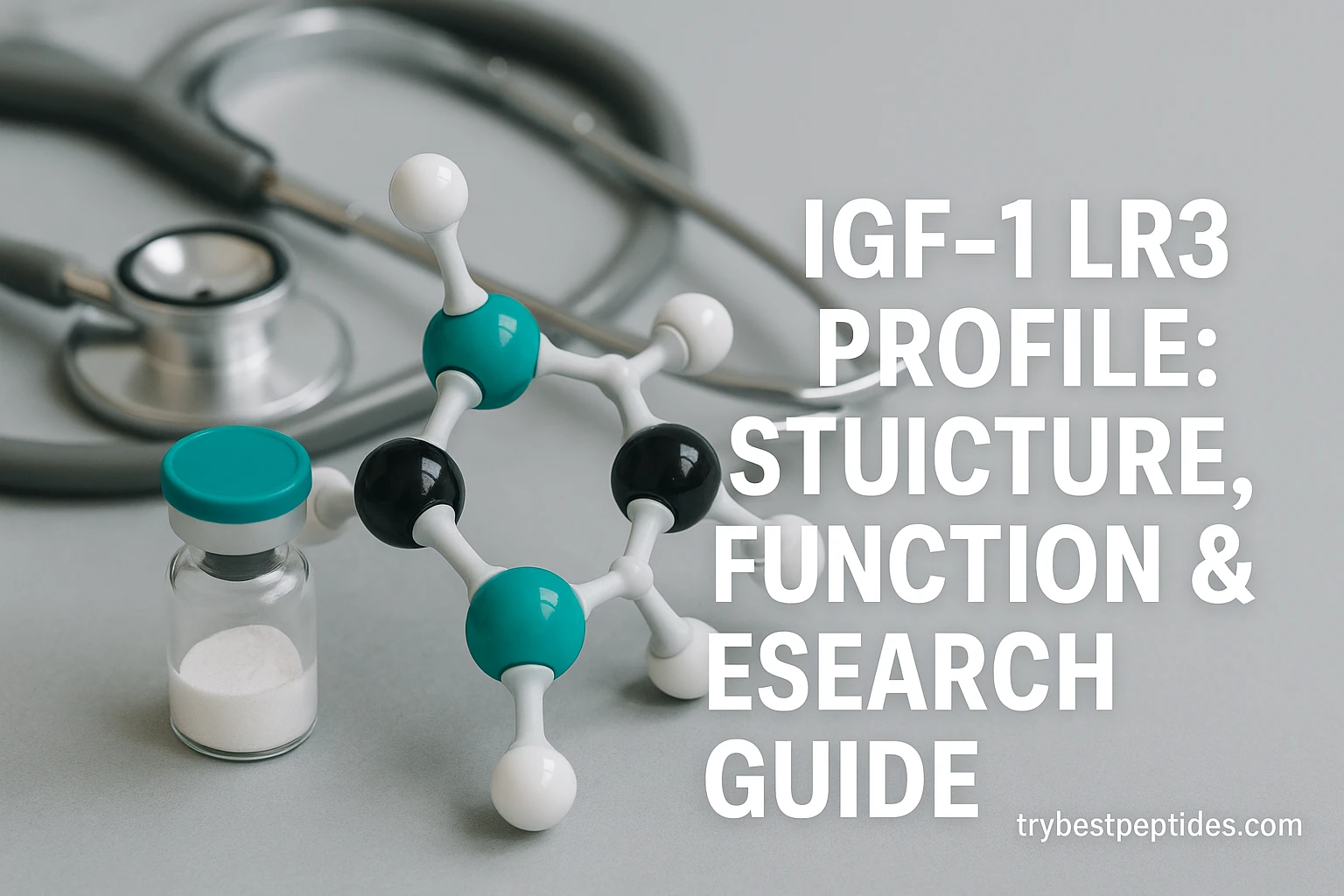
Insulin-like growth factor 1 (IGF-1) plays a crucial role in regulating growth, metabolism, and tissue repair throughout the human body. However, native IGF-1 faces a significant limitation: it binds rapidly to carrier proteins in the bloodstream, severely restricting its bioavailability and reducing its active half-life to merely 15 minutes. IGF-1 LR3 represents a modified version of this peptide, engineered to overcome these bioavailability challenges. This comprehensive guide explores the structural modifications, mechanisms of action, research findings, and regulatory status of IGF-1 LR3, providing evidence-based information for those interested in peptide research and development.
What Is IGF-1 LR3?
IGF-1 LR3 is a synthetic analog of insulin-like growth factor 1 that incorporates specific structural modifications to enhance its biological activity and longevity. The "LR3" designation refers to the addition of a 13-amino acid sequence at the N-terminus and the substitution of glutamic acid for arginine at position 3 of the peptide chain.
These modifications were designed with a clear scientific objective: to reduce the peptide's binding affinity to insulin-like growth factor-binding proteins (IGFBPs). In the body's natural state, IGF-1 becomes sequestered by these binding proteins almost immediately upon entering circulation, limiting its availability to target tissues and significantly shortening its functional half-life.
IGF-1 LR3 maintains approximately 70% sequence homology with native IGF-1, meaning it preserves the core structural features necessary for biological activity while gaining enhanced resistance to IGFBP binding. This balance between similarity and modification makes it a valuable research compound for studying growth factor signaling pathways.
Structural Modifications and IGFBP Binding
Understanding the structural differences between native IGF-1 and its LR3 variant provides insight into why this peptide exhibits superior pharmacological properties.
The N-Terminal Extension
The addition of 13 amino acids to the N-terminus creates a protective extension that sterically hinders IGFBP binding sites. This extension acts as a molecular shield, physically obstructing the proteins that would normally capture IGF-1 molecules circulating through the bloodstream. The result is significantly improved free peptide availability.
Arginine to Glutamic Acid Substitution
The substitution at position 3 alters the peptide's charge distribution and three-dimensional configuration. This modification further reduces IGFBP recognition and binding capacity, allowing IGF-1 LR3 to remain active in circulation for an extended duration compared to the native peptide.
Enhanced Bioavailability
These combined modifications extend IGF-1 LR3's active half-life to approximately 20-30 hours, representing a dramatic improvement over native IGF-1's 15-minute window. This extended duration allows for less frequent dosing and more sustained biological effects, making it a superior research tool for investigating long-term growth factor signaling.
Mechanism of Action
IGF-1 LR3 exerts its biological effects through the insulin-like growth factor 1 receptor (IGF-1R), a transmembrane tyrosine kinase receptor expressed across numerous cell types.
When IGF-1 LR3 binds to IGF-1R, it initiates a cascade of intracellular signaling pathways. The primary pathways include the phosphatidylinositol 3-kinase (PI3K)/AKT pathway and the mitogen-activated protein kinase (MAPK)/ERK pathway. These signaling cascades promote cellular proliferation, differentiation, and survival while simultaneously suppressing apoptotic processes.
In muscle tissue specifically, IGF-1 LR3 stimulates protein synthesis and inhibits protein degradation, contributing to cellular hypertrophy and tissue growth. In bone and connective tissues, it promotes osteogenic differentiation and collagen synthesis, supporting tissue repair and remodeling processes. Metabolic effects include improved glucose utilization and enhanced lipid metabolism across various tissues.
The extended half-life of IGF-1 LR3 allows these signaling cascades to persist longer compared to native IGF-1, enabling sustained biological responses to the growth factor signal.
Research on IGF-1 LR3
Scientific investigation into IGF-1 LR3 has primarily focused on its effects on muscle tissue growth, metabolic processes, and tissue repair mechanisms.
Muscle Tissue Studies
Research demonstrates that IGF-1 LR3 promotes myoblast proliferation and differentiation, leading to increased muscle protein synthesis. Studies in animal models have documented increases in muscle mass and improvements in muscle strength parameters. The extended half-life allows for sustained signaling that promotes the anabolic state necessary for muscle growth.
Metabolic Effects
Investigation into metabolic parameters reveals that IGF-1 LR3 influences glucose homeostasis and lipid metabolism. The peptide enhances insulin sensitivity in some tissues while promoting glucose uptake through IGF-1R-mediated signaling independent of the insulin receptor pathway.
Tissue Repair and Regeneration
Research indicates IGF-1 LR3 may support connective tissue repair and bone healing. By stimulating fibroblast activity and osteogenic differentiation, the peptide could theoretically accelerate recovery from injuries, though clinical human trials remain limited.
Limitations of Current Research
Most existing research utilizes animal models or in vitro systems. Human clinical trials investigating IGF-1 LR3's effects remain sparse, limiting our understanding of its safety and efficacy in human subjects. Extrapolation from animal studies to human physiology requires careful interpretation.
Safety Profile and Risks
While IGF-1 LR3 research is ongoing, several potential safety concerns warrant attention.
Hypoglycemia Risk: IGF-1 LR3's insulin-like effects on glucose metabolism could potentially cause hypoglycemic episodes, particularly when combined with insulin or other glucose-lowering agents.
Cell Proliferation Concerns: As a growth factor that promotes cellular proliferation, there remains theoretical concern regarding potential stimulation of aberrant cell growth, though this requires further investigation.
Immune Response: Any exogenous peptide administration carries potential for immune system activation and antibody formation against the administered compound.
Injection Site Reactions: Local inflammation, infection, or lipodystrophy may occur at injection sites with repeated administration.
Systemic Effects: Potential systemic effects may include joint pain, carpal tunnel syndrome, or edema, though human data remains limited.
Current research suggests that short-term IGF-1 LR3 administration in controlled research settings demonstrates generally manageable safety profiles, but long-term safety data in human subjects remains insufficient.
Legal and Regulatory Status
The regulatory landscape surrounding IGF-1 LR3 varies significantly by jurisdiction.
In most Western countries, including the United States and European Union member states, IGF-1 LR3 lacks approval for human therapeutic use. The FDA has not granted marketing authorization, and the peptide remains restricted to research purposes only. In the United States, IGF-1 LR3 is typically classified as a research chemical not approved for human consumption.
Possession and distribution for human use may violate federal regulations in many jurisdictions. However, purchase for legitimate research purposes through licensed suppliers remains legal in many regions, provided it is clearly labeled "not for human consumption."
Athletes should be aware that IGF-1 LR3 appears on most sports anti-doping agency banned substance lists, including those of WADA (World Anti-Doping Agency). Testing for peptide use has become increasingly sophisticated.
The regulatory status continues to evolve as research advances and regulatory bodies reassess the peptide's classification.
Frequently Asked Questions
Q: How does IGF-1 LR3 differ from native IGF-1? A: IGF-1 LR3 features a 13-amino acid N-terminal extension and an amino acid substitution at position 3, reducing IGFBP binding and extending half-life from 15 minutes to 20-30 hours.
Q: What is the typical research dosing protocol? A: Research protocols vary considerably, but dosing typically ranges from 20-100 micrograms per kilogram of body weight, administered via subcutaneous injection.
Q: Can IGF-1 LR3 be combined with other peptides? A: Combinations with other growth factors or peptides occur in research settings, though interaction profiles require careful consideration.
Q: How long before effects are observed? A: Acute signaling effects begin within hours, while tissue-level changes typically require days to weeks of continued administration.
Bottom Line
IGF-1 LR3 represents a scientifically engineered modification of native insulin-like growth factor 1, designed specifically to overcome bioavailability limitations inherent to the natural peptide. Structural modifications reduce binding to carrier proteins, extending the active half-life dramatically and allowing sustained signaling through IGF-1 receptor pathways.
Current research demonstrates promising effects on muscle tissue growth, metabolic processes, and tissue repair mechanisms, primarily in animal and in vitro systems. However, human clinical trial data remains limited, necessitating cautious interpretation of research findings.
The peptide remains unapproved for human therapeutic use in most jurisdictions and is restricted to research purposes. Safety considerations include potential hypoglycemic effects, cellular proliferation concerns, and injection site complications, requiring careful evaluation in research protocols.
For researchers interested in growth factor signaling biology, IGF-1 LR3 offers valuable advantages over native IGF-1 due to its extended half-life and reduced IGFBP binding. However, regulatory compliance and proper research protocols are essential for all investigations involving this peptide.
Key Takeaways
-
Structural Design: IGF-1 LR3 incorporates a 13-amino acid N-terminal extension and an amino acid substitution that reduce IGFBP binding affinity, extending active half-life to 20-30 hours versus 15 minutes for native IGF-1.
-
Mechanism: The peptide signals through IGF-1 receptors, activating PI3K/AKT and MAPK/ERK pathways that promote cellular growth, protein synthesis, and metabolic effects.
-
Research Applications: Studies demonstrate potential benefits for muscle growth, metabolic regulation, and tissue repair, though most evidence comes from animal models and in vitro systems.
-
Safety Considerations: Potential risks include hypoglycemia, cellular proliferation concerns, immune responses, and injection site reactions, with limited human safety data available.
-
Regulatory Status: IGF-1 LR3 lacks human therapeutic approval in most jurisdictions and is restricted to research use, with varying legal status by region.
-
Research Value: Extended pharmacological half-life makes IGF-1 LR3 superior to native IGF-1 for investigating growth factor signaling in research applications.
-