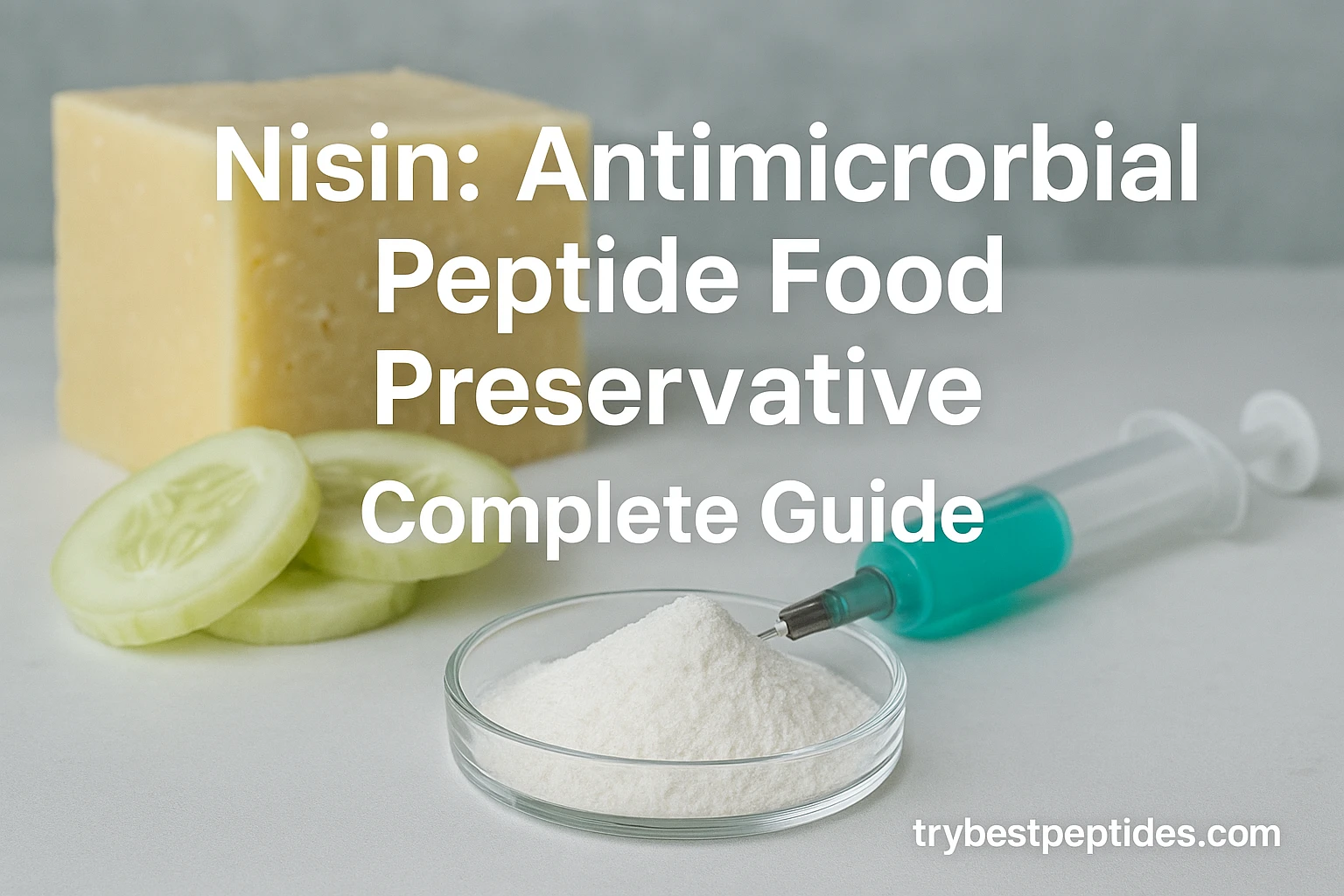
Nisin stands as one of the most effective and naturally-derived antimicrobial peptides available today, offering a safe and efficient solution for food preservation across multiple industries. Produced through fermentation by the bacterium Lactococcus lactis, this remarkable peptide has earned regulatory approval in numerous countries worldwide, including the United States, European Union, and Australia. With its proven ability to inhibit the growth of harmful bacteria while maintaining food safety and quality, nisin represents a significant advancement in food technology. This comprehensive guide explores the mechanisms of action, applications, regulatory status, and future potential of nisin as a food preservative and antimicrobial agent.
What is Nisin and How Does It Work?
Nisin is a naturally occurring antimicrobial peptide classified as a bacteriocin—a type of ribosomally synthesized antimicrobial protein produced by certain bacteria. Specifically, nisin is synthesized by Lactococcus lactis subspecies lactis through a fermentation process that has been refined over decades of scientific research and industrial application.
The peptide structure of nisin consists of 34 amino acids and contains unusual post-translational modifications, including lanthionine residues. These unique structural features distinguish nisin from conventional antibiotics and contribute significantly to its antimicrobial efficacy. The presence of these modified amino acids creates a distinctive mechanism of action that sets nisin apart in the landscape of food preservation agents.
Mechanism of Antimicrobial Action
Nisin's antimicrobial properties operate through multiple simultaneous mechanisms, making bacterial resistance development particularly unlikely. The primary mechanism involves the formation of pores in the bacterial cell membrane of target organisms. When nisin molecules interact with the bacterial cell wall, they disrupt the integrity of the lipid bilayer, creating channels that allow cellular contents to leak out. This disruption is lethal to the targeted bacteria.
Additionally, nisin inhibits cell wall synthesis in susceptible bacteria by interfering with peptidoglycan cross-linking, a critical component necessary for structural integrity. This dual-action approach provides both immediate bactericidal effects and prevents the development of adaptive bacterial resistance, a concern that plagues conventional antibiotic use in food preservation.
Applications in Food Industry
The food preservation industry has widely adopted nisin for its remarkable ability to extend shelf life and maintain product safety across diverse applications. Its versatility makes it suitable for numerous food categories, each with specific preservation challenges.
Dairy Products
Dairy applications represent one of the most established uses of nisin in food preservation. The peptide is particularly effective in cheese production, where it prevents the growth of Clostridium species that can cause unwanted gas production and spoilage. By incorporating nisin during the cheese-making process, producers can eliminate the need for high-temperature processing that might negatively impact flavor and texture profiles.
In yogurt and other fermented dairy products, nisin serves as an insurance policy against post-fermentation contamination, ensuring product stability throughout its intended shelf life. This application has proven especially valuable in extending the freshness of products without compromising their probiotic benefits.
Meat and Poultry Products
The meat industry benefits tremendously from nisin's antimicrobial properties, particularly in preventing the growth of Listeria monocytogenes and Clostridium botulinum, two major pathogens of concern in processed meat products. Processed meats such as ham, sausages, and deli meats can incorporate nisin to enhance safety margins while reducing dependence on traditional preservatives.
The peptide is also applied to fresh meat products as a surface treatment, creating an antimicrobial barrier that inhibits spoilage and pathogenic organisms without affecting the sensory qualities consumers expect.
Beverages and Other Applications
Beyond traditional applications, nisin finds utility in various beverage formulations, including certain dairy-based drinks and functional beverages. Its thermal stability at moderate temperatures makes it compatible with pasteurization processes, and its resistance to pH variations allows application across acidic and neutral beverage categories.
Other notable applications include processed vegetables, seafood products, and specialty food items designed for extended shelf life or specific market distribution requirements.
Regulatory Status and Safety Profile
Nisin's regulatory approval represents a significant validation of its safety and efficacy. The Food and Drug Administration (FDA) in the United States recognizes nisin as Generally Recognized As Safe (GRAS), allowing its use as a food additive without specific limitations on applications.
The European Food Safety Authority (EFSA) similarly approved nisin as a food additive (E234), establishing it as a permitted substance throughout European Union member states. Australia's Food Standards Code, along with regulatory bodies in Canada, Japan, and numerous other nations, have granted comparable approvals based on extensive safety evaluations.
Safety Assessment
The extensive safety data supporting nisin's regulatory approvals stems from its unique properties as a peptide. Since nisin is a protein composed of amino acids, it undergoes degradation through normal digestive processes, breaking down into constituent amino acids that the body metabolizes as standard nutritional components. This fundamental characteristic distinguishes it from synthetic preservatives that require specific metabolic pathways for elimination.
Toxicological studies have demonstrated the absence of acute or chronic toxicity at levels far exceeding those used in food applications. Additionally, nisin does not promote the development of resistant bacterial strains, a critical advantage over antibiotic applications in food preservation.
Production and Manufacturing
The production of nisin relies on fermentation technology, with Lactococcus lactis strains serving as the primary production organisms. Modern manufacturing processes have optimized fermentation parameters to maximize nisin yield while maintaining consistent quality standards.
Industrial production typically involves controlled fermentation in bioreactors where temperature, pH, oxygen levels, and nutrient composition are precisely managed. Following fermentation, nisin is extracted and purified through various chromatographic and precipitation techniques, resulting in concentrated preparations suitable for food industry applications.
The production process maintains sustainability advantages compared to chemical synthesis alternatives, as it utilizes renewable resources and generates minimal hazardous waste. Quality control protocols ensure batch consistency and purity, meeting the stringent specifications required by food manufacturers and regulatory authorities.
Advantages Over Traditional Preservatives
Nisin offers several compelling advantages compared to conventional chemical preservatives that have dominated the food industry for decades. As a natural antimicrobial peptide derived from a food-safe bacterium, nisin aligns with growing consumer preferences for clean-label products with recognizable ingredients.
Unlike some synthetic preservatives that generate controversy regarding long-term safety or undesirable sensory impacts, nisin operates effectively at relatively low concentrations. This efficiency translates to cost-effectiveness and minimal flavor or texture alterations in preserved products.
Furthermore, the resistance of pathogens to develop nisin resistance provides a significant public health advantage. Unlike antibiotics where resistance mechanisms can develop over time, the peptide's multiple simultaneous mechanisms of action make resistance development extraordinarily unlikely, preserving its effectiveness for sustained use.
Current Research and Future Potential
Ongoing research continues to explore expanded applications for nisin and related bacteriocins. Scientists investigate combinations of nisin with other natural antimicrobials to create synergistic preservation systems offering enhanced efficacy against broader bacterial spectra.
Emerging applications include incorporation into food packaging materials that release nisin gradually, creating antimicrobial surfaces that protect products throughout their distribution and storage periods. Such innovations represent the future of food preservation technology, combining the proven safety of nisin with cutting-edge delivery mechanisms.
Research into nisin's potential applications beyond food preservation—including pharmaceutical and cosmetic uses—continues to expand understanding of this remarkable peptide's versatility and therapeutic potential.
Conclusion
Nisin exemplifies how biotechnology can provide effective, safe solutions to persistent challenges in food safety and preservation. With decades of regulatory approval, extensive safety data, and proven effectiveness across diverse food categories, nisin has established itself as an indispensable tool in modern food manufacturing.
As consumer demand for clean-label products and natural ingredients continues to grow, nisin's prominence in the food preservation industry will likely increase. The peptide's unique properties—derived from a naturally occurring bacterium, completely safe upon ingestion, and effective at minimal concentrations—position it as an ideal solution for the future of sustainable food preservation. Continued research promises even more innovative applications that will further demonstrate nisin's value across multiple industries.
Key Takeaways
- Natural Origin: Nisin is a bacteriocin produced by Lactococcus lactis, making it a naturally derived antimicrobial agent with a clean-label advantage
- Multiple Mechanisms: The peptide disrupts bacterial cell membranes and inhibits cell wall synthesis through multiple simultaneous pathways, preventing resistance development
- Regulatory Approval: Nisin holds GRAS status in the USA, E234 approval in the EU, and regulatory clearance in numerous other countries worldwide
- Diverse Applications: Effective in dairy products, processed meats, beverages, and numerous other food categories requiring extended shelf life
- Safety Profile: As a peptide composed of amino acids, nisin breaks down during digestion and has demonstrated no toxicity in extensive safety evaluations
- Cost-Effective: Works at low concentrations, providing efficient preservation without requiring excessive quantities or sensory impacts
- Future Potential: Emerging applications include antimicrobial packaging and potential pharmaceutical uses, with ongoing research expanding nisin's versatility
-