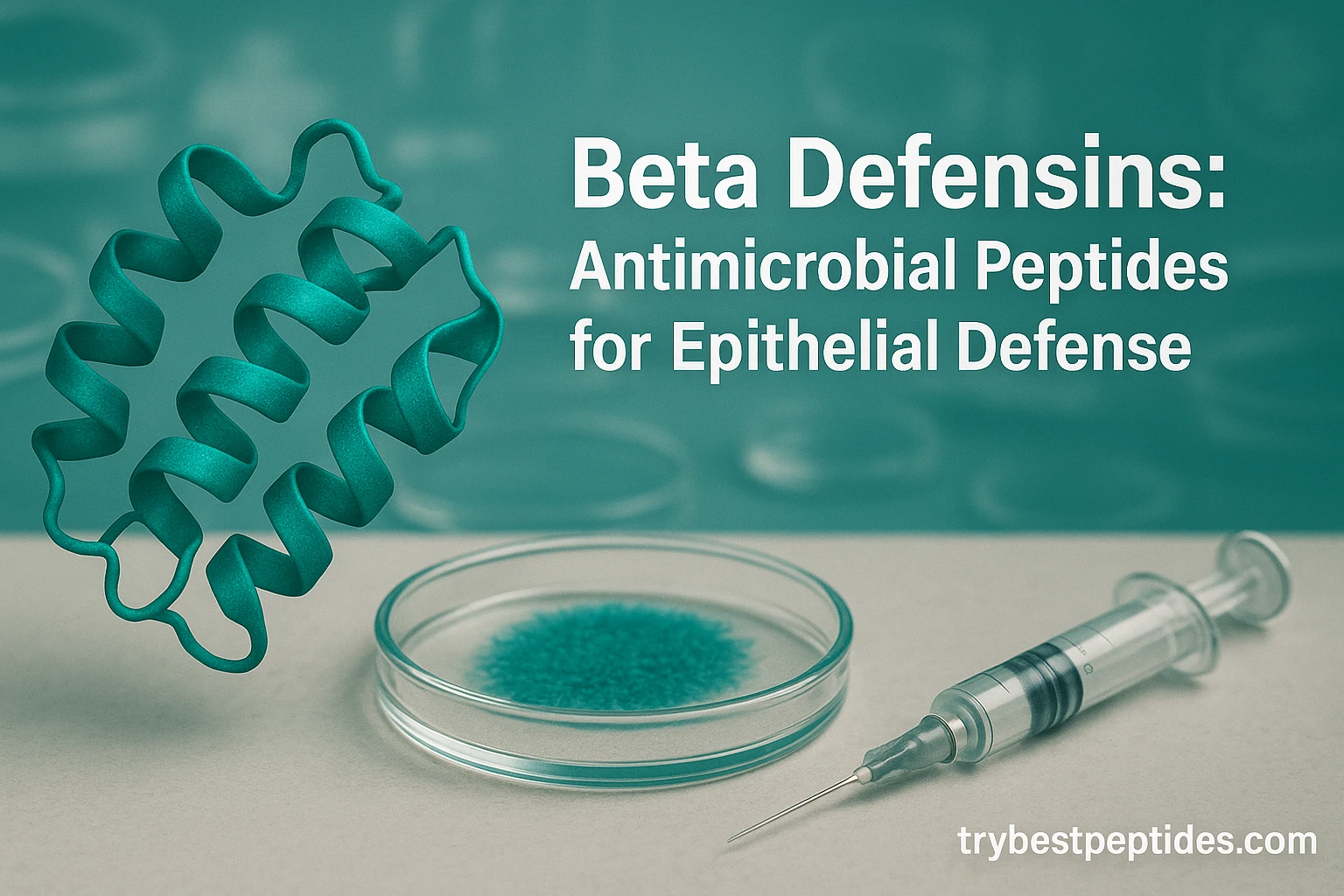
Beta defensins represent a crucial class of antimicrobial peptides that serve as the epithelial barrier's first line of defense against pathogenic microorganisms. These small, cationic proteins are naturally produced by various cell types within the body, including epithelial cells, immune cells, and keratinocytes, functioning as part of the innate immune system. Unlike antibodies that require prior sensitization, beta defensins provide immediate antimicrobial protection through direct interaction with microbial membranes. They exhibit remarkable versatility in combating bacteria, fungi, viruses, and parasites, making them invaluable subjects of medical research and therapeutic development. Understanding the mechanisms and functions of beta defensins is essential for advancing antimicrobial therapies and developing novel treatments for infections, inflammatory conditions, and immune disorders.
What Are Beta Defensins?
Beta defensins are small cationic antimicrobial peptides that belong to the broader defensin family, which represents one of the most ancient components of innate immunity. These peptides typically range from 18 to 45 amino acids in length and are characterized by their distinctive structural pattern of disulfide bonds, which provide remarkable stability and resistance to proteolytic degradation.
The classification of beta defensins distinguishes them from alpha defensins, primarily based on their structural architecture and spacing of cysteine residues. While alpha defensins are predominantly found in neutrophil granules, beta defensins are primarily synthesized by epithelial cells, making them crucial guardians of mucosal surfaces. The human genome encodes multiple beta defensin variants, including hBD-1 through hBD-4 and others, each with specialized functions and distribution patterns throughout the body.
The synthesis of beta defensins occurs in response to various stimuli, including bacterial lipopolysaccharides, pro-inflammatory cytokines, and direct microbial contact. This inducible nature allows epithelial tissues to rapidly amplify their antimicrobial defense mechanisms in response to infection or inflammation.
Mechanisms of Antimicrobial Action
Beta defensins execute their antimicrobial functions through several complementary mechanisms that work synergistically to eliminate pathogens. The primary mechanism involves direct interaction with microbial cell membranes, exploiting the structural differences between bacterial and host cell membranes.
Direct Membrane Disruption
The cationic nature of beta defensins allows them to electrostatically interact with the negatively charged bacterial cell membrane. Upon binding, these peptides insert into the lipid bilayer, creating pores or channels that disrupt membrane integrity. This leads to leakage of essential cellular contents, including potassium ions and metabolic intermediates, ultimately resulting in bacterial cell death. The amphipathic structure of beta defensins enables them to adopt configurations that facilitate both initial membrane binding and subsequent pore formation.
Intracellular Target Engagement
Beyond membrane disruption, beta defensins can penetrate bacterial cells and engage intracellular targets. Once inside the cell, they interfere with critical processes such as DNA replication, RNA synthesis, and protein translation. This multipronged approach makes it substantially more difficult for pathogens to develop resistance mechanisms, as simultaneous mutations in multiple cellular targets would be required.
Immune System Modulation
Beta defensins function not merely as direct antimicrobial agents but also as immunomodulatory molecules. They interact with pattern recognition receptors on immune cells, including toll-like receptors and G-protein coupled receptors, triggering inflammatory responses that enhance overall immune function. This capability to recruit and activate immune cells amplifies the protective effects beyond the peptides' direct antimicrobial activity.
Distribution and Production Sites
Beta defensins are synthesized in diverse tissues throughout the body, reflecting their importance in protecting multiple anatomical barriers. The respiratory tract epithelium constitutes a major production site, where beta defensins help defend against inhaled pathogens. Similarly, the gastrointestinal tract epithelium produces significant quantities of these peptides to protect against enteric pathogens.
The skin represents another critical production site, where keratinocytes synthesize beta defensins to provide continuous antimicrobial protection on the body's largest organ. Urogenital tissues also produce beta defensins, contributing to local defense mechanisms. Additionally, immune cells such as macrophages, dendritic cells, and B lymphocytes synthesize beta defensins, allowing them to participate in systemic immune responses.
Specific Beta Defensin Variants
Human Beta Defensin-1 (hBD-1)
hBD-1 is constitutively expressed in most epithelial tissues, providing baseline antimicrobial protection. This variant maintains relatively constant production levels and serves as the foundational defense mechanism. Its expression in the respiratory, urogenital, and gastrointestinal tracts provides comprehensive epithelial coverage.
Human Beta Defensin-2 (hBD-2)
hBD-2 represents the most inducible beta defensin variant, with expression dramatically increasing in response to inflammatory stimuli and bacterial infection. This responsiveness makes hBD-2 particularly important during acute infections, where rapid antimicrobial defense is critical.
Human Beta Defensin-3 (hBD-3)
hBD-3 exhibits potent broad-spectrum antimicrobial activity and demonstrates efficacy against both gram-positive and gram-negative bacteria, as well as fungi. This variant shows particularly strong activity against pseudomonas aeruginosa and other opportunistic pathogens.
Human Beta Defensin-4 (hBD-4)
hBD-4 displays selective antimicrobial properties and plays specialized roles in specific tissue environments. Its expression patterns and specific activities suggest distinct functional roles compared to other beta defensin variants.
Clinical Significance and Therapeutic Applications
Antimicrobial Resistance Solutions
As antibiotic resistance continues to escalate globally, beta defensins represent promising alternatives for developing novel antimicrobial therapies. Their multiple mechanisms of action and evolutionary success suggest resistance development is substantially more challenging than with conventional antibiotics.
Infectious Disease Treatment
Beta defensins demonstrate efficacy against diverse pathogens including methicillin-resistant Staphylococcus aureus (MRSA), multidrug-resistant gram-negative organisms, and various fungal species. Their application in treating complex wound infections, respiratory infections, and urinary tract infections shows considerable promise.
Inflammatory Condition Management
Beyond direct antimicrobial effects, beta defensins modulate inflammatory responses, suggesting therapeutic utility in managing inflammatory conditions characterized by excessive immune activation or dysbiosis.
Vaccine Adjuvant Development
The immunomodulatory properties of beta defensins make them attractive candidates for vaccine development, potentially enhancing immune responses to specific antigens.
Factors Affecting Beta Defensin Expression
Expression levels of beta defensins fluctuate based on numerous environmental and physiological factors. Bacterial colonization, viral infection, and fungal exposure all trigger upregulation of specific beta defensin variants. Inflammatory mediators including tumor necrosis factor-alpha and interleukin-1 beta stimulate increased production. Conversely, certain environmental conditions, nutritional deficiencies, and specific disease states may suppress beta defensin expression, potentially compromising epithelial defense.
Future Research Directions
Ongoing research continues to elucidate the precise mechanisms by which beta defensins execute their antimicrobial functions and modulate immune responses. Scientists are investigating synthetic peptide derivatives that enhance antimicrobial potency while maintaining stability and reducing potential side effects. Gene therapy approaches to amplify endogenous beta defensin production represent another promising avenue. Additionally, combination therapies integrating beta defensins with conventional antimicrobials or other immunomodulatory agents warrant further investigation.
Conclusion
Beta defensins constitute a sophisticated antimicrobial defense system that has evolved over millions of years to protect epithelial surfaces from diverse pathogenic threats. Their multifaceted mechanisms of action, spanning direct microbial killing to immune system modulation, make them invaluable components of innate immunity. As antibiotic resistance continues to pose escalating threats to public health, beta defensins and related antimicrobial peptides offer compelling alternatives for therapeutic development. Understanding their structure, function, and regulation facilitates the development of novel treatments for infections, inflammatory conditions, and immune disorders. The translation of beta defensin research into clinical applications promises to revolutionize antimicrobial therapy and enhance our capacity to combat resistant pathogens.
Key Takeaways
-
Structural Definition: Beta defensins are small cationic antimicrobial peptides with 18-45 amino acids, characterized by distinctive disulfide bond patterns that provide stability against degradation.
-
Multiple Mechanisms: These peptides eliminate pathogens through direct membrane disruption, intracellular target engagement, and immune system modulation, making resistance development particularly challenging.
-
Widespread Distribution: Beta defensins are synthesized by epithelial cells throughout the body, including respiratory, gastrointestinal, urogenital tracts, and skin, providing comprehensive antimicrobial coverage.
-
Diverse Variants: Different beta defensin types (hBD-1 through hBD-4) exhibit distinct expression patterns and antimicrobial spectra, with hBD-2 being highly inducible and hBD-3 showing broad-spectrum activity.
-
Therapeutic Potential: With rising antibiotic resistance, beta defensins represent promising alternatives for developing novel antimicrobial therapies, vaccine adjuvants, and immunomodulatory treatments.
-
Responsive Defense: Beta defensin expression increases in response to bacterial infection, viral exposure, and inflammatory signals, allowing dynamic adaptation of epithelial defenses to environmental threats.
-