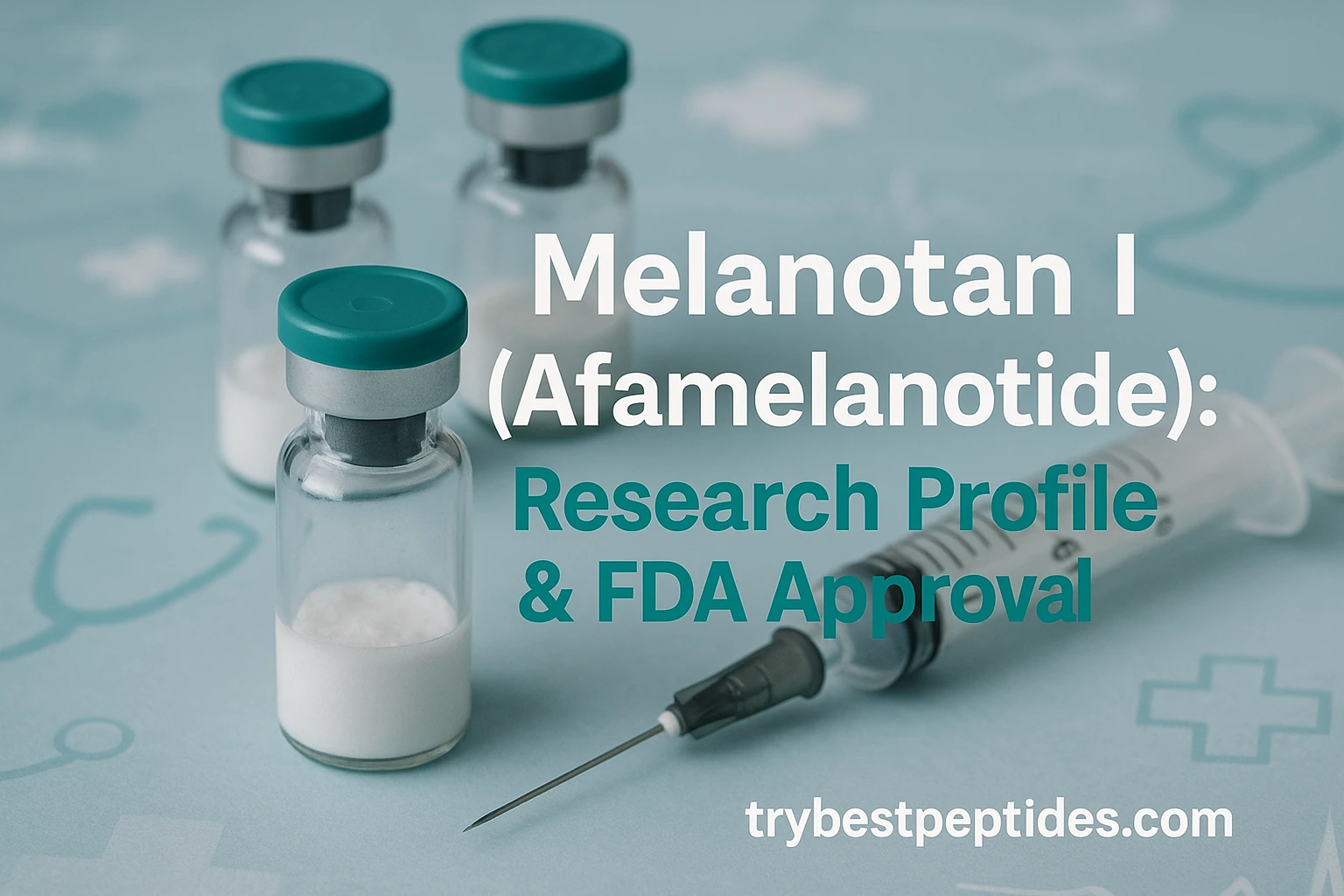
Melanotan I, scientifically known as Afamelanotide, represents a significant breakthrough in peptide research and pharmaceutical development. Unlike its more controversial counterpart Melanotan II, Melanotan I has achieved FDA approval, making it a legitimate therapeutic option in clinical settings. This peptide functions as a synthetic alpha-melanocyte-stimulating hormone (α-MSH) analog, designed to stimulate melanin production in the skin. Originally developed to address erythropoietic protoporphyria and other photosensitive conditions, Melanotan I has demonstrated considerable potential in dermatological applications. The distinction between Melanotan I and Melanotan II is crucial for researchers and medical professionals to understand, as the former maintains proper regulatory oversight while demonstrating measurable clinical efficacy. This comprehensive research profile examines the chemical properties, mechanism of action, clinical evidence, and regulatory status of this important peptide compound.
What Is Melanotan I (Afamelanotide)?
Melanotan I is a synthetic peptide analog of the naturally occurring hormone alpha-melanocyte-stimulating hormone (α-MSH). This 13-amino acid peptide was developed to enhance melanin production in human skin through targeted biological mechanisms. The compound has become notable in dermatology due to its ability to provide photoprotection and induce controlled pigmentation.
The peptide was initially synthesized in response to the need for improved treatment options for rare photodermatological conditions. Unlike topical sunscreen products, Melanotan I works systemically to enhance the skin's natural protective mechanisms. This approach offers a fundamentally different strategy for managing conditions where sun exposure presents significant health risks.
Melanotan I's development followed rigorous scientific protocols and extensive clinical testing, ultimately leading to its FDA approval under the brand name Scenesse. This regulatory achievement distinguishes it from numerous other peptides that remain in research-only status.
Chemical Structure and Properties
Melanotan I consists of a 13-amino acid peptide sequence that directly mimics the structure of endogenous α-MSH. The chemical composition includes specific amino acid residues that enable precise interaction with melanocortin-1 receptors (MC1R) in the skin.
The peptide's molecular structure features several critical characteristics that influence its biological activity:
- Amino acid sequence: Ac-Ser-Tyr-Ser-Met-Glu-His-Phe-Arg-Trp-Gly-Lys-Pro-Val-NH2
- Molecular weight: Approximately 1,817 Da
- Stability: Enhanced stability compared to native α-MSH through synthetic modifications
- Solubility: Designed for parenteral administration with appropriate pharmaceutical formulation
The synthetic modifications to the natural α-MSH sequence were specifically engineered to improve metabolic stability and extend the compound's biological half-life. These structural enhancements make Melanotan I more suitable for clinical application compared to the less stable natural hormone.
Mechanism of Action
Melanotan I exerts its effects through a well-characterized mechanism involving melanocortin receptor activation. The peptide binds selectively to melanocortin-1 receptors (MC1R), which are primary regulators of melanin synthesis in melanocytes.
When Melanotan I activates MC1R, a cascade of intracellular signaling events occurs:
- Receptor binding: The peptide binds to MC1R on the surface of melanocytes with high affinity and specificity
- Signal transduction: Activation triggers the cAMP (cyclic adenosine monophosphate) pathway
- Gene expression: Increased cAMP levels stimulate the expression of tyrosinase and related melanogenic enzymes
- Melanin synthesis: Enhanced enzyme activity results in increased melanin production and deposition in the skin
This mechanism provides endogenous protection against UV radiation by increasing the skin's natural pigmentation. The resulting melanin offers both UV-absorbing and antioxidant benefits, contributing to comprehensive photoprotection.
Unlike external sunscreen products that create a physical or chemical barrier, Melanotan I's approach strengthens the skin's inherent defense mechanisms. This distinction makes it particularly valuable for individuals with severe photosensitivity who cannot tolerate standard sun protection measures.
Clinical Research and Evidence
Clinical research supporting Melanotan I's efficacy has expanded significantly since its development. The compound has undergone rigorous testing protocols to establish safety and effectiveness in relevant patient populations.
FDA-Approved Indication
Melanotan I received FDA approval specifically for erythropoietic protoporphyria (EPP), a rare genetic disorder causing severe phototoxic reactions to sunlight. Patients with EPP experience severe pain, burning, and swelling within minutes of sun exposure, making normal daily activities challenging.
Clinical trials demonstrated that Melanotan I reduced phototoxic reactions and enabled patients to tolerate significantly increased sun exposure times. This approval represented a major advancement for EPP patients who previously lacked effective preventive treatments.
Additional Research Applications
Beyond EPP, research has explored Melanotan I's potential in various conditions:
- Polymorphous light eruption: Treatment of abnormal skin reactions to UV exposure
- Xeroderma pigmentosum: Potential application in DNA repair-deficient conditions
- General photoprotection: Use in individuals with extreme photosensitivity
- Cosmetic dermatology: Investigation of controlled pigmentation effects
The research evidence indicates consistent melanin induction across diverse patient populations, with variable effects depending on baseline skin type and genetic factors.
Melanotan I vs. Melanotan II
The distinction between Melanotan I and Melanotan II represents a critical consideration for researchers and medical professionals. These compounds differ substantially in regulatory status, receptor selectivity, and clinical applications.
| Characteristic | Melanotan I | Melanotan II |
|---|---|---|
| Regulatory Status | FDA-approved (Scenesse) | No FDA approval; research chemical |
| Amino Acid Sequence | 13-amino acid analog | Cyclic 7-amino acid structure |
| Receptor Selectivity | Primarily MC1R selective | Broader melanocortin receptor activity |
| Clinical Indications | Approved for EPP | No approved medical uses |
| Side Effects Profile | Mild and manageable | More variable; greater systemic effects |
| Medical Legitimacy | Established pharmaceutical product | Unregulated research compound |
Melanotan I's MC1R selectivity makes it more targeted in its effects, reducing potential off-target activation of other melanocortin receptors. This specificity contributes to its superior safety profile and regulatory approval status.
Melanotan II, by contrast, activates multiple melanocortin receptor subtypes, leading to broader systemic effects including potential impacts on appetite regulation, sexual function, and mood. The lack of regulatory oversight and variable formulation quality in uncontrolled markets makes Melanotan II significantly riskier for research or experimental use.
Safety Profile and Side Effects
Clinical data from Melanotan I trials indicates a favorable safety profile, particularly when compared to alternative treatments for photosensitive conditions.
Common Side Effects
Most adverse events associated with Melanotan I administration are mild and transient:
- Injection site reactions: Mild erythema, swelling, or discomfort at administration sites
- Nausea: Occasional mild gastrointestinal effects
- Headache: Mild headaches reported in some subjects
- Darkening of existing nevi: Expected enhancement of melanin in pre-existing moles
Important Safety Considerations
Several critical safety factors warrant attention from clinical perspectives:
- Skin lesion monitoring: Regular dermatological examination recommended due to increased pigmentation
- Melanoma risk: Theoretical concerns about melanoma risk remain under investigation; current evidence does not demonstrate increased incidence in approved clinical populations
- Cumulative UV exposure: Melanotan I enhances photoprotection but does not eliminate the need for sun avoidance in severe cases
- Individual sensitivity variation: Response varies based on baseline melanin production and genetic factors
The safety data from FDA-approved clinical use provides substantially more reliable information than data from uncontrolled research chemical markets.
Legal Status and Availability
Melanotan I's legal status differs markedly depending on regulatory jurisdiction and intended use.
FDA-Approved Status
In the United States, Melanotan I is marketed as Scenesse (afamelanotide) following FDA approval. This approval restricts distribution to licensed pharmacies and requires valid medical prescriptions. The approved indication remains specific to erythropoietic protoporphyria.
International Regulatory Status
Outside the United States, regulatory approaches vary:
- European Union: Approved for EPP and other serious photodermatoses
- Canada: Available through regulated pharmaceutical pathways
- Australia: Approved for specific photosensitive conditions
- Other jurisdictions: Status varies by country-specific regulations
Research and Availability
For legitimate research purposes, Melanotan I can be obtained through:
- Clinical trial enrollment: Participation in approved research protocols
- Institutional research programs: Access through accredited research facilities
- Regulated pharmaceutical suppliers: Licensed distributors providing research-grade material with proper documentation
The distinction between regulated pharmaceutical products and uncontrolled research chemicals remains crucial for safety and legal compliance.
Frequently Asked Questions
How quickly does Melanotan I induce melanin production? Melanin induction typically begins within days of administration, with maximal effects developing over 2-4 weeks depending on individual factors and dosing schedules.
Does Melanotan I increase melanoma risk? Current clinical evidence from FDA-approved use does not demonstrate increased melanoma incidence. However, individuals with personal or family history of melanoma require careful medical evaluation before use.
Can Melanotan I replace sunscreen entirely? No. Even with Melanotan I treatment, sun exposure remains limited for individuals with serious photosensitive conditions. The peptide enhances photoprotection but does not eliminate the need for comprehensive sun avoidance strategies.
What is the typical dosing schedule? FDA-approved Scenesse involves subcutaneous injections administered according to specific clinical protocols determined by prescribing physicians.
Is Melanotan I suitable for cosmetic use? FDA approval is restricted to medical indications. Use solely for cosmetic pigmentation purposes falls outside approved applications and may carry uncharacterized risks.
Conclusion
Melanotan I (Afamelanotide) represents a scientifically validated peptide therapeutic with legitimate FDA approval and established clinical applications. The compound's selective activation of melanocortin-1 receptors provides a targeted mechanism for enhancing endogenous photoprotection, making it valuable for individuals with serious photosensitive conditions.
The critical distinction between Melanotan I and Melanotan II cannot be overstated. Melanotan I's regulatory approval, research support, and clinical track record establish it as a legitimate pharmaceutical product, whereas Melanotan II remains an unregulated research chemical with significant safety uncertainties.
For researchers and medical professionals, understanding Melanotan I's mechanism, clinical evidence, and regulatory status is essential for informed decision-making. The peptide's success in treating erythropoietic protoporphyria demonstrates the potential of well-designed peptide therapeutics to address previously intractable medical conditions.
Future research may expand approved indications and refine understanding of long-term safety profiles. As peptide science continues advancing, Melanotan I serves as an exemplary model of rigorous development, proper regulatory oversight, and legitimate therapeutic application.
Key Takeaways
- Melanotan I (Afamelanotide) is an FDA-approved 13-amino acid peptide analog that enhances melanin production through melanocortin-1 receptor activation
- The compound is approved specifically for erythropoietic protoporphyria (EPP) under the brand name Scenesse, distinguishing it from unapproved research chemicals
- Melanotan I differs fundamentally from Melanotan II in regulatory status, receptor selectivity, and clinical safety profile
- The peptide's mechanism works by stimulating natural skin defense mechanisms rather than providing external protection
- Safety data from clinical use indicates a favorable profile with mild, manageable side effects in approved applications
- Current evidence does not demonstrate increased melanoma risk with regulated clinical use, though continued monitoring remains important
- Legal availability varies by jurisdiction; in the U.S., it requires medical prescription for approved indications
- The peptide exemplifies the importance of distinguishing between FDA-approved pharmaceuticals and unregulated research chemicals
-