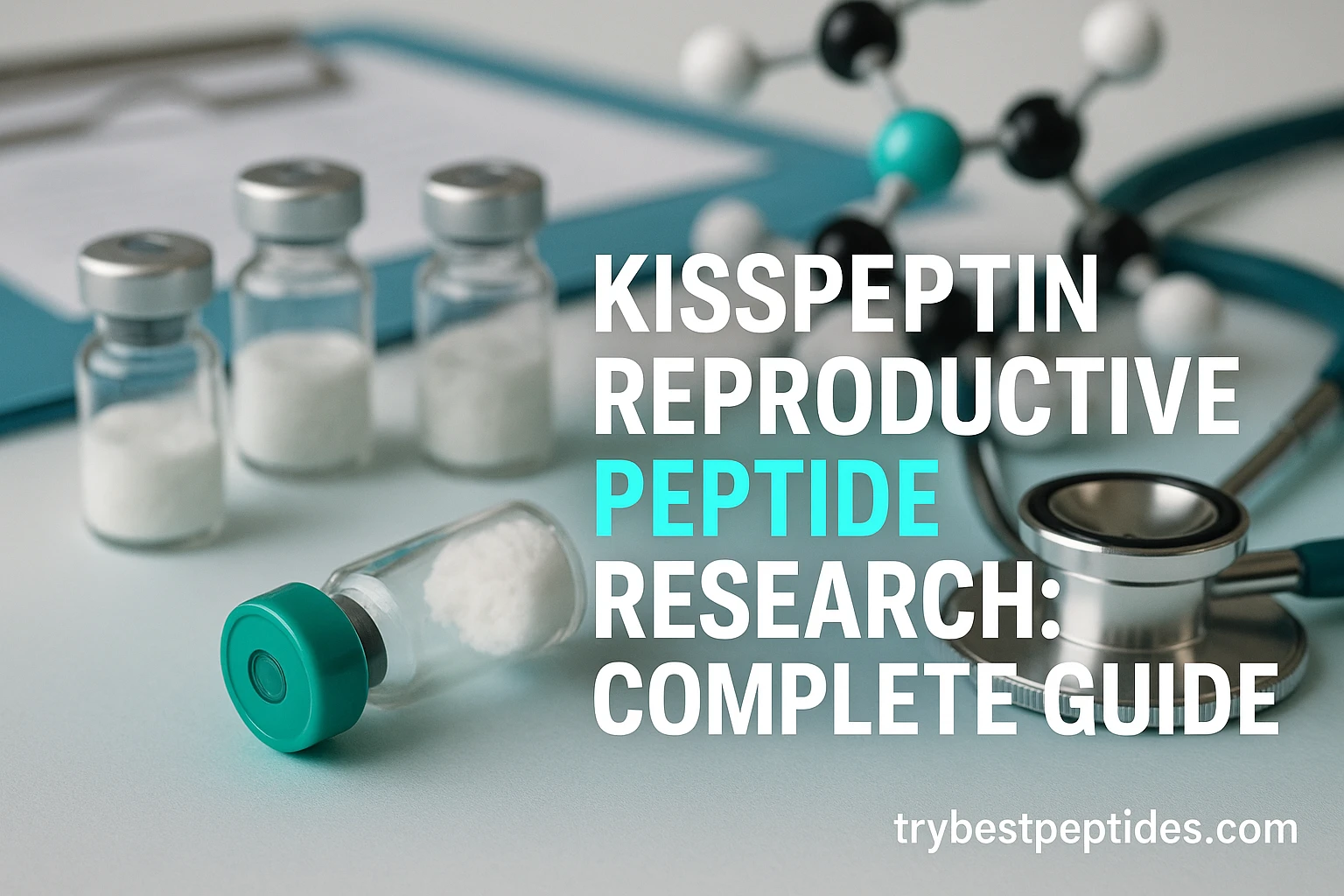
Kisspeptin stands as one of the most critical neuropeptides in human physiology, functioning as the master regulator of the entire reproductive system. Encoded by the KISS1 gene and operating through the GPR54 receptor, this remarkable peptide orchestrates the complex cascade of events that initiate puberty, regulate fertility, and control the release of reproductive hormones throughout the lifespan. Understanding kisspeptin's mechanisms has opened new avenues for addressing reproductive disorders, infertility, and hormonal imbalances. This comprehensive guide explores the science behind kisspeptin, its biological functions, current research applications, and the regulatory landscape surrounding this significant peptide.
What Is Kisspeptin?
Kisspeptin is a neuropeptide comprising 54 amino acids that plays a fundamental role in reproductive endocrinology. The peptide's name derives from Hershey's Kiss candies, as it was discovered in Hershey, Pennsylvania. Scientists identified it as a metastasis suppressor, but its most significant function relates to reproductive regulation.
The KISS1 gene encodes kisspeptin, which is subsequently processed into shorter bioactive peptides. These fragments, particularly kisspeptin-10 and kisspeptin-54, interact with the GPR54 receptor (also known as KISS1R), a G-protein coupled receptor found throughout the central and peripheral nervous system.
Kisspeptin neurons are strategically distributed in the hypothalamus, the brain region responsible for coordinating hormone release. This anatomical positioning enables kisspeptin to directly influence the hypothalamic-pituitary-gonadal (HPG) axis, the primary regulatory system governing reproduction.
How Kisspeptin Works: The Mechanism
Kisspeptin functions through a sophisticated signaling cascade that triggers the release of gonadotropin-releasing hormone (GnRH). This process represents the foundational step in reproductive hormone regulation.
The GPR54 Receptor Pathway
When kisspeptin binds to GPR54 receptors located on GnRH neurons, it initiates a cascade of intracellular signaling events. This interaction activates phospholipase C, increases intracellular calcium levels, and ultimately stimulates GnRH secretion. GnRH then travels through the hypothalamic-pituitary portal system to trigger the anterior pituitary gland.
The pituitary responds by releasing two essential hormones: follicle-stimulating hormone (FSH) and luteinizing hormone (LH). These gonadotropins act on the testes and ovaries to promote sex hormone production and gamete development.
Puberty and Reproductive Development
Kisspeptin appears to act as a critical "on switch" for puberty. Research demonstrates that kisspeptin signaling remains suppressed throughout childhood, then activates during adolescence to initiate the pubertal transition. Mutations affecting the KISS1 gene or GPR54 receptor result in hypogonadotropic hypogonadism, characterized by delayed or absent puberty.
Hormonal Feedback Regulation
The reproductive system employs negative feedback mechanisms to maintain hormonal balance. Elevated testosterone and estrogen levels suppress kisspeptin expression, while declining sex hormone concentrations increase kisspeptin signaling. This elegant feedback system ensures physiological hormone levels.
Forms of Kisspeptin in Research
Scientists studying kisspeptin have utilized various peptide fragments, each with distinct properties and applications:
Kisspeptin-54 represents the full-length peptide and serves as the primary form in circulation. This 54-amino acid sequence exhibits high biological activity but demonstrates relatively short stability in vivo.
Kisspeptin-10 is a shorter fragment derived from C-terminal processing. Despite its reduced size, kisspeptin-10 maintains potent biological activity comparable to the full-length peptide. Researchers often employ kisspeptin-10 in experimental settings due to its enhanced stability and simplified synthesis.
Modified variants include structural analogues designed to improve pharmacokinetic properties. These modifications may enhance receptor binding affinity, increase half-life, or improve bioavailability, making them valuable research tools.
Research Applications and Current Studies
Kisspeptin research has expanded significantly due to its potential therapeutic applications across multiple conditions affecting reproductive health and endocrine function.
Infertility and Reproductive Disorders
Kisspeptin dysregulation contributes to various forms of infertility. Conditions characterized by hypogonadotropic hypogonadism—including congenital hypogonadotropic hypogonadism (CHH)—involve kisspeptin signaling defects. Research initiatives explore whether kisspeptin-based interventions could restore fertility in affected individuals.
Hormone Replacement Applications
Researchers investigate kisspeptin's role in optimizing reproductive hormone delivery. Unlike conventional hormone replacement therapy, kisspeptin acts upstream in the hormonal cascade, potentially providing more physiological hormone pulsatility and avoiding certain side effects associated with direct hormone administration.
Metabolic and Neuroendocrine Research
Emerging evidence suggests kisspeptin influences energy homeostasis and metabolic regulation beyond reproduction. Some studies examine kisspeptin's potential role in appetite control, insulin sensitivity, and energy expenditure, opening possibilities for metabolic disorder research.
Clinical Trials and Human Studies
Human research evaluating kisspeptin represents an exciting frontier in reproductive medicine. Several clinical investigations have demonstrated safety and preliminary efficacy:
Phase I Safety Studies established that kisspeptin administration to healthy volunteers produces predictable hormonal responses without serious adverse events. These foundational studies confirmed that exogenous kisspeptin successfully stimulates the HPG axis in humans.
Infertility Treatment Trials have enrolled patients with hypogonadotropic hypogonadism. Preliminary results indicate that chronic kisspeptin administration can restore spermatogenesis and fertility markers in men with this condition. Similarly, studies in women have examined whether kisspeptin treatment restores ovulatory function.
Contraception Research explores whether selective antagonism of kisspeptin signaling might offer novel contraceptive approaches by suppressing HPG axis activity without affecting other physiological systems.
Safety and Side Effects
Available human data suggests kisspeptin demonstrates a favorable safety profile, though long-term effects require continued investigation:
Acute responses to kisspeptin administration typically include transient increases in LH and FSH, accompanied by mild facial flushing and headache in some subjects. These effects resolve quickly following peptide administration.
Reproductive safety appears favorable in short-term studies, with no unexpected effects on testicular size, sperm morphology, or ovarian function observed at therapeutic doses.
Systemic effects require ongoing assessment, particularly regarding cardiovascular function, metabolic parameters, and potential long-term effects on non-reproductive tissues expressing GPR54 receptors.
The limited human safety database necessitates continued monitoring in clinical trials and careful adverse event documentation.
Legal and Regulatory Status
Kisspeptin's regulatory classification varies by jurisdiction and specific application context:
In most countries, kisspeptin remains classified as a research chemical without approved pharmaceutical status. The United States FDA has not approved kisspeptin for clinical use outside investigational settings. Researchers and institutions must obtain appropriate regulatory approval before conducting human studies.
The European Medicines Agency similarly classifies kisspeptin as an investigational substance. Clinical trials proceed under strict regulatory oversight with comprehensive informed consent and safety monitoring requirements.
Researchers and practitioners should verify their local regulations before procurement or use. The peptide's legal status differs from pharmaceutical medications and requires careful attention to research-grade specifications and institutional review board approval.
Key Takeaways
- Kisspeptin serves as the master regulator of the human reproductive system, controlling puberty onset, fertility, and reproductive hormone release through the GPR54 receptor
- The peptide initiates the HPG axis by stimulating GnRH secretion, triggering a cascade that releases FSH and LH from the pituitary gland
- Multiple kisspeptin variants exist in research, including the full-length kisspeptin-54 and the shorter but equally potent kisspeptin-10 fragment
- Current research explores applications in infertility treatment, hormone optimization, and metabolic regulation with promising preliminary results
- Safety profiles appear favorable in available human studies, though long-term effects require continued investigation in clinical trials
- Regulatory status remains investigational in most jurisdictions, requiring appropriate oversight and institutional approval for human research
Conclusion
Kisspeptin represents a transformative discovery in reproductive endocrinology, offering fundamental insights into how the body regulates fertility and pubertal development. The peptide's role as the master regulator of the HPG axis positions it as a potential therapeutic target for numerous reproductive disorders affecting millions globally.
As research continues to elucidate kisspeptin's mechanisms and therapeutic potential, clinical applications appear increasingly promising. Current human studies demonstrate safety and efficacy in restoring reproductive function in individuals with kisspeptin-responsive disorders. The peptide's upstream position in hormonal regulation may offer advantages over conventional hormone replacement approaches by maintaining more physiological hormone pulsatility.
Future research directions include expanding clinical trial populations, investigating long-term safety and efficacy, and exploring potential applications in metabolic and neuroendocrine disorders. As the scientific understanding deepens and regulatory frameworks evolve, kisspeptin-based therapies may become valuable tools in reproductive medicine.
-