Pentadecarginine, commonly abbreviated as PDA, represents an emerging area of peptide research that builds upon decades of scientific investigation into related compounds. Most researchers first encounter this peptide through its connection to BPC-157, the renowned "Body Protection Compound" discovered in human gastric juice. While BPC-157 has accumulated significant evidence over thirty years for its potential in tissue healing, gut repair, and anti-inflammatory applications, pentadecarginine offers a distinct biochemical profile worth exploring. This comprehensive guide examines the current research on pentadecarginine, its mechanisms of action, practical administration considerations, and what the scientific literature reveals about its safety and efficacy. Whether you're a researcher, healthcare professional, or science enthusiast, understanding pentadecarginine's role in peptide research requires examining both what we know and acknowledging current knowledge gaps.
What Is Pentadecarginine?
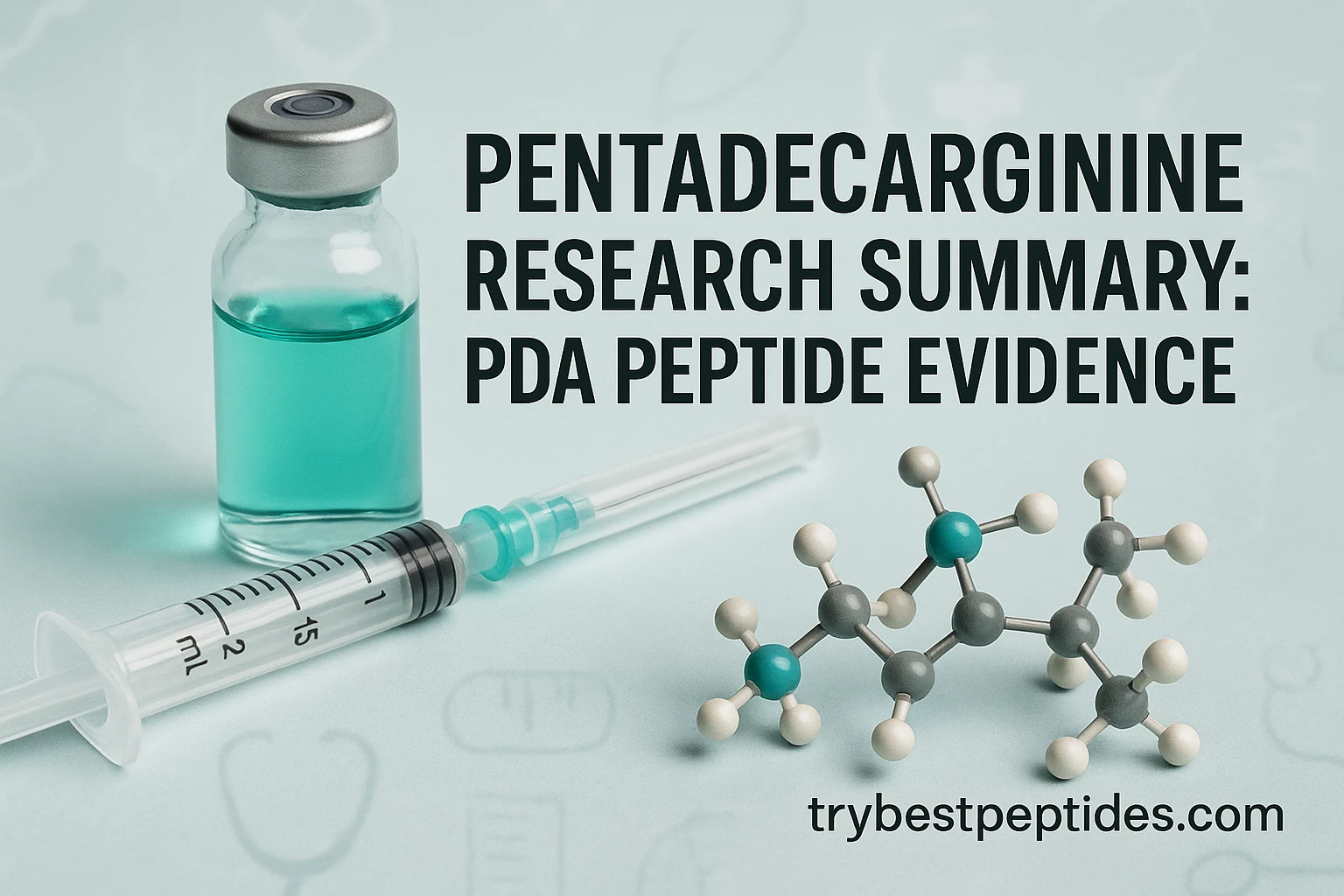
Pentadecarginine is a synthetic peptide composed of fifteen arginine amino acids linked in sequence. The name itself reflects this structure: "penta" indicating five units, and "deca" indicating ten, totaling fifteen arginine residues. This straightforward composition contrasts with the more complex structure of BPC-157, which consists of fifteen amino acids of varying types arranged in a specific sequence.
The arginine-rich composition gives pentadecarginine unique biochemical properties. Arginine is a semi-essential amino acid known for its roles in nitric oxide production, immune function, and protein synthesis. By concentrating fifteen of these residues into a single peptide chain, researchers have created a compound with distinctive cellular interaction patterns.
As a research peptide, pentadecarginine exists primarily in scientific literature rather than as an established therapeutic agent. The compound has attracted attention from researchers investigating cell-penetrating peptides and compounds with potential applications in tissue repair and cellular signaling.
Understanding the Arginine Difference: Why the Salt Form Matters
The distinction between pentadecarginine and related compounds lies fundamentally in arginine composition. Where BPC-157 contains just two arginine residues among its fifteen amino acids, pentadecarginine consists entirely of arginine units. This compositional difference produces substantial variations in how these compounds interact with biological systems.
Arginine's biochemical functions include several mechanisms relevant to research:
- Nitric oxide production: Arginine serves as a substrate for nitric oxide synthase, an enzyme critical for vascular function and cellular signaling
- Protein synthesis: As a standard amino acid, arginine participates in normal protein construction and repair mechanisms
- Immune function: Arginine influences T-cell function and immune response regulation
- Membrane interactions: The positively charged arginine residues affect how the peptide interacts with cell membranes
When formulated as a salt (such as the hydrochloride form), pentadecarginine gains enhanced solubility and stability properties. This salt formulation makes the compound more suitable for research applications requiring precise dosing and consistent delivery.
Mechanisms of Action
Pentadecarginine's mechanism of action reflects its unique arginine composition. As a cell-penetrating peptide, it demonstrates several theoretical mechanisms:
Cell membrane penetration represents the primary characteristic of arginine-rich peptides. The multiple positive charges on arginine residues allow pentadecarginine to interact with the negatively charged phospholipid bilayer of cell membranes, facilitating cellular uptake without requiring specific receptors.
Nitric oxide pathway activation occurs through arginine's role as a nitric oxide synthase substrate. In theoretical models, pentadecarginine could influence vascular tone, blood flow, and tissue-level signaling through nitric oxide production.
Protein interaction possibilities exist due to the peptide's charge characteristics. Positively charged peptides interact differently with various cellular proteins compared to neutral or negatively charged compounds.
Current research remains limited regarding pentadecarginine's specific mechanisms in living organisms. Most mechanistic data comes from in vitro studies and theoretical biochemical modeling rather than comprehensive animal or human trials.
Current Research Evidence
The research landscape for pentadecarginine differs substantially from that of BPC-157. While BPC-157 boasts hundreds of publications spanning multiple decades, pentadecarginine remains a more recent focus with fewer peer-reviewed studies examining its effects.
Available research generally categorizes into several areas:
Cell-penetrating peptide properties have been documented in laboratory studies examining pentadecarginine's ability to cross cell membranes. These fundamental studies establish the compound's basic biochemical characteristics but don't necessarily translate to therapeutic efficacy in living systems.
Arginine metabolism research provides indirect evidence about pentadecarginine's potential effects. Since arginine influences nitric oxide production and immune function, pentadecarginine's fifteen-arginine structure theoretically amplifies these effects, though direct comparative studies remain limited.
Tissue repair applications have been theoretically proposed based on arginine's known biological roles, but direct experimental evidence specific to pentadecarginine remains sparse. Most tissue repair research in arginine-rich peptides focuses on compounds with additional amino acid residues or modifications.
The limited research base means that many claims about pentadecarginine's benefits remain speculative. Researchers and medical professionals distinguish between theoretical mechanisms and demonstrated effects in appropriate experimental models.
Administration and Dosing Considerations
As a research compound, pentadecarginine lacks standardized clinical dosing protocols. Information about administration comes primarily from laboratory research protocols rather than established therapeutic guidelines.
Research-grade studies typically employ pentadecarginine in the following contexts:
- Intravenous administration in controlled laboratory settings
- Subcutaneous injection in animal model research
- Topical application in specific experimental protocols
- In vitro cellular studies using various concentrations
Dosing in animal research varies widely depending on the specific experimental question being addressed. Some studies utilize microgram quantities in cell culture, while others employ milligram-per-kilogram doses in animal models.
The lack of human trial data means that appropriate dosing for any putative human application remains undetermined. Extrapolating from animal studies to human-relevant doses requires careful pharmacokinetic and safety data that currently doesn't exist in the published literature.
Safety Profile and Side Effects
Information about pentadecarginine's safety comes from limited sources: in vitro studies, animal research, and theoretical considerations based on arginine biochemistry. Comprehensive human safety data does not currently exist.
Theoretical safety considerations include:
- Arginine's known effects on blood pressure and vascular function
- Potential immune stimulation from arginine-rich peptides
- Interactions with nitric oxide pathways and related signaling
- Possibility of allergic responses to synthetic peptides
Animal research findings in available literature generally report tolerability at research dosages, though comprehensive toxicology studies specifically examining pentadecarginine remain limited.
Regulatory status as a research compound means pentadecarginine is not approved for human therapeutic use in most jurisdictions. Its status parallels other research peptides—legal for scientific investigation but not for clinical application or human consumption.
Limitations of Current Research
Several important limitations characterize the current pentadecarginine research landscape:
Limited publication volume means fewer independent research groups have examined this compound compared to established peptides. This reduces the opportunity for confirmation and refutation of findings across different laboratories.
Lack of large-scale studies means we possess no comprehensive data on pentadecarginine's effects in diverse populations or across varied physiological conditions. Most available research involves limited sample sizes or specific experimental conditions.
Absence of human trials represents the most significant limitation. Peptide research frequently shows promising laboratory results that fail to translate to human applications. Without appropriate clinical trials, claims about human efficacy remain purely speculative.
Publication bias potentially skews our understanding—studies showing positive results may be more likely to reach publication than negative or null findings.
Frequently Asked Questions
Q: Is pentadecarginine the same as BPC-157? A: No. While both are peptides connected to repair research, they have entirely different amino acid compositions. BPC-157 contains fifteen diverse amino acids, while pentadecarginine contains fifteen arginine residues exclusively.
Q: Can pentadecarginine be purchased for human use? A: Pentadecarginine remains a research compound without therapeutic approval. Any marketing for human consumption would be improper and potentially illegal depending on jurisdiction.
Q: How does pentadecarginine compare to other cell-penetrating peptides? A: Pentadecarginine is one of many arginine-rich cell-penetrating peptides. Its specific advantages or disadvantages versus alternatives haven't been systematically established in comparative research.
Q: What future research directions seem most promising? A: Comparative efficacy studies against established peptides, comprehensive safety pharmacology, and potential applications in cell-based therapies represent promising research directions.
The Bottom Line
Pentadecarginine represents an interesting research direction in peptide science, building on our understanding of arginine biochemistry and cell-penetrating peptides. However, current evidence remains preliminary, consisting largely of theoretical mechanisms and limited experimental data rather than comprehensive proof of efficacy.
The scientific literature demonstrates pentadecarginine's basic biochemical properties and cell-penetrating capabilities, but substantial gaps exist between laboratory findings and potential clinical applications. Researchers continue investigating its mechanisms and potential applications, but drawing firm conclusions about therapeutic benefits would be premature based on existing evidence.
As with any emerging research compound, appropriate skepticism toward exaggerated claims remains warranted. The responsible approach involves acknowledging what current research actually demonstrates while recognizing significant limitations in our present understanding. Future studies may clarify pentadecarginine's role in peptide science and establish whether theoretical mechanisms translate to meaningful biological effects in living organisms.
Key Takeaways
- Pentadecarginine is an arginine-rich synthetic peptide composed of fifteen arginine amino acids, distinguishing it from other compounds like BPC-157
- Limited research currently exists compared to established peptides, meaning many claims remain speculative rather than evidence-based
- Cell-penetrating properties appear documented in laboratory studies, but translation to therapeutic applications requires further investigation
- No human safety or efficacy data exists; pentadecarginine remains primarily a research compound without clinical approval
- Future studies comparing pentadecarginine to other peptides and examining potential applications could clarify its scientific utility
- Caution is warranted regarding marketing claims or suggestions of human use until appropriate research establishes safety and efficacy
-