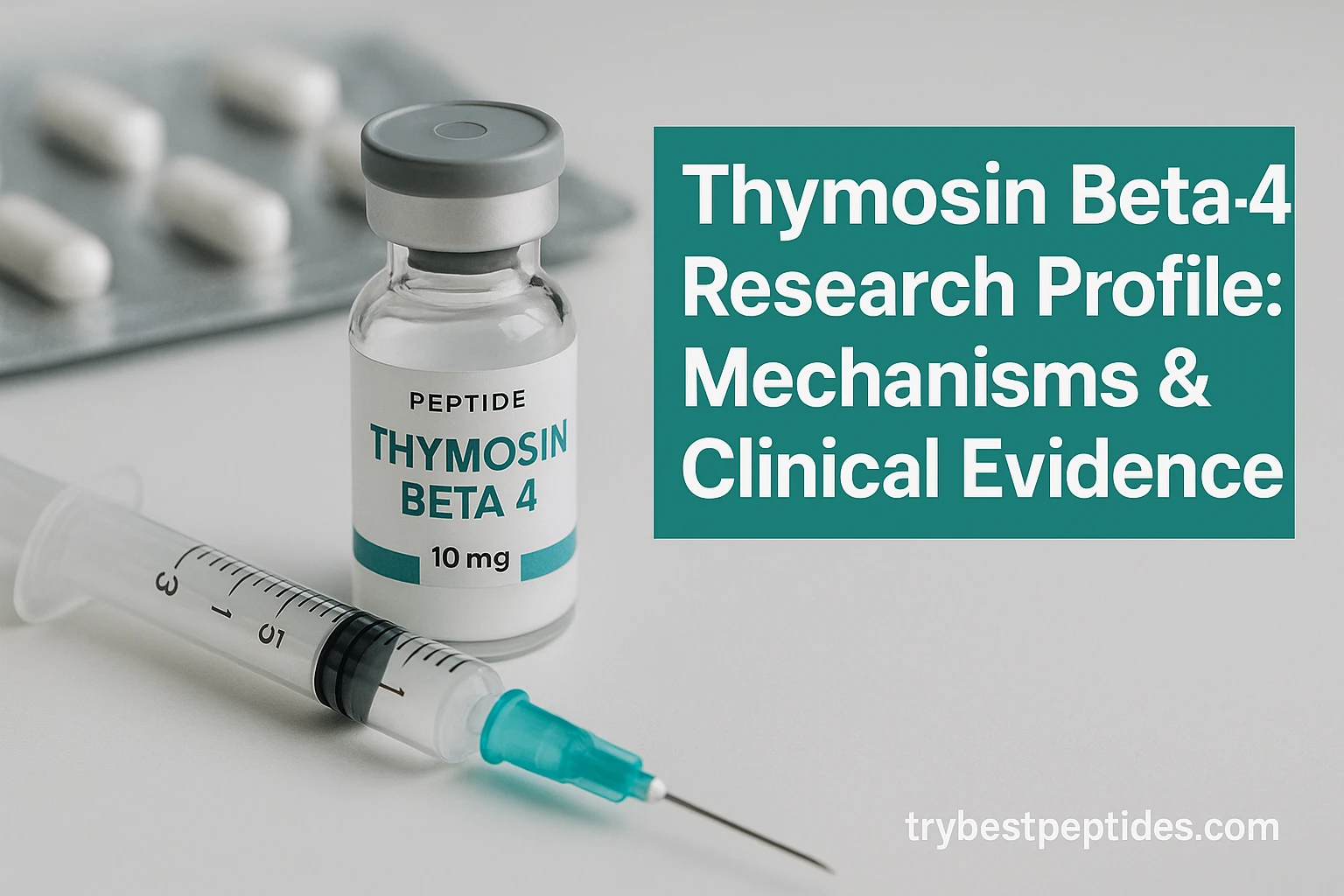
Thymosin Beta-4 (TB-4) represents one of the most thoroughly studied regenerative peptides in modern research. This 43-amino-acid peptide occurs naturally in nearly every human cell, making it a central subject of interest for scientists exploring tissue repair and healing mechanisms. Unlike synthetic alternatives, TB-4 works within the body's existing biological frameworks, promoting angiogenesis, reducing inflammation, and facilitating cellular migration. Recent Phase 3 clinical trials have demonstrated promising results in eye healing applications, while ongoing research continues to explore its potential in cardiac repair, neurological healing, and musculoskeletal recovery. This comprehensive profile examines the current scientific evidence, mechanisms of action, and regulatory landscape surrounding this remarkable peptide.
What Is Thymosin Beta-4?
Thymosin Beta-4 is an endogenous peptide composed of 43 amino acids that plays a crucial role in cellular regeneration and immune modulation. The peptide exists naturally throughout human tissues, with particularly high concentrations in wound fluid, platelets, and immune cells. Its name derives from the thymus gland, where it was first identified, though it's now understood to be ubiquitously distributed across the body.
The peptide functions as a G-actin binding protein, meaning it interacts with actin—a fundamental protein involved in cell movement and structure. This interaction enables TB-4 to influence cell migration patterns, promoting the movement of cells toward damaged or injured areas where healing is needed. This mechanism makes TB-4 particularly valuable for research into accelerated tissue repair without stimulating cell proliferation in uncontrolled ways.
What distinguishes TB-4 from other regenerative compounds is its multi-faceted approach to healing. Rather than triggering a single pathway, TB-4 simultaneously addresses inflammation, promotes new blood vessel formation, and facilitates cell protection and migration. This comprehensive mechanism has attracted significant attention from researchers worldwide.
TB-4 vs. TB-500: Understanding the Difference
Two primary forms of thymosin beta peptides dominate the research landscape: Thymosin Beta-4 (TB-4) and TB-500. Understanding the distinction between these compounds is essential for proper research application.
TB-4 is the authentic, full-length 43-amino-acid peptide as it occurs naturally in the human body. It represents the complete, unmodified version and serves as the basis for most contemporary clinical trials.
TB-500 typically refers to TB-4 that has been acetylated (with an acetyl group attached to its N-terminus) to improve stability and bioavailability. This modification extends the peptide's half-life, allowing it to remain active longer within biological systems. TB-500 was originally marketed as a branded product, though the term is now used generically for modified TB-4 variants.
For research purposes, TB-4 in its native form remains the focus of most peer-reviewed studies and clinical trials, while TB-500 modifications are primarily employed in research environments where extended stability is beneficial.
Key Fragments: Ac-SDKP and LKKTETQ
Research has identified specific sequences within the TB-4 structure that carry particular biological significance. These fragments represent areas of concentrated therapeutic potential.
Ac-SDKP is a four-amino-acid sequence that functions as an independent bioactive fragment. This sequence demonstrates remarkable efficacy in reducing cardiac fibrosis and promoting cardiac healing—research shows it can work independently of the complete TB-4 molecule.
LKKTETQ represents another functionally important region, contributing to TB-4's anti-inflammatory and cell-protective properties. This fragment has demonstrated value in neuroprotection studies and appears particularly relevant for neural repair applications.
Understanding these fragments allows researchers to design more targeted studies and potentially develop therapeutic approaches with enhanced specificity. The identification of active regions within TB-4 has opened new avenues for peptide-based therapeutic development.
Mechanism of Action
Thymosin Beta-4 operates through multiple interconnected biological pathways, making it unique among regenerative compounds. Its mechanisms can be categorized into several distinct but overlapping areas:
Actin Binding and Cell Migration: TB-4 binds to G-actin monomers, preventing their polymerization into F-actin filaments. This process regulates cell movement and morphology, directing cells toward areas requiring repair. By controlling actin dynamics, TB-4 essentially creates a biological "traffic system" that mobilizes healing cells to damaged tissues.
Angiogenesis Promotion: The peptide stimulates endothelial cell proliferation and migration, encouraging the formation of new blood vessels. This is critical because new blood supply is fundamental to tissue repair—without adequate circulation, healing cannot proceed effectively.
Anti-inflammatory Response: TB-4 modulates immune responses by reducing pro-inflammatory cytokine production while preserving immune function. This balanced approach prevents excessive inflammation that could impede healing while maintaining protective immunity.
Cell Protection and Survival: Beyond promoting cellular movement, TB-4 enhances cell survival during and after injury. It activates protective pathways that minimize apoptosis (programmed cell death) in stressed tissues.
Research Evidence by Area
The scientific literature on TB-4 spans multiple therapeutic domains, each with distinct findings and implications.
Cardiac Repair and Heart Health
One of the most robust areas of TB-4 research involves cardiac applications. Studies demonstrate that TB-4 treatment following myocardial infarction (heart attack) reduces scar tissue formation, preserves cardiac function, and improves long-term outcomes. Animal models consistently show improved ejection fraction and reduced fibrosis when TB-4 is administered post-injury.
Eye and Corneal Healing
TB-4 has progressed to Phase 3 clinical trials for dry eye disease and corneal ulcers, representing one of its closest approaches to clinical approval. These trials are examining TB-4's capacity to promote corneal epithelial healing and reduce inflammation in ocular tissue. The progression to advanced human trials reflects confidence in its safety and efficacy profile.
Neural Regeneration and Neuroprotection
Research suggests TB-4 may facilitate nerve fiber growth and promote recovery following neurological injury. Studies in models of stroke, spinal cord injury, and peripheral nerve damage show promise, with TB-4 demonstrating neuroprotective and regenerative properties that could be valuable for multiple neurological conditions.
Musculoskeletal and Tendon Repair
Athletic injury research has explored TB-4's potential in accelerating tendon, ligament, and muscle healing. Preclinical evidence suggests enhanced collagen organization and improved tissue quality compared to untreated injuries.
Safety and Side Effects
Clinical and preclinical data indicate that TB-4 possesses a favorable safety profile. Natural occurrence throughout human tissues suggests inherent biological compatibility. Most research literature reports minimal adverse effects, with observed side effects being transient and mild—typically limited to temporary injection site reactions.
Because TB-4 modulates rather than stimulates uncontrolled growth, concerns about malignant transformation or excessive proliferation appear unfounded based on current evidence. The peptide's balanced approach to cellular activity minimizes risks associated with more aggressive regenerative compounds.
Legal and Regulatory Status
The regulatory landscape for TB-4 varies significantly by jurisdiction. In most countries, TB-4 remains classified as a research peptide not approved for human therapeutic use outside clinical trial settings. The progression of Phase 3 trials indicates potential for eventual regulatory approval, particularly for ophthalmological applications.
Researchers must ensure compliance with local regulations when acquiring and studying TB-4. Legitimate peptide suppliers provide compounds synthesized for research purposes, clearly labeled as not for human consumption outside approved clinical contexts.
Dosing in Research Settings
Typical research dosing protocols vary based on the specific application and administration route. Subcutaneous or intramuscular injections commonly range from 2-10 mg per dose, administered on a weekly or bi-weekly schedule in preclinical studies. Clinical trials employ more conservative, carefully titrated dosing protocols with extensive monitoring.
Dosing decisions should always be informed by relevant literature, study design requirements, and regulatory guidelines applicable in your jurisdiction.
Frequently Asked Questions
Is TB-4 the same as TB-500?
No. TB-4 is the native peptide; TB-500 typically refers to acetylated or modified versions with enhanced stability. Both are studied, but TB-4 is the focus of most clinical trials.
Can TB-4 cause cancer?
Available evidence does not support cancer risk from TB-4. Its mechanism—promoting controlled cellular processes rather than uncontrolled proliferation—makes this unlikely. However, ongoing monitoring remains appropriate during clinical development.
How quickly does TB-4 work?
Effects typically develop over days to weeks, depending on the tissue involved and the extent of injury. Acute inflammatory response reduction may occur within hours, while structural tissue remodeling requires weeks to months.
What's the difference between TB-4 and stem cell therapy?
TB-4 functions through direct molecular mechanisms affecting actin dynamics and cell signaling, while stem cell therapy introduces new cells capable of differentiation and replacement. TB-4 works with existing cellular systems; stem cells attempt to replace damaged populations.
The Bottom Line
Thymosin Beta-4 represents a well-characterized regenerative peptide with substantial scientific support across multiple therapeutic areas. Its natural occurrence, multi-mechanism approach to healing, and favorable safety profile distinguish it from many synthetic alternatives. While clinical approval remains limited to trial settings, ongoing research continues to validate its potential in cardiac repair, neural healing, and ophthalmological applications.
The progression to Phase 3 trials for eye conditions suggests growing confidence in its therapeutic utility. Researchers seeking to understand regenerative biology and cellular repair mechanisms have compelling reasons to examine TB-4 and its mechanisms in depth. As regulatory pathways mature and additional clinical data emerges, TB-4 may represent a significant advancement in regenerative medicine approaches.
Key Takeaways
- Natural Occurrence: TB-4 is a 43-amino-acid peptide found throughout human tissues, making it inherently biocompatible
- Multi-Mechanism Action: TB-4 promotes angiogenesis, reduces inflammation, facilitates cell migration, and protects cellular survival simultaneously
- Advanced Clinical Development: Phase 3 trials are underway for eye healing applications, indicating progress toward potential regulatory approval
- Broad Research Applications: Strong scientific evidence supports investigation of TB-4 in cardiac repair, neurological healing, and musculoskeletal regeneration
- Safety Profile: Research indicates favorable safety with minimal adverse effects, primarily consisting of transient injection site reactions
- Regulatory Distinction: TB-4 versus TB-500 represents native versus modified versions; regulatory status remains research-only in most jurisdictions
- Fragment Specificity: Key sequences like Ac-SDKP and LKKTETQ carry independent therapeutic potential, enabling targeted research approaches
-