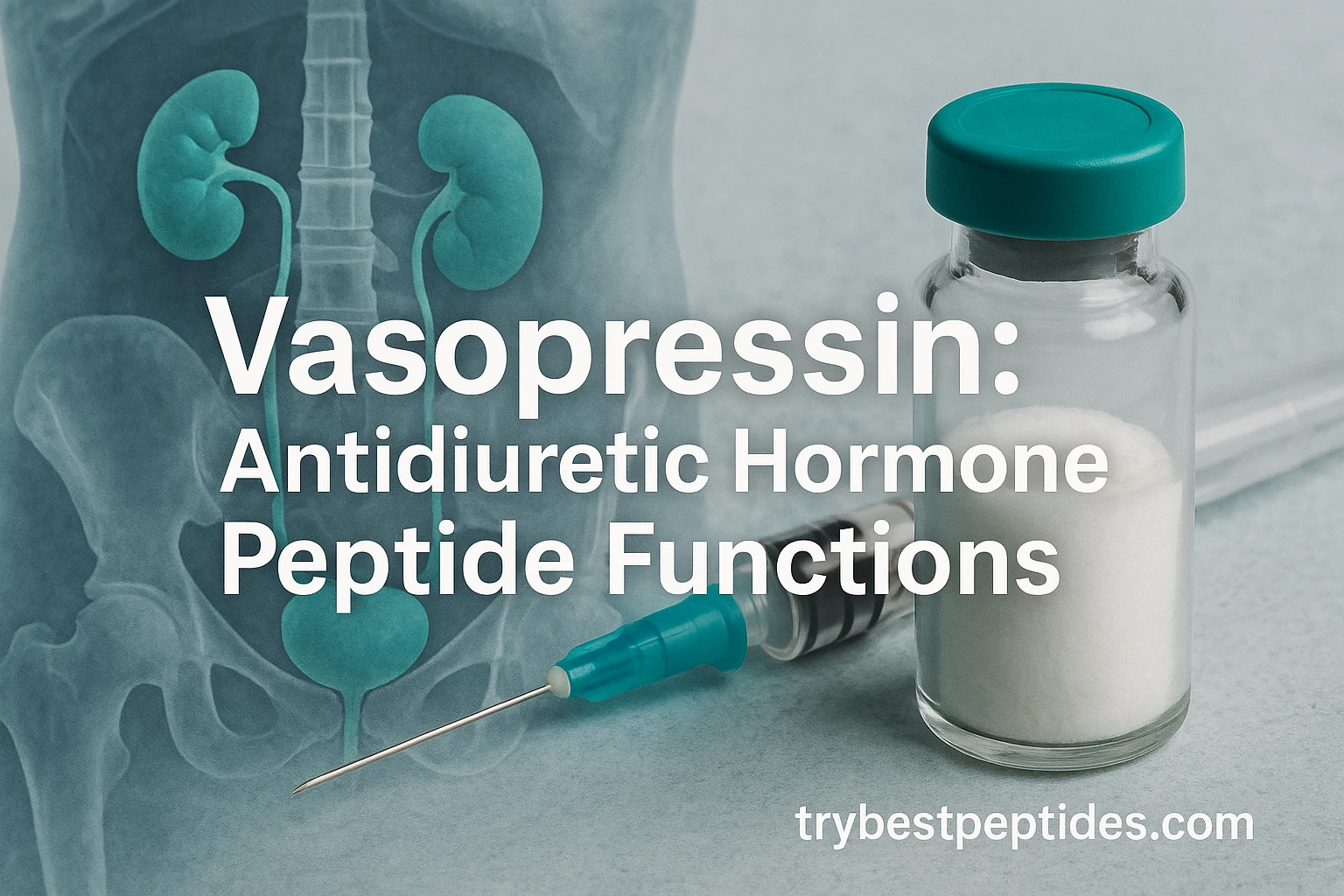
Vasopressin, scientifically known as arginine vasopressin (AVP), is a critical nonapeptide hormone produced in the hypothalamus and released by the posterior pituitary gland. This powerful regulatory peptide plays an essential role in maintaining water balance, blood pressure regulation, and various physiological processes throughout the body. Understanding vasopressin's mechanisms of action, biological functions, and clinical significance is crucial for healthcare professionals, researchers, and individuals interested in peptide science. This comprehensive guide explores the multifaceted nature of vasopressin, its effects on human physiology, and its applications in modern medicine and research contexts.
What is Vasopressin?
Vasopressin is an octapeptide hormone composed of nine amino acids, making it one of the most important regulatory molecules in human physiology. The peptide is produced within specialized neurons located in the supraoptic and paraventricular nuclei of the hypothalamus. Once synthesized, vasopressin is transported along nerve axons and stored in the posterior pituitary gland until physiological signals trigger its release into the bloodstream.
The chemical structure of vasopressin contains a characteristic disulfide bond between two cysteine residues, which provides stability and allows the peptide to maintain its bioactive conformation. This structural feature distinguishes vasopressin from many other hormonal peptides and contributes to its remarkable half-life and biological efficacy.
Historically, vasopressin earned its alternative name "antidiuretic hormone" (ADH) because of its primary function in reducing urine production by enhancing water reabsorption in the kidneys. However, this designation only partially describes the hormone's extensive physiological roles, as vasopressin influences numerous organ systems beyond the renal system.
Physiological Functions and Mechanisms
Water and Fluid Balance Regulation
The primary and most well-established function of vasopressin involves regulating water homeostasis and blood osmolality. When plasma osmolarity increases—such as during dehydration or increased salt intake—osmoreceptors in the hypothalamus detect these changes and stimulate vasopressin release. The hormone then binds to V2 receptors on the collecting duct cells of the kidneys, triggering a cascade of intracellular signaling events.
This activation increases the aquaporin-2 water channel expression on the apical membrane of collecting duct cells, dramatically enhancing water permeability. As a result, more water is reabsorbed from the filtrate back into the bloodstream, producing more concentrated urine and restoring normal plasma osmolarity. Conversely, when blood osmolarity decreases, vasopressin secretion diminishes, allowing more dilute urine to be produced.
Cardiovascular Regulation
Beyond its renal effects, vasopressin exerts powerful influences on the cardiovascular system through V1 receptors present on vascular smooth muscle cells. When vasopressin binds to these V1 receptors, it triggers vasoconstriction—a narrowing of blood vessels that increases peripheral vascular resistance and subsequently raises blood pressure. This vasopressor effect becomes particularly pronounced during hemorrhagic emergencies or severe hypotension, where high concentrations of vasopressin help maintain critical blood pressure levels to preserve vital organ perfusion.
The cardiovascular effects of vasopressin represent an important physiological response to hypovolemia and shock states, demonstrating the peptide's role in acute stress responses and hemodynamic stability.
Central Nervous System Effects
Emerging research has revealed that vasopressin receptors are distributed throughout the central nervous system, including the cerebral cortex, hippocampus, and amygdala. These neural vasopressin receptors participate in regulating memory formation, social behavior, stress responses, and emotional processing. V1a receptors in particular have been implicated in social cognition and behavioral patterns, while V1b receptors in the anterior pituitary modulate the hypothalamic-pituitary-adrenal (HPA) axis during stress responses.
Clinical Applications and Research
Diagnostic Significance
Vasopressin measurement and the water deprivation test represent valuable diagnostic tools in endocrinology. Abnormal vasopressin levels can indicate various pathological conditions. Central diabetes insipidus, characterized by insufficient vasopressin production, results in polyuria and polydipsia due to impaired water reabsorption. Conversely, the syndrome of inappropriate antidiuretic hormone secretion (SIADH) involves excessive vasopressin production, leading to hyponatremia and various neurological symptoms.
Therapeutic Applications
Vasopressin and its synthetic analogues have established clinical applications across multiple medical specialties. Desmopressin (1-deamino-8-D-arginine vasopressin), a synthetic vasopressin analogue with selective V2 receptor activity, serves as a treatment for central diabetes insipidus, nocturnal enuresis, and von Willebrand disease. Its longer half-life and reduced vasopressor activity make it ideal for chronic therapeutic use.
In acute medicine, vasopressin itself is administered as a vasopressor agent during cardiopulmonary resuscitation and septic shock management, where it helps maintain blood pressure when catecholamine vasopressors prove insufficient. Research continues into vasopressin's potential applications in trauma management, gastrointestinal bleeding, and other conditions requiring hemodynamic support.
Vasopressin Receptor Physiology
Vasopressin exerts its biological effects through interaction with specific G-protein coupled receptors classified into three main subtypes: V1a, V1b, and V2. Each receptor subtype demonstrates distinct tissue distribution and physiological consequences.
V1a Receptors: Primarily located on vascular smooth muscle cells, hepatocytes, and throughout the central and peripheral nervous system. V1a activation triggers vasoconstriction, glycogenolysis, and influences behavioral and neuroendocrine functions.
V1b Receptors: Concentrated in the anterior pituitary gland and brain, V1b receptors mediate the release of adrenocorticotropic hormone (ACTH) during stress responses and influence mood and memory processes.
V2 Receptors: Found exclusively on the basolateral membranes of collecting duct principal cells in the kidneys, V2 receptors mediate the antidiuretic effects that regulate water balance and urine concentration.
Factors Influencing Vasopressin Secretion
Multiple physiological and pathological factors regulate vasopressin release, allowing precise control of water balance and cardiovascular homeostasis. Osmotic stimuli represent the primary physiological driver, with as little as a 1-2% increase in plasma osmolarity triggering significant vasopressin secretion. Non-osmotic factors including blood pressure changes, nausea, pain, stress, and certain medications can also modulate vasopressin release.
Alcohol consumption and certain pharmaceutical agents such as selective serotonin reuptake inhibitors (SSRIs) can enhance vasopressin secretion, while glucocorticoids, NSAIDs, and some anticonvulsants may suppress it. Understanding these regulatory mechanisms proves essential for interpreting clinical findings and managing patients with vasopressin-related disorders.
Research Applications and Future Directions
The understanding of vasopressin continues to expand with contemporary neuroscience research exploring its roles in autism spectrum disorders, social anxiety, post-traumatic stress disorder, and other neuropsychiatric conditions. Animal studies suggest that vasopressin system dysfunction may contribute to social cognition deficits, prompting investigation into potential therapeutic interventions targeting vasopressin receptors.
Additionally, vasopressin's antimicrobial properties and potential immunomodulatory effects represent emerging areas of investigation. Some research suggests vasopressin may influence inflammatory responses and pathogen clearance, opening possibilities for novel therapeutic applications beyond traditional endocrinological uses.
Conclusion
Vasopressin represents one of the most versatile and critical peptide hormones in human physiology, extending far beyond its original designation as merely an antidiuretic agent. From maintaining water balance and regulating blood pressure to influencing neuropsychiatric function and stress responses, vasopressin orchestrates multiple essential physiological processes. Its clinical applications span from diagnostic tools identifying endocrine pathology to life-saving interventions in acute medical emergencies.
Continued research into vasopressin receptor biology and signaling mechanisms promises to unveil new therapeutic targets and treatment strategies for diverse medical conditions. Healthcare professionals, researchers, and patients benefit from understanding vasopressin's complex roles in human health and disease, making this peptide hormone a subject of ongoing clinical and scientific importance.
Key Takeaways
- Vasopressin is a nine-amino acid peptide hormone synthesized in the hypothalamus and released by the posterior pituitary gland, serving critical regulatory functions throughout the body
- The hormone's primary function involves water balance regulation through enhanced aquaporin-2 expression in kidney collecting ducts, making it essential for maintaining plasma osmolarity
- Vasopressin exerts cardiovascular effects via V1 receptors, triggering vasoconstriction and blood pressure elevation during hemorrhagic emergencies and hemodynamic compromise
- The peptide influences central nervous system function, affecting memory, social behavior, stress responses, and emotional processing through distributed brain vasopressin receptors
- Clinical applications include treatment of central diabetes insipidus (via desmopressin), acute shock management, and potential neuropsychiatric disorder interventions
- V1a, V1b, and V2 receptor subtypes mediate distinct vasopressin effects: vasodilation and behavior, ACTH release, and renal water reabsorption respectively
- Understanding vasopressin regulation by osmotic and non-osmotic factors enables proper clinical diagnosis and management of vasopressin-related disorders
- Emerging research explores vasopressin's roles in neurodevelopmental and psychiatric conditions, potentially revolutionizing treatment approaches in these areas
-