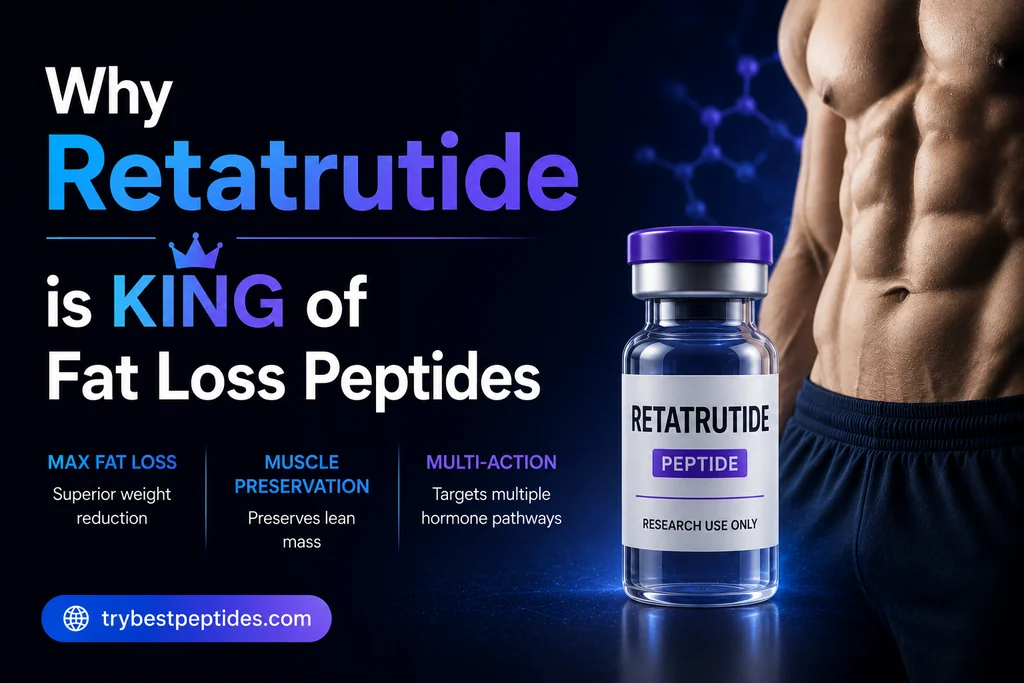
Retatrutide is generating serious buzz in weight loss and metabolic health circles—and for good reason. Unlike earlier GLP-1 medications, this triple-receptor agonist combines three different mechanisms to suppress appetite, improve insulin sensitivity, and actively boost your metabolism during weight loss. But what exactly is it, how does it compare to drugs like semaglutide and tirzepatide, and should you consider using it? This comprehensive guide breaks down the science, the real side effects people are experiencing, and what you actually need to know before this medication reaches mainstream approval.
Understanding GLP-1 Medications: From Good to Best
The evolution of GLP-1 medications reads like a pharmaceutical success story. We've gone from single-mechanism drugs to sophisticated peptide blends, each generation solving problems the previous one created.
Semaglutide was the beginning. It's a pure GLP-1 receptor agonist that works by hitting GLP-1 receptors throughout your body—especially in your brain and gut. The mechanism is straightforward: it dumps down your appetite and slows digestion. The problem? Significant side effects. Users reported nausea, constipation, and general gastrointestinal distress. Average weight loss in clinical trials reached about 15% of body weight.
Then came tirzepatide, which changed the game by combining two receptor types. It targets both GLP-1 and GIP (glucose-dependent insulinotropic polypeptide) receptors. This dual approach delivered something remarkable: 20-25% average weight loss in trials, with fewer side effects than semaglutide. Why less nausea? Research shows that GIP receptors in the brain actually dampen the nausea signals triggered by pure GLP-1 agonism. It's like having an "anti-nausea" button firing simultaneously with the appetite suppression.
But here's where tirzepatide gets really interesting—and most people don't know about this part. GIP receptor activation causes what scientists call a "futile calcium cycle." Essentially, calcium pumps in your cells activate and shuffle calcium back and forth across membranes for absolutely no functional purpose. It's metabolic waste—literally revving your engine while sitting in neutral. This pointless activity burns energy. Additionally, tirzepatide increases oxygen consumption in brown fat, which raises your resting metabolic rate even while eating fewer calories. Most remarkably, tirzepatide increases your metabolism despite the caloric deficit that normally triggers metabolic slowdown.
Now enter retatrutide. The researcher who designed this deserves recognition because it represents a genuine breakthrough in peptide formulation.
How Retatrutide Works: The Metabolic Trifecta
Retatrutide maintains the proven GLP-1 and GIP components from tirzepatide but adds a third receptor: glucagon receptor agonism. This is the game-changer. To understand why, you need to know what glucagon normally does.
In a healthy fasting state, glucagon signals your liver to release stored sugar to prevent hypoglycemia. It's your body's natural "don't pass out" hormone. But retatrutide creates an elegant biochemical trick. While GLP-1 and GIP handle appetite suppression and insulin sensitivity, they simultaneously push glucose and nutrients into your cells. In this nutrient-rich environment, glucagon receptors get "diverted" from their normal fasting role and instead activate their secondary functions: lipolysis (fat burning) and thermogenesis (heat production).
This happens through mitochondrial uncoupling. Normally, mitochondria create ATP (cellular energy) through an organized electron transport chain—imagine an assembly line producing power. Glucagon receptor activation creates "leaks" in this chain. Instead of manufacturing ATP efficiently, protons slip across membranes, and the energy releases purely as heat. Your body literally wastes calories as thermal energy.
The result? While normal weight loss eventually triggers metabolic adaptation—your body fights back by lowering metabolism to match your lower caloric intake—retatrutide prevents this. The glucagon signal tricks your metabolism into thinking you're in a high-energy-demand state. Your body stops being stingy with fat stores and actively wastes energy instead of conserving it. It's possibly the closest thing to "exercise in a bottle" that exists, though of course it cannot replace actual training.
The Three-Pronged Attack
- GLP-1 component: Appetite suppression via brain and gut receptors
- GIP component: Enhanced insulin sensitivity and transient metabolic increase
- Glucagon component: Active fat mobilization and thermogenic heat production
The Muscle Loss Problem: Why 40% Matters
Before you get excited about retatrutide, there's a critical consideration that most people gloss over. Clinical trials reveal that up to 40% of weight lost on GLP agonist peptides can be lean muscle mass, not fat. If you lose 100 pounds and 40 of those pounds are muscle tissue, you've essentially sacrificed a significant portion of your metabolic machinery.
Why does this matter? Muscle tissue is metabolically active. It's directly correlated with longevity, metabolic health, and quality of life. Losing 40 pounds of fat while preserving muscle looks and feels completely different than losing 40 pounds of muscle alongside some fat loss.
The solution requires discipline: consume a minimum of 1 gram of protein per pound of your current lean body mass. Track your muscle mass independently from scale weight. Yes, losing weight quickly feels good. But sustainable, healthy weight loss means preserving the metabolic tissue that keeps you functioning well long-term.
Measuring muscle mass accurately matters here. DEXA scans provide gold-standard measurements, showing exact body composition. However, home bioelectrical impedance scales like the Hum Body Pod now offer surprisingly accurate readings that correlate strongly with DEXA results. These allow you to monitor muscle preservation throughout your weight loss journey without repeated clinical scans.
The Side Effects You Need to Know About
Retatrutide hasn't received FDA approval for human use yet, so all safety data comes from controlled clinical trials. That said, three main side effect categories emerged that deserve serious consideration.
Increased Heart Rate
Retatrutide increased resting heart rates by 5-10 beats per minute in clinical participants. This occurs because glucagon receptors exist on the heart's natural pacemaker. For most healthy individuals, this modest increase poses minimal concern. However, if you have any personal or family history of arrhythmia, tachycardia, or other cardiac rhythm issues, this deserves discussion with a cardiologist before use.
Allodynia: Skin Sensitivity
About 20% of participants taking high doses (12 mg) reported allodynia—a painful condition where skin feels sunburned despite no actual burns. The mechanism appears to involve sensory neuron sensitization. Glucagon receptors on sensory neurons, when overstimulated, lower the threshold for firing these neurons. The encouraging news? Evidence suggests this side effect may be temporary, particularly with slow dose titration rather than rapid escalation.
Pancreatitis and Gallstones
The risk of pancreatitis exists but remains rare. In clinical trials, incidence was less than 0.5%. Gallstones represent a more common concern, though not because of the medication itself. Rapid weight loss—regardless of method—is one of the leading triggers for gallstone formation. If you have a personal or family history of gallbladder disease, monitor carefully for upper abdominal pain or discomfort.
Retatrutide Dosing and the Microdosing Question
In clinical trials, retatrutide followed this dosing schedule:
- Week 0-4: 2 mg
- Week 4-8: 4 mg
- Week 8-12: 6 mg
- Week 12-16: 9 mg
- Week 16+: 12 mg (maintenance)
Each dose receives a full 4-week interval before escalation. This gradual approach gives your body time to adapt and helps identify individual tolerability.
Some people experiment with "microdosing"—splitting weekly doses into smaller, more frequent injections. The rationale sounds logical: smaller, more frequent doses might reduce nausea peaks. However, there's a theoretical concern. GLP-1 and GIP receptors are designed to receive pulsatile signals from food intake, not continuous stimulation. Under normal circumstances, the dip at the end of a 7-day injection cycle allows receptors a "breathing period" to recycle back to the cell surface.
Continuous microdosing maintains 24/7 receptor tension. Theoretically, this could accelerate tolerance—requiring higher doses sooner to achieve the same effect. This isn't established fact, but the biology of receptor lifecycles suggests it's a plausible concern. The safest approach aligns with clinical trial protocols: 4-week intervals between dose increases.
Can You Come Off Retatrutide Later?
This question comes up constantly. The answer is yes, technically—but with important caveats. GLP receptor agonists are not permanent. You can discontinue them after reaching your goal weight. However, here's the reality: if your metabolism has been suppressed by prolonged caloric restriction, you'll likely regain weight quickly upon stopping. The weight loss phase requires sustained effort, and the maintenance phase requires ongoing commitment—whether through continued medication, lifestyle changes, or both.
The glucagon receptor component prevents metabolic adaptation during use, but that protection disappears once you stop. Your body won't suddenly reverse the physiological changes from weight loss, but it also won't maintain an elevated metabolic rate without the glucagon signal. Plan accordingly.
Current Status and Availability
Retatrutide remains in clinical trials and has not received FDA approval for human use. Despite this, some individuals obtain it through research peptide suppliers—a legal and safety gray area that exists outside proper medical oversight. Once approved (timeline remains uncertain but appears to be approaching), it will likely become available through legitimate prescription channels.
Conclusion: The Retatrutide Reality
Retatrutide represents a genuine advancement in metabolic pharmacology. The triple-receptor mechanism addresses the fundamental challenge of weight loss: preserving muscle while mobilizing fat while preventing metabolic adaptation. The data from clinical trials is encouraging, side effects appear manageable with proper monitoring, and the mechanism is elegantly designed.
That said, retatrutide is not a magic solution. It requires protein intake discipline, resistance training to preserve muscle, medical supervision, and realistic expectations about maintenance after weight loss. The medication works with your body's physiology rather than against it—which is why it succeeds where earlier medications stumbled.
If you're considering this medication once it's approved, focus on three priorities: maximize protein intake to preserve lean mass, track your body composition independently from scale weight, and work with a healthcare provider who understands both the mechanism and the lifestyle requirements for sustained success.
Key Takeaways
-
Retatrutide combines three receptor agonists (GLP-1, GIP, and glucagon) to suppress appetite, improve insulin sensitivity, and actively increase metabolism—solving the metabolic slowdown that accompanies traditional weight loss.
-
Up to 40% of weight lost can be muscle tissue, making protein intake (1g per pound of lean body mass) and resistance training essential to preserve metabolic capacity.
-
Primary side effects include modest heart rate increases (5-10 bpm), temporary skin sensitivity in ~20% of high-dose users, and standard pancreatitis/gallstone risks associated with rapid weight loss.
-
Retatrutide is not yet approved for human use, though clinical trials demonstrate safety and efficacy; when approved, it should be used under medical supervision with attention to composition-based tracking rather than scale weight alone.