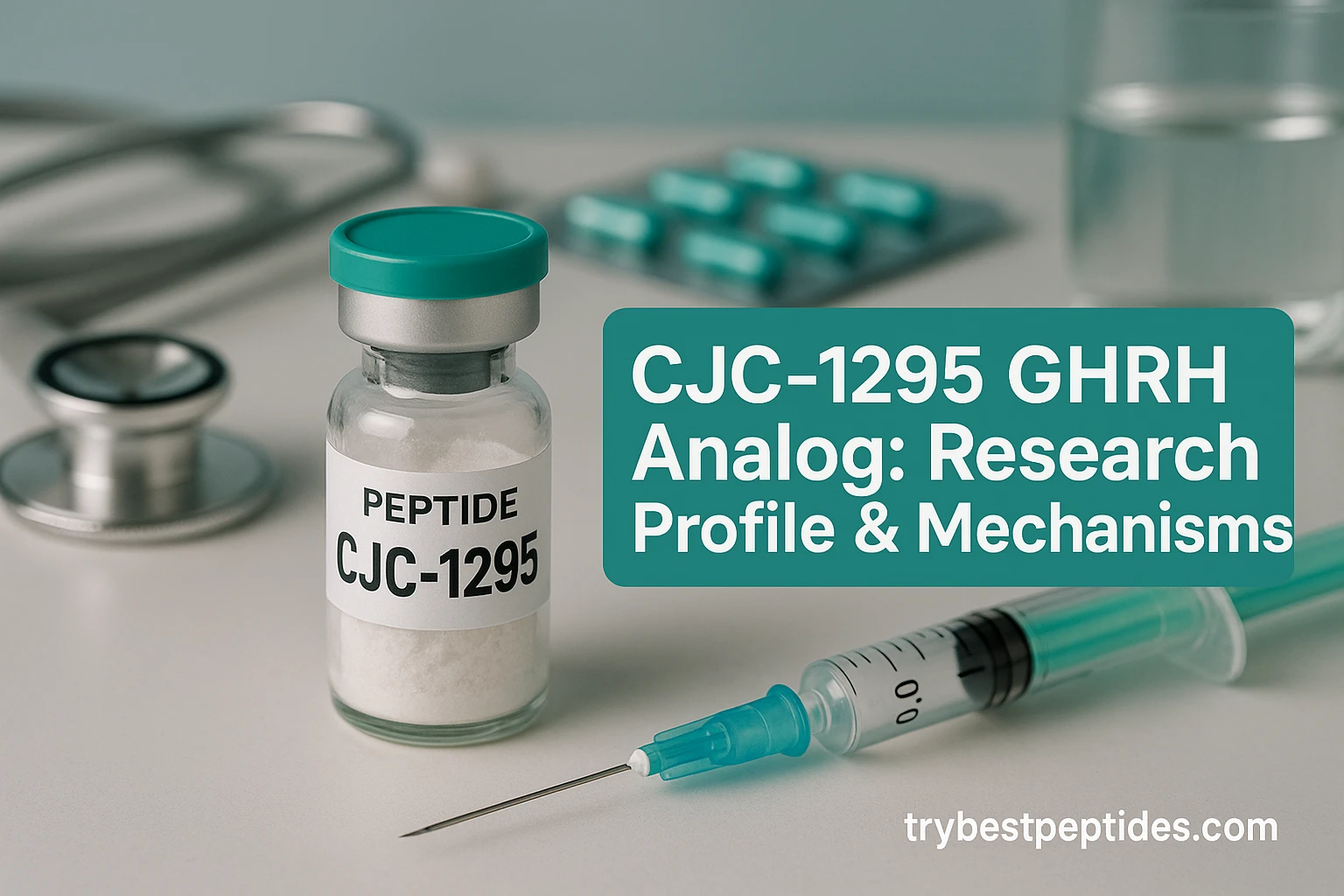
CJC-1295 represents a pivotal advancement in peptide research, functioning as a synthetic analog of growth hormone-releasing hormone (GHRH). Engineered to overcome the limitations of native GHRH's remarkably short seven-minute half-life, this peptide has become a significant subject of scientific investigation. The molecule operates by stimulating the anterior pituitary gland to increase growth hormone secretion, making it valuable for research exploring endocrine function and metabolic processes. Understanding CJC-1295's molecular structure, mechanisms of action, and pharmacokinetic profile provides essential insights for researchers examining peptide therapeutics and their potential applications in clinical and laboratory settings.
What Is CJC-1295?
CJC-1295 is a synthetic peptide compound classified as a growth hormone-releasing hormone analog. Unlike its natural counterpart GHRH, which exhibits rapid degradation in biological systems, CJC-1295 was specifically designed to provide extended activity and stability. The peptide consists of 30 amino acids and exists in two primary formulations: the free peptide version and the drug affinity complex (DAC) variant, which extends the half-life considerably through albumin binding mechanisms.
This compound emerged from research focused on improving peptide longevity without compromising efficacy. The development of CJC-1295 addressed a critical challenge in peptide pharmacology—the inability of naturally occurring GHRH to maintain therapeutic concentrations in the bloodstream due to rapid enzymatic degradation. By introducing strategic molecular modifications, researchers created a peptide capable of sustaining biological activity over extended periods.
Molecular Structure and Pharmacological Modifications
The structural foundation of CJC-1295 builds upon the GHRH template while incorporating crucial alterations that enhance stability and bioavailability. The peptide shares significant sequence homology with endogenous GHRH but includes specific amino acid substitutions designed to resist enzymatic breakdown.
Key Structural Features
The modifications in CJC-1295 focus on protecting vulnerable peptide bonds from degradation by dipeptidyl peptidase IV (DPP-IV) and other proteolytic enzymes. The hexarelin-based backbone provides enhanced conformational stability compared to the native hormone. When formulated with the DAC modification—which involves conjugation with drug affinity complex technology—the peptide's half-life extends from approximately two hours to roughly seven to nine days, representing a dramatic improvement in pharmacokinetic persistence.
These molecular enhancements enable less frequent dosing schedules compared to native GHRH, which requires multiple daily administrations due to its minimal half-life. This represents a substantial practical advantage for research applications requiring sustained hormonal signaling.
How CJC-1295 Works: Mechanisms of Action
CJC-1295 operates as a secretagogue, meaning it stimulates the release of growth hormone from the anterior pituitary gland. The mechanism involves binding to specific growth hormone-releasing hormone receptors located on somatotroph cells within the pituitary's anterior lobe.
GHRH Receptor Signaling
Upon receptor binding, CJC-1295 initiates a cascade of intracellular signaling events. This process involves activation of G-protein coupled receptor pathways, which increase intracellular cyclic adenosine monophosphate (cAMP) concentrations. Elevated cAMP levels trigger calcium influx into pituitary cells, ultimately leading to exocytosis of growth hormone-containing granules into the bloodstream.
The release pattern demonstrates pulsatile characteristics, mirroring the natural secretory patterns of endogenous GHRH. This physiological relevance distinguishes GHRH analogs from alternative growth hormone stimulators that may produce different secretion profiles.
Endogenous Regulation Preservation
Unlike direct growth hormone administration, CJC-1295 preserves the hypothalamic-pituitary-axis feedback mechanisms. The compound stimulates endogenous hormone production rather than replacing it, allowing natural regulatory systems to modulate responses. Somatostatin, the endogenous inhibitor of growth hormone secretion, continues to exert physiological control, preventing excessive hormone elevation.
Pharmacokinetics: The DAC Formulation Advantage
Pharmacokinetic profiles represent one of the most significant differentiating factors between CJC-1295 formulations. The original free peptide formulation exhibits a half-life of approximately two hours, while the DAC-modified version demonstrates substantially extended persistence.
Drug Affinity Complex Technology
The DAC modification involves covalent attachment of the peptide to a drug affinity complex that binds albumin with high affinity. Albumin, the most abundant plasma protein, serves as a natural carrier that prolongs peptide residence time in circulation. This technology prevents rapid renal clearance and enzymatic degradation, allowing single weekly or biweekly dosing schedules compared to multiple daily injections required for non-modified GHRH.
Peak plasma concentrations occur approximately two to three hours after injection, with measurable concentrations persisting for extended periods. The prolonged half-life enables more consistent hormonal stimulation while reducing dosing frequency—a practical advantage for sustained research investigations.
Research Evidence and Clinical Applications
Scientific literature examining CJC-1295 demonstrates consistent effects on growth hormone secretion across multiple studies. Research protocols have documented dose-dependent increases in circulating growth hormone levels, with peak elevations typically occurring within one to three hours of administration.
Studies in animal models have shown that CJC-1295 stimulates growth hormone secretion without significantly disrupting natural hormonal rhythms. The peptide maintains the characteristic pulsatile pattern of growth hormone release, suggesting preservation of physiological secretion mechanisms.
Research also indicates that CJC-1295 does not substantially suppress somatostatin secretion or significantly alter prolactin, cortisol, or thyroid hormone levels at therapeutic doses. This selective activity profile supports the use of CJC-1295 in investigations requiring growth hormone-specific stimulation without broad endocrine system disruption.
CJC-1295 and Ipamorelin: Understanding the Popular Combination
In research settings, CJC-1295 is frequently combined with ipamorelin, a growth hormone secretagogue that functions through distinct mechanisms. Ipamorelin acts as a ghrelin mimetic, activating growth hormone secretagogue receptors and stimulating growth hormone release through complementary pathways.
The combination approach theoretically provides synergistic stimulation of growth hormone secretion. While CJC-1295 targets GHRH receptors, ipamorelin engages alternative receptor pathways, potentially producing additive effects. Researchers employing this combination strategy aim to investigate whether dual-pathway activation enhances growth hormone responsiveness compared to monotherapy approaches.
Safety Profile and Considerations
Research-grade CJC-1295 used in laboratory and clinical investigations exhibits a generally favorable safety profile when administered appropriately. Common considerations include injection site reactions, which typically resolve without intervention, and transient symptoms such as flushing or mild dizziness reported in some studies.
Long-term safety data remains limited compared to established pharmaceutical agents. Research participants receiving CJC-1295 require appropriate medical oversight, baseline endocrine assessments, and periodic monitoring of growth hormone levels and metabolic parameters.
Individuals with existing pituitary disorders, active malignancies, or severe metabolic dysfunction represent populations requiring careful consideration before inclusion in research protocols. The absence of growth hormone or insulin-like growth factor-1 (IGF-1) production mechanisms should be excluded prior to study enrollment.
Legal and Regulatory Status
CJC-1295 maintains research chemical classification in most jurisdictions, meaning availability is restricted to laboratory and research settings rather than commercial distribution for human consumption. Regulatory frameworks vary significantly across different countries and regions.
In the United States, CJC-1295 remains unscheduled at the federal level but is subject to state and local regulations. Responsible procurement requires sourcing from qualified research chemical suppliers maintaining appropriate quality control standards and analytical verification. Any research involving human subjects requires institutional review board oversight and informed consent procedures.
Key Takeaways
-
Advanced Peptide Design: CJC-1295 represents engineered improvement over natural GHRH through strategic molecular modifications that enhance stability and extend half-life.
-
Extended Pharmacokinetics: The DAC formulation extends half-life from two hours to seven to nine days, enabling convenient dosing schedules for research applications.
-
Physiological Mechanisms: CJC-1295 stimulates growth hormone secretion through GHRH receptor activation while preserving endogenous regulatory mechanisms and natural secretion patterns.
-
Research Versatility: The peptide demonstrates selective activity on growth hormone pathways, making it valuable for investigations of endocrine function and metabolic processes.
-
Combination Potential: Co-administration with ipamorelin or other agents offers opportunities for investigating synergistic approaches to growth hormone stimulation.
-
Regulatory Considerations: Research-grade CJC-1295 remains classified as a research chemical requiring appropriate institutional oversight and qualified sourcing.
-