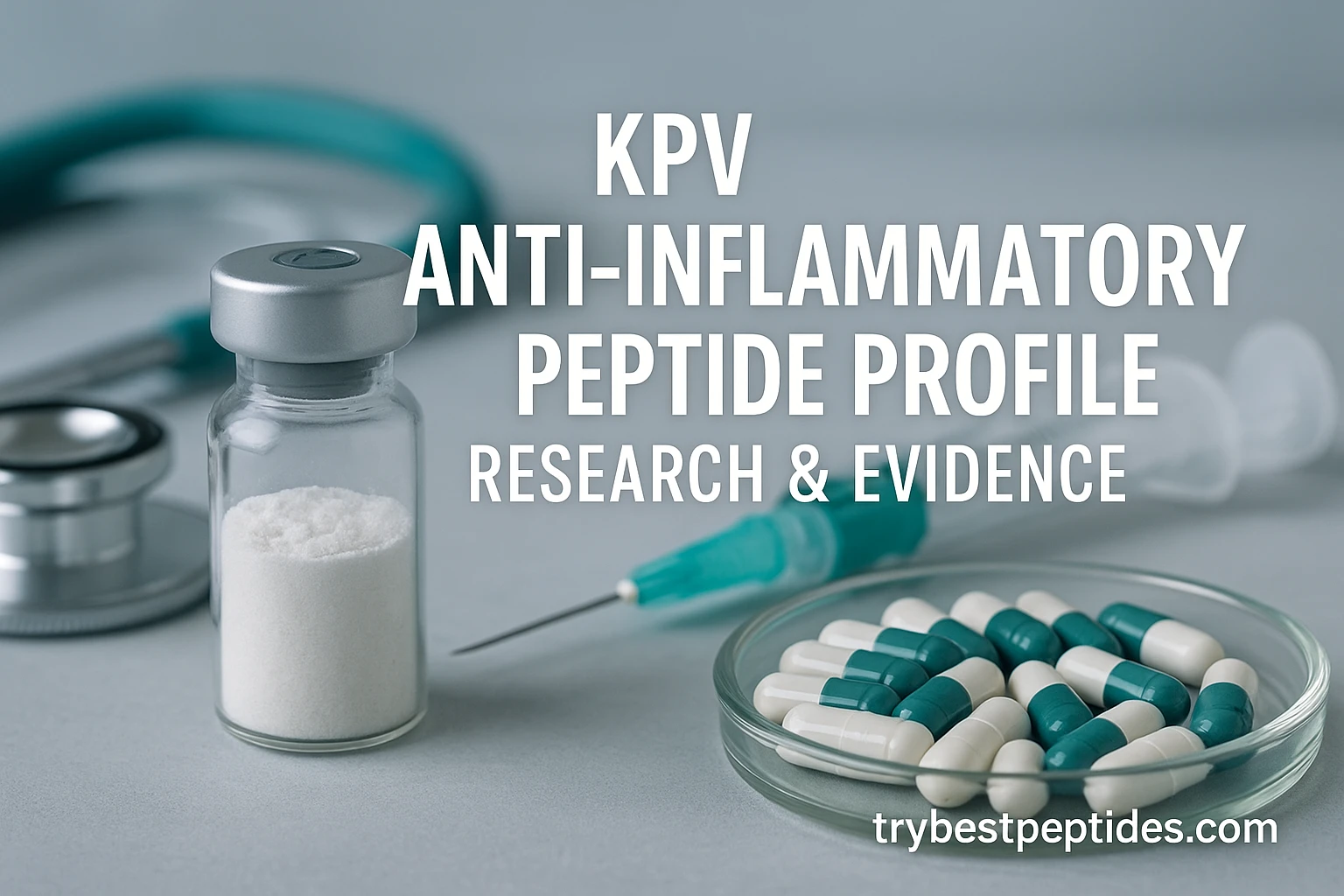
Your immune system operates through an intricate network of molecular signals that coordinate inflammatory responses. When tissue sustains damage or infection, a cascade of inflammatory molecules activates at the injury site—cytokines like TNF-alpha, IL-6, and IL-1 beta orchestrate this immune response by recruiting white blood cells and amplifying local defenses. However, when inflammation persists beyond its protective purpose, it becomes destructive to healthy tissue. This is where KPV peptide enters the picture. KPV is a tripeptide derived from alpha-melanocyte-stimulating hormone (alpha-MSH) that has garnered significant research attention for its potential to modulate inflammatory pathways and promote tissue healing. Understanding how KPV works at the molecular level provides insight into why researchers have become increasingly interested in this compound for investigating inflammatory conditions.
What Is KPV?
KPV represents a short peptide sequence composed of three amino acids: lysine, proline, and valine. This tripeptide is derived from a larger protein known as alpha-melanocyte-stimulating hormone (alpha-MSH), which plays a crucial role in regulating immune function and inflammatory responses throughout the body.
The discovery of KPV's bioactive properties emerged from research into alpha-MSH and its fragments. Scientists identified that this specific three-amino-acid segment retained significant anti-inflammatory activity while being smaller and potentially more stable than the full-length hormone. This discovery opened new avenues for peptide research focused on immune modulation and tissue repair.
Unlike many pharmaceutical compounds that broadly suppress immune function, KPV appears to work through more targeted mechanisms that preserve immune competence while reducing excessive inflammation. This distinction makes it particularly interesting to researchers investigating chronic inflammatory conditions and tissue recovery processes.
The Alpha-MSH Connection
Alpha-melanocyte-stimulating hormone serves as the parent molecule from which KPV is derived. Originally recognized for its role in pigmentation, researchers gradually uncovered alpha-MSH's broader immunological functions throughout the 1990s and 2000s.
Alpha-MSH acts as a potent anti-inflammatory signaling molecule within the body's immune system. It binds to specific melanocortin receptors—particularly the melanocortin-3 receptor (MC3R) and melanocortin-4 receptor (MC4R)—which are expressed on immune cells and in various tissues. Through these receptor pathways, alpha-MSH suppresses the production of pro-inflammatory cytokines and promotes anti-inflammatory responses.
The relationship between alpha-MSH and KPV is significant because KPV appears to retain anti-inflammatory properties similar to its parent molecule, yet it is substantially smaller. This structural difference offers potential advantages for research applications, including improved stability, easier synthesis, and potentially enhanced tissue penetration.
How KPV Works: Mechanisms of Action
KPV's anti-inflammatory effects operate through several interconnected molecular pathways that collectively reduce excessive immune activation while maintaining protective immune function.
Cytokine Modulation
The primary mechanism through which KPV exerts its effects involves reducing production of pro-inflammatory cytokines. Research has demonstrated that KPV downregulates the expression of TNF-alpha, IL-6, and IL-1 beta—three major cytokines that drive inflammation throughout the body. By suppressing these signaling molecules, KPV can theoretically reduce the inflammatory cascade that damages surrounding tissue.
This cytokine-modulating effect appears particularly important in conditions characterized by excessive inflammatory responses, such as inflammatory bowel disease, psoriasis, and certain autoimmune conditions.
Immune Cell Regulation
KPV influences the behavior of immune cells themselves, particularly macrophages and dendritic cells that play central roles in initiating and sustaining inflammatory responses. Rather than eliminating these cells or broadly suppressing immunity, KPV appears to shift their function toward anti-inflammatory phenotypes.
This represents an important distinction from traditional immunosuppressive therapies. Rather than creating immunodeficiency, KPV may help immune cells respond more appropriately to genuine threats while reducing overreaction to benign stimuli.
Melanocortin Receptor Signaling
Like alpha-MSH, KPV likely interacts with melanocortin receptor pathways, though research is still clarifying the precise receptor interactions of this tripeptide. Activation of melanocortin signaling has been associated with broad anti-inflammatory effects across multiple tissues and cell types.
Research Evidence and Current Studies
Scientific investigation into KPV has produced promising preliminary findings, though the research base remains relatively limited compared to more established therapeutics.
Inflammatory Bowel Disease Studies: Several research papers have documented KPV's effects in models of intestinal inflammation. These studies suggest that KPV administration reduces inflammatory markers in the colon and promotes barrier function recovery, potentially through mechanisms involving tight junction proteins and reduced immune cell infiltration.
Skin Inflammation Research: Given the peptide's derivation from a molecule involved in skin function, researchers have explored KPV's effects in skin inflammatory conditions. Preliminary evidence suggests potential benefits in models of psoriasis and dermatitis, though clinical data remains limited.
Wound Healing and Tissue Recovery: Beyond suppressing inflammation, some research indicates KPV may support tissue repair processes. This dual action—reducing excessive inflammation while promoting healing—distinguishes it from compounds that merely suppress immune activity.
It is important to note that most existing research involves laboratory and animal models. Human clinical trials remain limited, and no definitive conclusions about KPV's efficacy in human disease can be drawn from current evidence.
Administration and Dosing in Research Settings
In research contexts, KPV has been administered through various routes depending on the experimental protocol. Subcutaneous injection and topical application represent the most common administration methods in published studies.
Dosing in animal research typically ranges from nanomolar to micromolar concentrations, though specific protocols vary considerably. Research examining intestinal inflammation often employs intracolonic administration to achieve local therapeutic effects.
The limited human data available provides insufficient information to establish optimal dosing schedules. Any potential future clinical use would require carefully designed dose-escalation studies to determine appropriate dosing ranges and administration frequencies.
Safety Profile and Side Effects
The safety profile of KPV in animal models appears favorable, with most studies reporting minimal adverse effects at therapeutic doses. However, comprehensive long-term safety data in humans remains unavailable.
Potential Considerations: Theoretical risks associated with immune modulation include increased susceptibility to infection and potential loss of protective immune surveillance. However, because KPV appears to modulate rather than broadly suppress immunity, such risks may be lower than with traditional immunosuppressive medications.
Tolerability: When administered via injection or topical application in research settings, KPV has not been reported to cause significant injection site reactions or dermatological irritation at experimental doses.
The absence of reported serious adverse events should not be interpreted as proof of absolute safety. Rigorous clinical trial data would be necessary before any therapeutic claims could be substantiated.
Legal and Regulatory Status
KPV occupies an uncertain regulatory position. In most jurisdictions, including the United States and European Union, KPV is not approved as a pharmaceutical medication and is not available through prescription.
The peptide is available from research chemical suppliers and some online vendors, typically marketed for research purposes or sold under ambiguous labeling. However, selling any peptide with implied health claims violates regulations in most countries.
United States: The FDA has not approved KPV for any medical indication. Any marketing of KPV as a treatment for human disease would violate federal regulations.
European Union: Similar restrictions apply, with KPV not authorized as a pharmaceutical product or dietary supplement ingredient.
Prospective users should understand that purchasing KPV outside of legitimate research contexts involves significant legal and safety risks, as product quality, purity, and identity cannot be verified.
Limitations of Current Research
Several important limitations should be acknowledged when evaluating the existing evidence base for KPV.
The vast majority of published research involves laboratory and animal model systems. The translation from animal models to human efficacy remains unpredictable. Conditions that respond well in rodent models frequently prove disappointing in human trials.
Additionally, the total volume of peer-reviewed research on KPV remains modest compared to more established peptides and pharmaceuticals. Many studies originate from single research groups, and independent replication remains limited.
Finally, most research lacks the rigorous methodology of confirmatory clinical trials, including adequate control groups, blinding, and standardized outcome measures.
Frequently Asked Questions
Is KPV approved for medical use? No. KPV is not approved as a medication in any major regulatory jurisdiction. It remains a research compound without clinical approval.
Where can I legally obtain KPV? KPV is available from legitimate research chemical suppliers for laboratory research purposes only. Purchasing KPV with intent to use it for self-treatment carries legal and health risks.
How does KPV compare to other anti-inflammatory treatments? While KPV shows theoretical advantages over broad immunosuppressants, direct comparative clinical data does not exist. Any comparison remains speculative.
Could KPV be useful for COVID-19 or other acute infections? This remains an open research question. Preliminary investigations have explored whether KPV might modulate excessive inflammatory responses in acute infections, but no clinical evidence supports its use for this purpose.
The Bottom Line
KPV represents a fascinating research compound with theoretical anti-inflammatory mechanisms and preliminary evidence suggesting potential therapeutic applications. Its derivation from alpha-MSH, combined with its small size and favorable safety profile in animal models, has attracted legitimate scientific interest.
However, the reality remains clear: KPV's evidence base is still developing. No definitive proof of human efficacy exists. No regulatory approval has been granted. The compound remains strictly a research tool at this stage.
For individuals interested in evidence-based inflammatory management, established therapeutic options with robust clinical evidence should remain the priority. As KPV research continues to evolve, future clinical trials may clarify whether this peptide can transition from laboratory curiosity to validated therapeutic option.
Key Takeaways
- KPV is a tripeptide derived from alpha-melanocyte-stimulating hormone (alpha-MSH) with demonstrated anti-inflammatory properties in research models
- Mechanism of action involves suppressing pro-inflammatory cytokines (TNF-alpha, IL-6, IL-1 beta) and modulating immune cell behavior
- Animal research shows promise in inflammatory bowel disease, skin inflammation, and wound healing, but human clinical evidence remains limited
- No regulatory approval exists in major jurisdictions; KPV is not available as an approved pharmaceutical
- Safety profile appears favorable in research settings, but comprehensive human safety data is unavailable
- Current research limitations include reliance on animal models, limited independent replication, and absence of confirmatory clinical trials
-