Disclaimer: This article is for educational and informational purposes only. The information presented here is not medical advice. If you have health concerns or questions, please consult a licensed healthcare professional. Do not rely on this content for medical decisions.
Introduction: The Antibiotic Crisis and a Natural Solution
Strep throat, urinary tract infections, H. pylori infections—the list of serious diseases treatable by antibiotics grows longer each year. Yet we face two critical problems that demand our attention: pathogens are mutating and becoming resistant to our current antibiotics, and these medications often take a harsh toll on the body. What if there were a natural alternative? Enter LL37, a naturally occurring antimicrobial peptide that research suggests could serve as a complementary or alternative approach to conventional antibiotics while supporting both our innate and adaptive immunity.
Since researchers began studying LL37 more closely, many have shifted their perspective on how we approach disease treatment and immune function. This peptide represents a fascinating frontier in immunology—one that's generating genuine excitement among peptide researchers worldwide. In this comprehensive guide, we'll explore what LL37 is, how it works, its research-backed benefits and side effects, optimal dosing strategies, and complementary therapies that amplify its potential.
Understanding LL37: Nature's Antimicrobial Defender
What Is LL37?
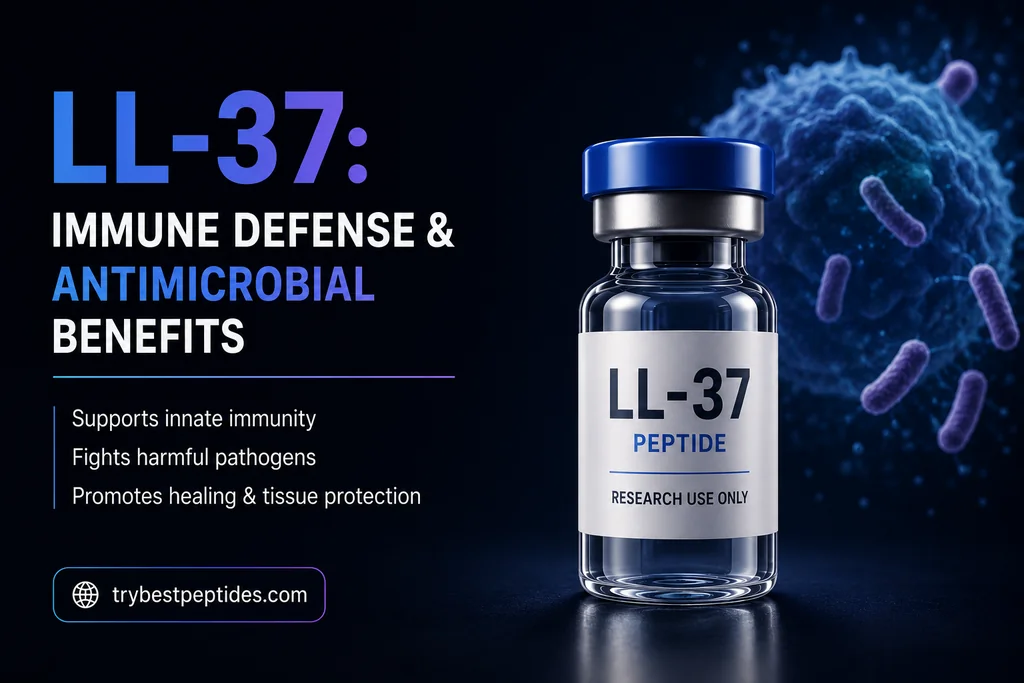
LL37 belongs to a fascinating class of molecules called antimicrobial peptides (AMPs), specifically cathelicidins. Your body produces this peptide naturally through white blood cells—particularly macrophages and neutrophils, both critical soldiers in your immune arsenal. Rather than being something foreign you need to introduce, LL37 is already part of your biological defense system.
What makes LL37 exceptional is its dual role: researchers increasingly view it not just as a direct pathogen killer, but as a potential replacement or complement to traditional antibiotics. The immune system produces LL37 on demand, which is genuinely exciting from both a scientific and practical health perspective.
How LL37 Works in Your Body
Your immune system synthesizes LL37 specifically when fighting infections or inflammatory diseases. Interestingly, concentrations spike dramatically during active infections—something that initially confused researchers who worried the peptide itself might be dangerous. The opposite is true. Think of it like a fever: your body gets hotter to kill pathogens. Similarly, elevated LL37 represents a protective immune response.
When LL37 activates, it targets dangerous cells with surgical precision. The mechanism is straightforward but powerful: LL37 punctures holes in pathogenic cell membranes, causing cell death and eliminating the threat. It's particularly effective in lung and skin tissues, which explains why researchers are investigating its use for various respiratory and dermatological conditions. This cellular targeting makes LL37 a fundamentally different approach compared to broad-spectrum antibiotics that can indiscriminately damage beneficial bacteria.
Research-Backed Benefits of LL37
The emerging research on LL37 reveals several compelling applications for immune support and infection prevention. These benefits continue to expand as scientists investigate this peptide more thoroughly.
- Combats lung infections: LL37 shows promise in fighting respiratory pathogens, which explains its prevalence in elevated concentrations during lung infections
- Protects gut health: Research suggests LL37 can prevent and combat gut inflammation and intestinal infections
- Enhances immune signaling: The peptide facilitates communication between immune cells, essentially calling reinforcements to threatened areas
- Reduces inflammation: Beyond killing pathogens, LL37 actively downregulates inflammatory responses
- Accelerates healing: Both wound closure and bone formation appear accelerated under LL37 activity
The most exciting aspect? These benefits work through the body's own natural mechanisms rather than relying on external pharmaceutical intervention.
The Flip Side: Understanding LL37 Side Effects
No powerful compound comes without tradeoffs. LL37'sunique mechanism—punching holes in cell membranes—can become problematic when the peptide activates unnecessarily. Since it works indiscriminately, healthy cells can suffer collateral damage if LL37 concentrations run too high or persist too long.
This is why careful monitoring and purposeful use matter enormously. You want to deploy LL37 when your body actually has an infection or inflammatory condition to fight, not as a blanket preventative. The peptide works best when there's a legitimate biological reason for activation. Unnecessary stimulation risks causing the very inflammation you're trying to prevent.
Dosing and Cycling Protocols
Based on current research patterns, LL37 typically follows these dosing guidelines, though individual variation is substantial:
- Standard dose: Approximately 100 micrograms per injection
- Frequency: Typically twice daily, though this varies by individual condition and response
- Cycling duration: Generally 4 to 6 weeks, with adjustments based on results and biomarker monitoring
The variability here is crucial. Just as with other peptides like Thymosin Alpha 1, if your health goals aren't met after one cycle, a longer duration or higher dose may be warranted. However, this is precisely where blood testing and biomarker monitoring become non-negotiable. You need objective measures confirming that LL37 is actually delivering benefits without causing systemic damage.
Peptides That Synergize With LL37
LL37 performs optimally when combined with complementary peptides that address different aspects of healing and immunity.
Primary immune-supporting partners: - Thymosin Alpha 1: Essential for immune function; arguably the most important peptide to combine with LL37 - KPV: Another excellent immune peptide available in cream, nasal, and oral formulations - Humanin and VIP: Additional theme peptides selected based on specific health conditions
Healing and regeneration amplifiers: - BPC 157: Offers profound internal healing benefits alongside LL37's antimicrobial action - TB500: Enhances wound healing and tissue regeneration - GHK-Cu: Traditionally known as a copper peptide for cosmetics, but emerging research reveals significant internal healing applications that complement LL37 remarkably well
Specialized applications: - AR-A290: Particularly useful for nerve regeneration and diabetic conditions
The synergistic approach matters more than individual peptides alone. These combinations create a comprehensive healing environment while addressing multiple biological systems simultaneously.
Supplements That Amplify LL37 Effectiveness
While LL37 works at the peptide level, strategic supplementation supports the immune system's broader functioning and healing capacity.
- Mushroom complexes: Various medicinal mushrooms provide therapeutic immune support and should form your supplementation foundation
- Glutathione with NAD+: A powerful pairing for anti-aging and immune system resilience
- Resveratrol: This antioxidant group becomes especially potent in liposomal form, strengthening antioxidant defenses
- Methylene blue: An emerging supplement showing impressive potential for fighting various pathogens and supporting cellular healing
Each addresses different biological pathways, creating redundancy in your body's defense systems.
Lifestyle Factors That Work Synergistically With LL37
Perhaps most importantly, LL37 functions best within a comprehensive lifestyle framework. These tools activate natural healing mechanisms that complement peptide therapy.
Nutritional and Fasting Approaches
Fasting, particularly prolonged fasting lasting 2-5 days, creates biological conditions favorable to immune activation and healing. Pair this with functional nutrition—whole foods aligned with your individual biology—and you've established a foundation that LL37 can build upon. The combination matters far more than either approach alone.
Movement and Physical Modalities
Functional exercise remains foundational. Beyond basic training, consider these specialized approaches:
- Infrared sauna therapy: Extended sessions support detoxification and immune function
- Lymphatic massage: Directly enhances lymphatic circulation, which is critical for immune cell distribution
- Acupuncture: Supports immune signaling and overall system balance
- Hyperbaric oxygen therapy (HBOT): Enhances healing across multiple tissue types
Emerging Therapies Worth Exploring
- Halotherapy (salt therapy): Particularly beneficial for lung health, especially when combined with infrared sauna
- Mud therapy: While unconventional, mud offers antimicrobial and detoxification properties worth investigating
These aren't gimmicks—they're supported by growing research suggesting they activate innate healing responses that complement peptide therapy.
Weighing the Pros and Cons of LL37
Advantages
LL37 emerges as a powerful tool for immune support and infection management. The most compelling advantage? Research increasingly suggests it could serve as a genuine antibiotic alternative, which addresses one of modern medicine's most pressing challenges: antibiotic resistance. Having additional tools beyond conventional antibiotics represents a genuine paradigm shift in how we approach infectious disease.
Disadvantages
The same power that makes LL37 effective—its cell membrane-puncturing mechanism—can backfire if misused. Affecting healthy cells is not merely a theoretical risk; it's a documented concern. This demands rigorous biomarker monitoring, careful dosing discipline, and absolute resistance to the temptation of "more is better." Overuse could cause the opposite of your intended effect.
The Future of LL37 and Peptide Immunotherapy
LL37 represents just the beginning of a broader shift in how we conceptualize disease treatment. Rather than relying solely on increasingly potent pharmaceuticals with escalating side effects, we're discovering that our bodies produce sophisticated defense mechanisms we barely understand.
The research landscape continues expanding rapidly. Scientists are investigating LL37 applications for severe infections, immune compromised states, and even cancer—conditions where conventional approaches sometimes fail. Dosing protocols will likely become more refined. Cycling strategies will evolve as we accumulate more data. Combination therapies will probably become standard practice rather than experimental.
This doesn't mean antibiotics should disappear. They clearly have essential roles in acute infections and emergencies. Rather, LL37 and similar peptides offer tools we can deploy earlier in disease progression, potentially preventing the situations where antibiotics become necessary. That's a genuine win for human health.
Conclusion: A Promising Frontier in Immune Health
LL37 stands as a compelling example of how better understanding of our innate immunity might reshape medicine. This naturally occurring antimicrobial peptide offers real potential as both a complement to and potential alternative for conventional antibiotics—a critical advantage in an era of antibiotic resistance. The research continues evolving, revealing new applications and refining our protocols for dosing, cycling, and combination therapy.
Your body already produces LL37. The question isn't whether this compound is "natural"—it absolutely is. The real questions are whether peptide research will move fast enough to meet our current health challenges, and whether we'll adopt the comprehensive lifestyle and supplementation approaches necessary for LL37 to function optimally. The evidence suggests the answers are genuinely promising. As with any emerging therapy, careful monitoring, professional guidance, and evidence-based decision-making remain essential. If you're interested in exploring peptide therapies and optimizing your immune function, this is an extraordinary time to deepen your knowledge and connect with communities advancing this field forward.
Key Takeaways
- LL37 is a naturally occurring antimicrobial peptide produced by white blood cells that punches holes in pathogenic cell membranes, making it a potential alternative or complement to conventional antibiotics facing resistance issues
- Optimal LL37 use requires purposeful application (only when fighting actual infections), careful dosing around 100 micrograms twice daily for 4-6 week cycles, and regular biomarker monitoring to prevent damage to healthy cells
- LL37 works synergistically with complementary peptides (Thymosin Alpha 1, BPC 157, TB500, GHK-Cu), targeted supplements (mushrooms, glutathione, resveratrol), and lifestyle practices (fasting, infrared sauna, lymphatic massage, acupuncture) that activate innate healing
- While promising research continues on LL37's applications for lung infections, gut health, and immune signaling, significant further study is needed on long-term safety, optimal protocols, and specific conditions where benefits outweigh risks
-