When I first encountered GHK copper, I assumed it was purely a cosmetic treatment. I was embarrassingly wrong. After reviewing the actual research, I discovered this peptide does far more than plump skin—it fundamentally influences your body's repair systems. GHK copper is a naturally occurring peptide that affects over 4,000 human genes, representing 30% of your entire genome. Understanding how this molecule works reveals why aging accelerates collagen breakdown and how restoring GHK levels might address diseases from lung fibrosis to hair loss. In this deep dive, we'll explore what GHK copper actually does, why your body makes less of it with age, the clinical evidence supporting its use, and the legitimate safety concerns you need to know about.
What Is GHK Copper and Where Does It Come From?
Your body naturally produces GHK—a small peptide made of three amino acids that circulates in your bloodstream. The fascinating part? GHK isn't some exotic compound. It's actually a byproduct of collagen remodeling.
Here's how it works: when your body repairs tissue or heals wounds, enzymes break down old collagen and a collagen-associated protein called SPARC. One of the fragments released during this breakdown is GHK. Once liberated, GHK immediately seeks out copper ions with remarkable chemical affinity—so strong it can actually extract copper from albumin, your blood's main transport protein. The result is GHK copper, a complex that acts as a biological messenger.
Think of GHK copper as a key fitting into a very specific lock. Once bound to copper, this peptide becomes a signal that cells recognize, triggering cascades of repair responses throughout your body.
The Collagen Crisis: Why GHK Declines With Age
Here's what caught me off guard: by age 60, circulating GHK levels drop by approximately 60%. That's not just a minor decline—it's a loss of your body's primary tissue repair signal. And this isn't coincidental aging; it's actually a driver of it.
As we grow older, collagen becomes increasingly stiff and cross-linked in dysfunctional ways. When repair enzymes arrive to remodel this collagen, they hit a wall. The GHK trapped within damaged tissue can't escape. With less circulating GHK, copper fails to reach repair sites effectively. And without adequate copper, your body simply cannot rebuild collagen properly.
This creates a vicious cycle. Damaged collagen accumulates. Repair signals diminish. Tissue degenerates further. This mechanism likely explains why aging accelerates—it's not just that time passes, but your repair machinery gradually shuts down.
How GHK Copper Functions in Your Body
GHK copper operates in remarkably diverse ways, unlike most peptides. When this complex enters your system, it performs multiple simultaneous functions:
Enzymatic and Structural Support
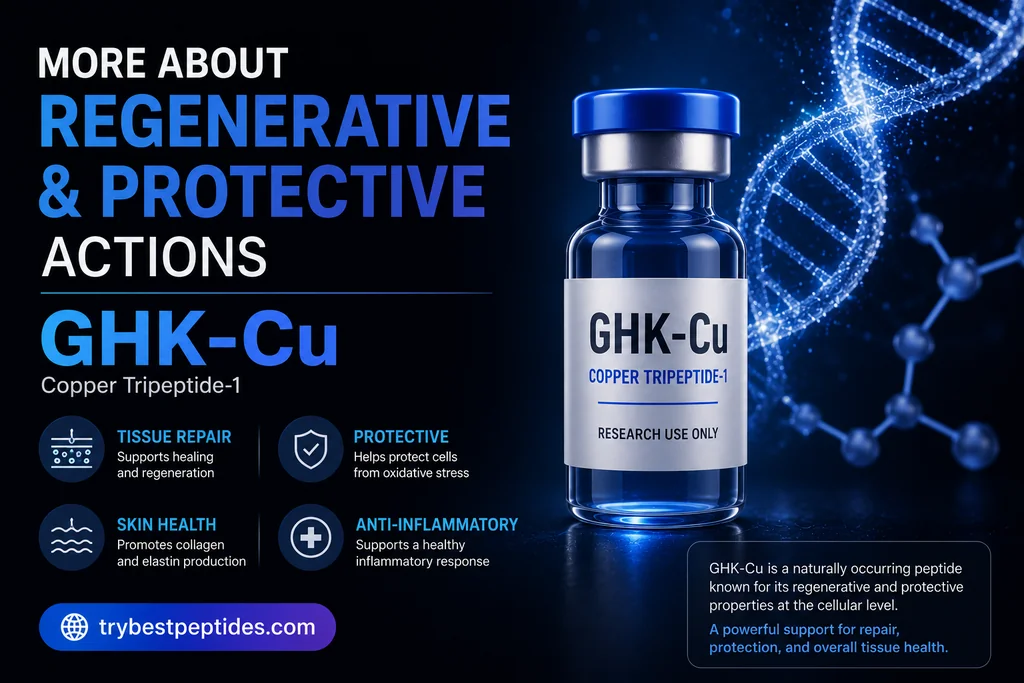
First, GHK copper delivers copper precisely where enzymes need it. Copper-dependent enzymes manage antioxidant defense throughout cells. Another copper-dependent enzyme cross-links collagen and elastin properly, creating organized, strong fibers instead of weak, disorganized structures that lead to conditions like tendinosis or chronic tendon pain. Additionally, GHK stimulates angiogenesis—the creation of new blood vessels that supply nutrients to healing wounds.
Genetic Signaling and Gene Expression
The peptide itself operates as a genetic switch. Research shows GHK influences over 4,000 human genes—approximately 30% of your entire genome. It upregulates genes involved in DNA repair, antioxidant defense, and protein synthesis. Remarkably, GHK signals skin cells to behave as if they're young again.
Equally important, GHK downregulates pro-inflammatory genes and genes associated with cancer progression. It suppresses the low-grade destructive processes underlying much of aging.
Lasting Epigenetic Changes
Here's what makes GHK unique: while the molecule itself has a half-life of 30 minutes to an hour in your bloodstream, the epigenetic changes persist for days. These aren't temporary effects—they're cumulative switches in your DNA that continue influencing cell behavior long after the peptide metabolizes.
Clinical Evidence Supporting GHK Copper
The research backing GHK copper is surprisingly robust for a peptide:
- Human studies demonstrate that topical GHK copper increases skin density and thickness, outperforming vitamin C and retinoic acid for collagen stimulation
- Animal research shows dramatic acceleration of wound healing
- Cellular studies reveal GHK copper signals cells to repair DNA rather than becoming senescent cells—those zombie cells that should die but don't
- Hair follicle research shows GHK serums can restore dormant follicles to active growth
The FDA is particularly interested in injectable GHK copper. The agency recently removed it from the banned peptide list and is actively re-evaluating it for several therapeutic applications: regenerative wound healing, dermal atrophy in elderly and steroid-dependent patients, COPD and lung remodeling, and hair follicle restoration.
GHK Copper and Lung Disease: An Emerging Application
Perhaps the most exciting FDA evaluation involves COPD and emphysema. GHK copper shows potential to downregulate runaway collagen deposition that causes pulmonary fibrosis—lung scarring. Since current treatment options for these conditions remain limited, this represents a genuine therapeutic opportunity.
More recent research suggests GHK copper activates sirtuins, often called the longevity genes, and reduces systemic inflammation markers like IL-6. The implications for age-related disease extend well beyond cosmetics.
Signs You Might Have Copper Deficiency
Not everyone needs additional copper, but how do you know if you're depleted? Copper deficiency isn't always obvious, yet certain signs warrant attention:
- Iron deficiency unresponsive to iron supplementation (copper is essential for iron transport into red blood cells)
- Tingling sensations in hands and feet
- Low white blood cell counts
- Taking high-dose zinc supplements, which can block copper absorption
This last point deserves emphasis. Zinc is hugely popular—especially among those seeking testosterone support. High-dose zinc supplementation can gradually deplete your copper stores. The relationship works both ways: excessive copper supplementation can deplete zinc. Serious GHK copper users often supplement 15-30 mg of zinc daily to maintain balance. (This isn't medical advice—just an observation from user reports.)
Delivery Methods: What Actually Works
Not all GHK copper delivery methods are equally effective. Topical application through creams and serums works reasonably well because the peptide is small enough to penetrate skin. Injectable GHK copper offers another route, and it's the form the FDA is currently re-evaluating.
Inhalation is theoretically possible but remains untested clinically. Some users report the injections sting significantly. Two factors explain this discomfort. First, GHK copper maintains an acidic pH in storage vials for stability. When it contacts your neutral pH tissue, nerve endings can become irritated. Second, the local copper influx triggers a brief inflammatory response. Whether this irritation indicates a problem remains debated among users.
Safety Considerations and Potential Risks
The primary safety concerns surrounding GHK copper deserve your attention:
Copper Overload
Chronic excessive GHK copper supplementation could theoretically lead to copper toxicity, though clinical cases remain rare. Monitoring is prudent for frequent users.
Zinc Depletion
As mentioned, long-term high-dose GHK copper can deplete zinc stores, requiring supplementation to maintain balance. This appears manageable but requires awareness.
Angiogenesis and Cancer Risk
GHK copper stimulates new blood vessel formation. There's theoretical concern that this could feed existing tumors requiring new vascularization to grow. However, evidence supporting this risk remains inconclusive—frankly, nobody yet knows if this concern is valid. This deserves further investigation before using GHK copper if you have cancer history.
What's Next for GHK Copper?
The FDA's re-evaluation of injectable GHK copper suggests potential approval may occur within the coming years. If you're reading this in 2027 or later, regulatory status may have changed. The agency's focus on wound healing, tissue atrophy, lung disease, and hair restoration indicates serious scientific interest beyond cosmetic applications.
The trajectory suggests GHK copper may transition from supplement/cosmetic peptide to prescription medication, similar to how other peptides are evolving. This would include standardized dosing, quality control, and clinical oversight—improvements worth anticipating.
Key Takeaways:
- GHK copper is a naturally produced peptide that declines 60% by age 60, limiting your body's ability to repair collagen and other tissues
- This peptide influences over 4,000 genes and creates lasting epigenetic changes, making it far more than a cosmetic compound
- Injectable GHK copper is under FDA re-evaluation for wound healing, lung disease, and hair restoration—serious therapeutic applications
- Copper and zinc balance is critical—GHK copper users should monitor levels and supplement zinc (15-30 mg daily) to prevent deficiency complications
-