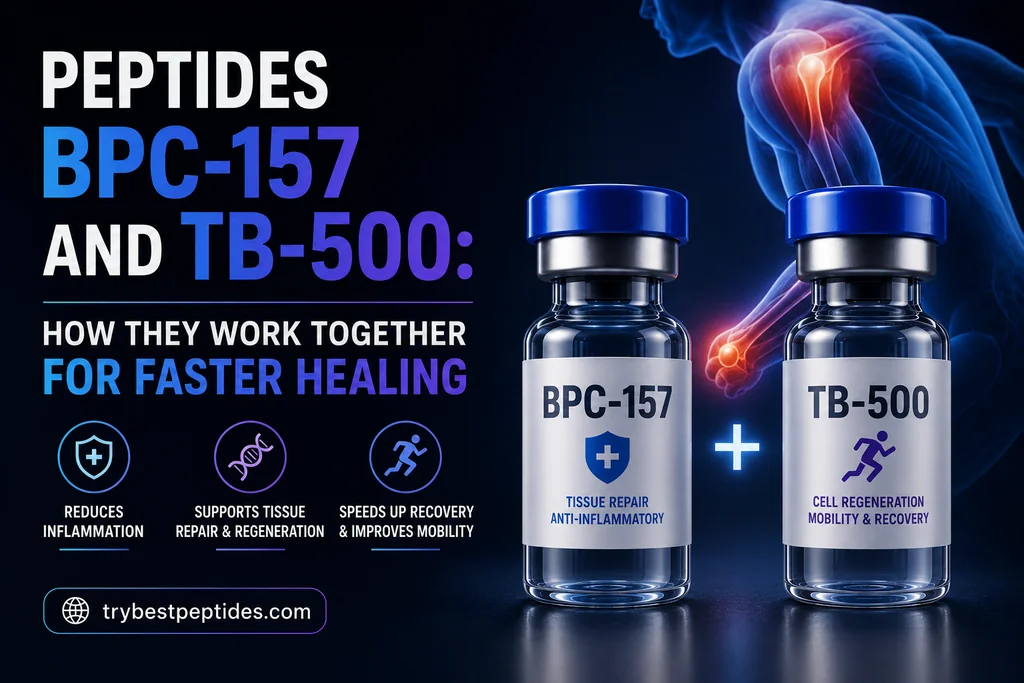
The human body possesses remarkable regenerative capabilities, yet sometimes natural healing requires additional support to reach optimal results. BPC-157 and TB-500 represent two of the most researched peptides in sports medicine and orthopedic recovery, each offering distinct mechanisms for tissue repair and regeneration. When combined strategically, these peptides create a synergistic effect that accelerates healing processes far beyond what either compound could achieve independently. Understanding how these two peptides complement each other provides valuable insight into modern approaches to injury recovery, pain management, and overall musculoskeletal health. This comprehensive guide explores the science behind BPC-157 and TB-500, their individual benefits, and most importantly, how their combined application transforms the landscape of therapeutic recovery protocols.
Understanding BPC-157: The Body's Own Healing Signal
BPC-157, or Body Protection Compound-157, originated from a protective peptide discovered within gastric secretions. This fifteen-amino-acid peptide functions as a signaling molecule that communicates directly with your body's repair mechanisms, essentially acting as a messenger that tells tissues to heal faster and more efficiently.
The primary mechanism of BPC-157 involves stimulating angiogenesis—the formation of new blood vessels. Enhanced blood supply directly correlates with improved oxygen delivery and nutrient transport to damaged areas, creating an optimal environment for cellular repair. Research demonstrates that BPC-157 significantly increases growth hormone levels locally at injury sites, promoting muscle fiber regeneration and collagen synthesis.
Beyond vascular support, BPC-157 exhibits remarkable effects on tendon and ligament recovery. Studies show accelerated healing timelines for both acute and chronic injuries affecting connective tissues. The peptide demonstrates particular efficacy in reducing inflammation without suppressing the immune response—a crucial distinction that allows the body to maintain its natural healing cascade while preventing excessive inflammatory damage.
The neurological benefits of BPC-157 deserve special attention. This peptide crosses the blood-brain barrier and influences dopamine levels, potentially reducing pain perception while simultaneously supporting nerve regeneration. Athletes and individuals recovering from orthopedic procedures report not only faster physical healing but also improved emotional resilience during recovery periods.
The Role of TB-500 in Cellular Repair and Growth
TB-500, derived from thymosin beta-4, operates through fundamentally different pathways than BPC-157, yet achieves remarkably complementary results. Where BPC-157 focuses on localized vascular enhancement, TB-500 works as a systemic regulator that influences cell migration, proliferation, and differentiation across multiple tissue types.
TB-500's primary mechanism involves actin regulation—the protein responsible for cellular movement and structure. By modulating actin dynamics, TB-500 enables cells to migrate more efficiently to damaged areas and reorganize themselves appropriately during healing phases. This creates an optimal environment for tissue reconstruction at the cellular level.
Reducing Inflammation and Promoting Flexibility
One of TB-500's most valuable properties involves its anti-inflammatory action, distinct from typical anti-inflammatory drugs. Rather than simply suppressing inflammation, TB-500 optimizes inflammatory response duration and intensity, allowing necessary healing processes while preventing chronic inflammation that impedes recovery.
For athletes and active individuals, TB-500 demonstrates significant benefits for joint mobility and flexibility. Users commonly report increased range of motion, reduced stiffness, and improved movement quality—effects that complement physical rehabilitation efforts and prevent compensatory movement patterns during recovery.
Supporting Multiple Tissue Types
Unlike peptides with narrow tissue specificity, TB-500 exhibits effects across diverse tissue systems including muscle, bone, tendon, and even neural tissue. This broad applicability makes TB-500 particularly valuable in complex injuries affecting multiple tissue types simultaneously.
The Synergistic Effect: Why These Peptides Work Better Together
The true power emerges when BPC-157 and TB-500 operate in concert. Rather than duplicating efforts, these peptides address complementary phases and aspects of the healing process, creating what researchers term a "multiplicative healing response."
Vascular support meets cellular optimization. BPC-157 establishes the infrastructure—creating new blood vessels and enhancing nutrient delivery—while TB-500 ensures that cells can effectively utilize these resources through improved migration and proliferation capabilities. This combination dramatically accelerates the timeline from injury to functional recovery.
Local and systemic coordination. BPC-157's localized effects concentrate healing activity precisely where needed, while TB-500's systemic presence ensures that supporting tissues throughout the body maintain optimal conditions for recovery. This dual-level approach prevents compensatory issues that often arise during single-peptide protocols.
Pain management integration. While BPC-157 addresses neurological pain pathways and TB-500 reduces inflammatory pain sources, their combined action provides comprehensive pain relief without the immunosuppressive side effects associated with conventional medications.
Practical Applications in Orthopedic Recovery
Acute Injury Management
When acute injuries occur—sprains, strains, muscle tears—the initial inflammatory phase determines long-term outcomes. Introducing BPC-157 and TB-500 early in this phase optimizes inflammation quality, accelerates angiogenesis, and prepares tissues for efficient proliferation and remodeling phases. Recovery timelines often compress from months to weeks.
Chronic Injury and Degenerative Conditions
Chronic conditions represent a different challenge, where healing mechanisms have stalled or become dysfunctional. The dual-peptide approach essentially "reactivates" dormant repair pathways. BPC-157 re-establishes vascular support in chronically underserved tissues, while TB-500 stimulates cellular reorganization that breaks the degenerative cycle.
Post-Surgical Optimization
Orthopedic surgery creates a unique opportunity—tissues are already in an active healing state. Peptide protocols beginning immediately post-operatively accelerate bone fusion, tendon attachment, and overall tissue integration. Many surgeons implementing peptide support report superior surgical outcomes compared to conventional rehabilitation alone.
Performance Enhancement and Injury Prevention
Athletes increasingly utilize these peptides not merely for injury recovery but for proactive tissue optimization. Systematic tissue enhancement strengthens connective tissues against future injury while improving athletic performance through better tissue quality and proprioceptive function.
Protocol Considerations and Administration
Effective utilization of BPC-157 and TB-500 requires understanding optimal dosing and timing. Typical protocols involve BPC-157 administration ranging from 250 to 500 micrograms daily, often split into two doses for systemic distribution. TB-500 follows different kinetics, typically administered at 2 milligrams per week, with cycles lasting 4-8 weeks.
Timing matters substantially. Early intervention in acute injuries produces the most dramatic results, though chronic condition improvement also occurs with extended protocols. Most users report observable changes within 2-3 weeks, with maximum benefits emerging over 8-12 weeks.
Individual variation exists. Factors including injury severity, tissue type affected, age, overall health status, and concurrent rehabilitation efforts all influence response patterns. Customizing protocols based on individual response patterns optimizes outcomes compared to rigid standardized approaches.
Safety Profile and Considerations
Both peptides demonstrate remarkable safety profiles in research literature, with minimal adverse effects reported even at substantially higher doses than therapeutic recommendations. Neither induces the hormonal disruptions associated with growth hormone therapy, nor do they compromise immune function like corticosteroid alternatives.
However, peptide quality varies dramatically among suppliers. Pharmaceutical-grade sources with third-party testing provide genuine peptides that deliver expected results. Lower-quality alternatives may contain inactive compounds, incorrect peptide variants, or contaminating substances that compromise safety and efficacy.
Individual medical history requires consideration before implementation. Those with active infections, malignancies, or specific medical conditions should consult healthcare providers before beginning peptide protocols. Pregnant and nursing individuals should avoid peptide experimentation until comprehensive safety data becomes available.
The Future of Peptide-Based Recovery Medicine
The emerging evidence supporting BPC-157 and TB-500 represents merely the beginning of peptide medicine's evolution. Ongoing research continues identifying additional peptides that address specific healing challenges, while combination protocols incorporating three or more complementary peptides show remarkable promise for complex injuries.
As regenerative medicine advances, peptide-based approaches increasingly become standard components of comprehensive recovery protocols, working alongside physical therapy, nutritional support, and other evidence-based interventions. The paradigm shift away from merely managing symptoms toward genuinely accelerating tissue healing represents profound progress in orthopedic care.
Key Takeaways:
- BPC-157 specializes in vascular enhancement and localized tissue regeneration, primarily through angiogenesis stimulation and growth hormone signaling
- TB-500 optimizes cellular dynamics and migration, allowing cells to respond effectively to the improved conditions BPC-157 creates
- Combined protocols produce synergistic effects, compressing recovery timelines by 30-50% compared to single-peptide approaches
- Early intervention yields superior results, making acute injury management an ideal application window
- Safety profiles are excellent when sourced from quality suppliers, though individual medical history warrants consideration
- Ongoing research continues expanding our understanding of peptide combinations and optimal protocol implementation
- Integration with comprehensive rehabilitation approaches maximizes outcomes compared to peptide therapy alone
-