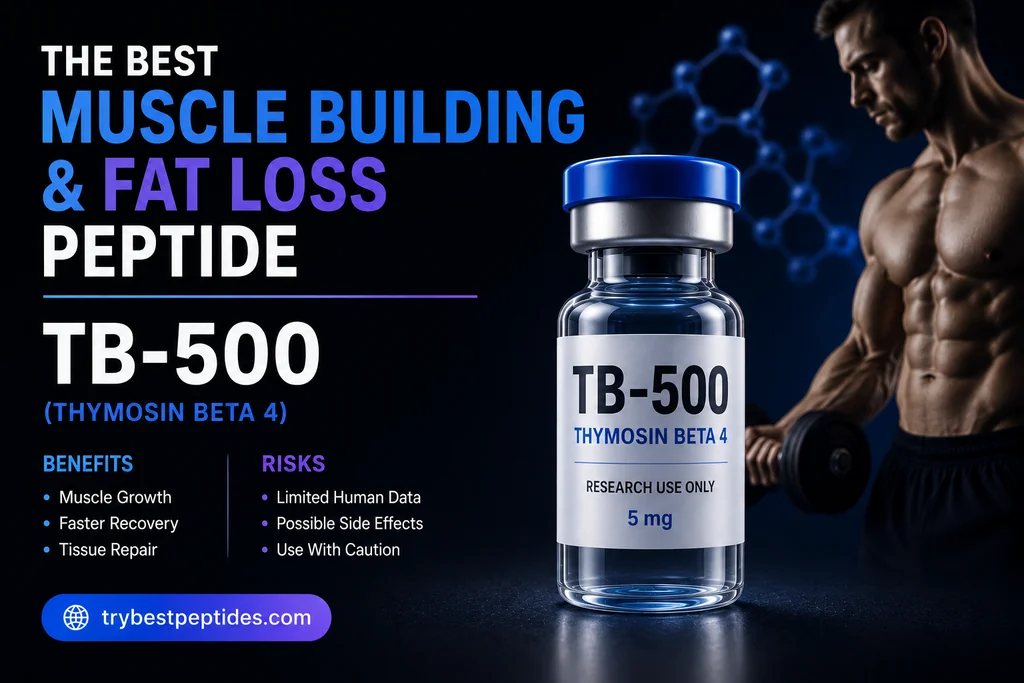
Peptides are among the most fascinating developments in recovery, muscle building, and cognitive enhancement today. One peptide in particular—TB500, also known as thymosin beta-4—has generated significant interest in both scientific circles and athletic communities. These terms refer to the same molecule: thymosin beta-4 is the naturally occurring peptide, while TB500 is its synthetic form. Understanding what TB500 does, how it works, and what the current research shows can help you make informed decisions about whether this peptide might be relevant to your health and recovery goals.
Peptides themselves are simply chains of amino acids, typically ranging from two to over 200 amino acids in length. What makes them powerful is their ability to mimic signals within your body. In the case of thymosin beta-4, this peptide is naturally secreted by your thymus gland in response to injury, trauma, or muscle damage—especially when connective tissue repair is needed. The challenge? Your body produces only small amounts, and production declines with age. TB500 supplements this natural supply with a concentrated dose. While personal experience with peptides remains limited in mainstream medicine, the emerging research paints a compelling picture of potential benefits across injury recovery, cognition, heart health, and muscle repair.
Injury Repair and Connective Tissue Recovery
When it comes to tissue healing, the research on TB500 is particularly encouraging. A landmark study published in the Journal of Regulatory Peptides examined connective tissue repair in detail. Researchers injured the MCL (medial collateral ligament) in rats and administered either TB500 or a placebo daily for four weeks.
The results were striking. The TB500 group formed collagen fibrils in a much denser pattern than the control group. More importantly, these collagen fibers were uniform and evenly spaced—meaning the tissue was healing in a biomechanically normal way. This matters tremendously because when we injure connective tissue, poor healing can lead to reduced range of motion, instability, or chronic weakness. The TB500-treated animals recovered proper biomechanics, suggesting the peptide actively directed tissue toward healthy restoration rather than scar formation.
Wound Healing and Collagen Formation
A separate study in the Journal of Investigative Dermatology examined wound healing timelines. Researchers tracked collagen and skin formation over open wounds, comparing TB500 recipients with controls. At four days post-administration, the TB500 group showed 42% more collagen and skin formation compared to placebo. By day seven, this advantage widened to 61% more formation.
What's driving this accelerated healing? The mechanism appears to involve two key processes: angiogenesis (new blood vessel formation) and collagen deposition. In practical terms, TB500 appears to increase blood flow to injured areas while simultaneously signaling your body to lay down new connective tissue more efficiently. Think of it this way—if you cut yourself on your foot and have poor circulation, healing will lag. With better blood flow plus active collagen signaling, the repair process accelerates.
Inflammation and Immune Response
Beyond structural healing, TB500 seems to modulate inflammation. A study published in the International Journal of Immunopharmacology examined mice with sepsis (a serious systemic infection). Remarkably, TB500 reduced mortality rates associated with sepsis and lowered inflammatory responses at the molecular level. This anti-inflammatory effect aligns with anecdotal reports from users who experienced less soreness and stiffness during TB500 use. Better heart rate variability and faster overall recovery further suggest that inflammation—a driver of poor recovery—was being actively reduced.
Cognitive Function and Brain Health
The research on TB500's effects on cognition is newer and more speculative, but genuinely promising. A study published in Neuroinflammation took a different approach: instead of administering TB500 directly, researchers triggered mice to produce more thymosin beta-4 naturally through genetic overexpression.
The findings were impressive. The mice showed massive decreases in beta-amyloid plaque formation, the protein aggregates associated with neurodegenerative diseases. They also displayed improved neuronal function—essentially, their brain cells fired more effectively. On top of that, the study found normalized microglia activity. Microglia are the brain's resident immune cells, and when overactive, they drive neuroinflammation. Restoring them to baseline levels may protect against cognitive decline.
Mechanisms of Neuroprotection
The mechanism behind these brain benefits appears multifaceted. Research suggests TB500 reduces toll-like receptor 4 signaling—imagine a toll booth that, when triggered, initiates immune activation. By dampening this pathway, TB500 may prevent unnecessary immune escalation in the brain. Additionally, it appears to lower nuclear factor kappa B, a genetic marker for top-down inflammatory signaling.
The collective effect? TB500 seems to reduce oxidative stress in brain tissue, lowering neuroinflammation from the ground up. Importantly, all of this research comes from rodent models. No human trials have directly tested cognitive benefits, so caution is warranted. Still, the consistency across multiple mechanisms suggests TB500's brain-protective potential deserves serious investigation.
Heart Cell Health and Regeneration
Perhaps the most remarkable—and most cautionary—research involves cardiac tissue. A study published in the New York Academy of Sciences demonstrated something extraordinary: the research team reported that thymosin beta-4 was "the first known molecule able to initiate simultaneous myocardial and vascular regeneration after systemic administration."
In plain language, TB500 protected heart muscle cells from death and triggered new blood vessel formation. For conditions like myocardial infarction (heart attack), where cardiac tissue dies, this regenerative potential could be life-changing. But here's where we need to pump the brakes. Not all angiogenesis is beneficial.
Excessive blood vessel formation in heart tissue can actually impair function. If you're already training intensively—especially with high-intensity interval work designed to stress your cardiovascular system—adding angiogenesis stimulation might create problematic tissue thickening. Notably, even researchers like Andrew Huberman have raised this concern privately: too much angiogenesis isn't always good. The practical takeaway? TB500 may be valuable for healing acute injuries or disease, but using it long-term or during heavy training cycles requires caution and professional guidance. A conversation with your healthcare provider isn't optional—it's essential.
Muscle Recovery and Regeneration
Athletes naturally wonder if TB500 has steroid-like muscle-building effects. The research suggests it's more nuanced than that. One study published in PLoS ONE examined mice deficient in dren, a protein critical for muscle repair signaling. These mice struggle to build and repair muscle effectively because dren helps orchestrate recovery and regeneration.
Researchers administered a hefty dose of thymosin beta-4 (150 micrograms twice weekly for six months) to these compromised mice. The results? TB500 offset most negative effects of dren deficiency. Muscle regenerative fibers increased significantly, allowing damaged muscle to repair itself more effectively. The catch: this research is in rodent models. Direct translation to humans hasn't been established. That said, if you have a muscular injury, atrophy, or a genetic/metabolic condition impairing muscle growth, TB500 might offer genuine benefit. More research in humans is needed before drawing firm conclusions.
Side Effects and Safety Considerations
Real talk: every peptide carries potential risks, and TB500 is no exception. The most common acute side effects are headache and nausea, typically occurring shortly after administration. Some users report experiencing excellent performance during workouts but exceptional fatigue afterward—suggesting that recovery mechanisms are being stimulated, possibly even overdrive.
The good news comes from a safety study published in the Journal of Cellular and Molecular Metabolism. Researchers tracked 30 individuals receiving both single and multiple TB500 doses. Side effects were so minimal that researchers deemed TB500 safe enough to proceed to ongoing human clinical trials. That's significant. It means the peptide isn't creating obvious toxicity or harmful reactions—at least in the short term.
However—and this is crucial—long-term human data remains sparse. TB500 is still relatively new territory. The studies backing its benefits come primarily from animal models. This isn't necessarily damning; many treatments begin this way. But it demands respect and caution. Before experimenting with TB500 or any peptide, consult a healthcare professional trained in peptide pharmacology. Doctors like Kyle Gillette or clinicians at firms like Merri Health specialize in this emerging field and can help you assess whether TB500 aligns with your specific health situation.
Conclusion
TB500 and thymosin beta-4 represent a genuinely novel frontier in recovery, regeneration, and potentially neuroprotection. The research—while primarily in animal models—suggests meaningful benefits for connective tissue healing, reduced inflammation, improved brain health markers, cardiac regeneration, and muscle recovery. These findings are exciting and worth following as human trials progress.
That said, this remains early-stage science. The gap between rodent studies and proven human benefit is real and shouldn't be minimized. The potential for overuse—particularly the angiogenesis concern in cardiac tissue or during intensive training—suggests that short-term, injury-focused application is more prudent than ongoing supplementation.
Your next step? If you're curious about TB500, educate yourself on the current research, speak with a qualified healthcare provider, and remember that this peptide is not a replacement for solid fundamentals: sleep, proper nutrition, intelligent training, and stress management. TB500 might be a tool that accelerates healing or recovery under the right circumstances, but it's never a shortcut to long-term health.
Key Takeaways:
- TB500 (thymosin beta-4) accelerates connective tissue healing by promoting uniform collagen fiber formation and restoring proper biomechanics, with research showing 42-61% faster wound healing in animal models.
- The peptide demonstrates neuroprotective effects by reducing beta-amyloid plaques, lowering neuroinflammation, and improving neuronal function—though human cognitive research remains limited.
- TB500 shows exceptional promise for heart tissue regeneration and repair, but long-term use during heavy cardiovascular training may risk problematic angiogenesis and should be discussed with a healthcare provider.
- Safety studies indicate TB500 is well-tolerated with minimal side effects, making it promising for clinical trials, but long-term human data remains incomplete and professional medical guidance is essential before use.
-