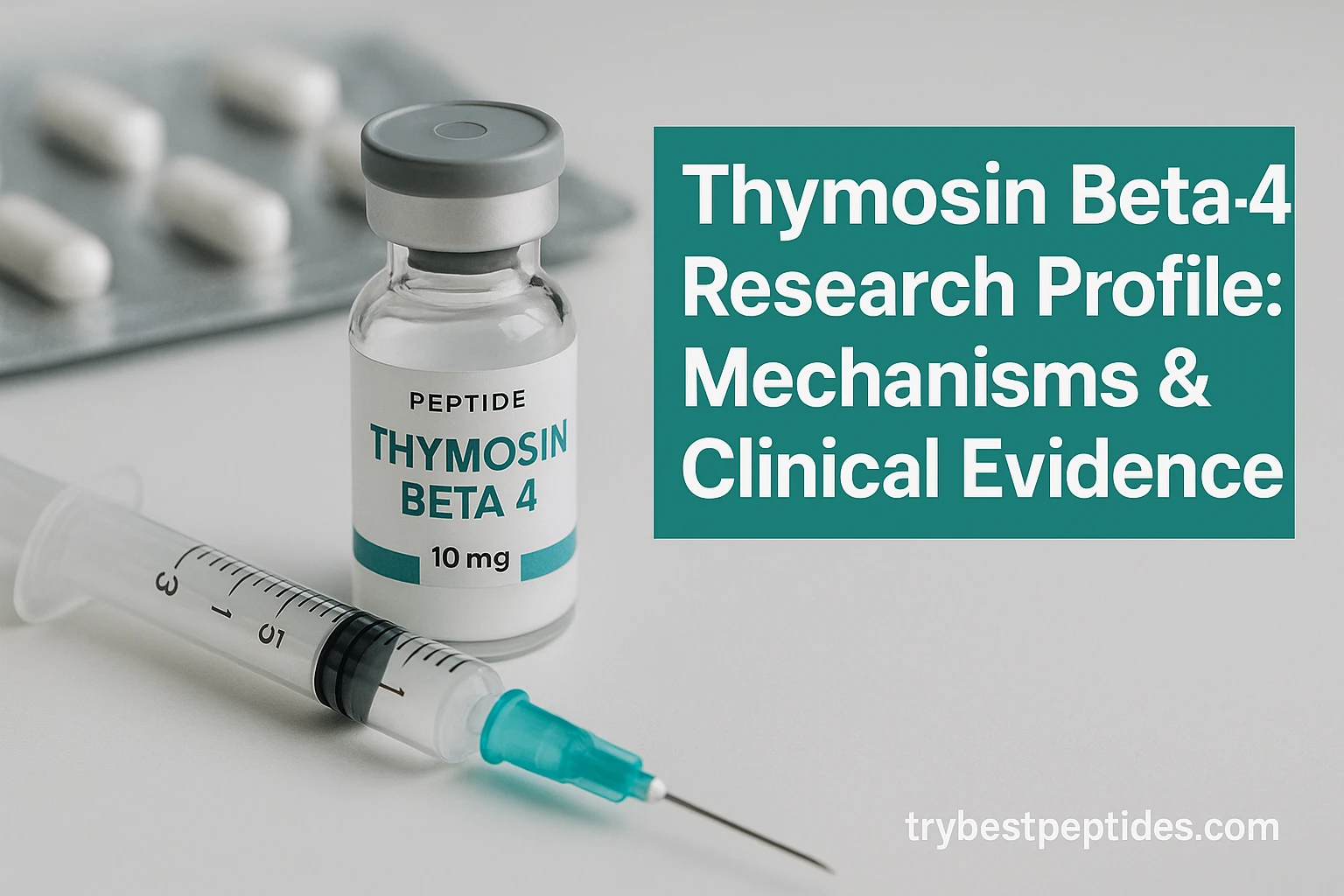
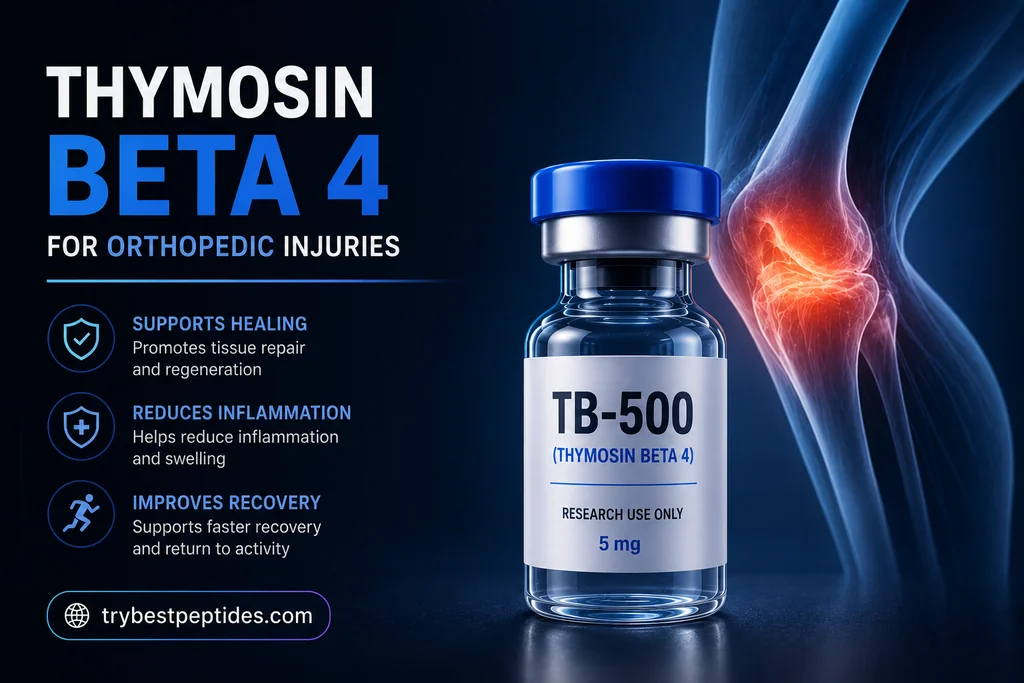
Thymusin beta-4, commonly known as TB4 or TB500, has emerged as one of the most discussed peptides in regenerative medicine and athletic recovery circles. This 43-amino acid peptide, naturally produced in the thymus gland, offers fascinating potential for tissue healing and injury recovery. If you're curious about how peptides work, what TB4 does at the cellular level, or whether it might support your recovery goals, this comprehensive guide will help you understand the science behind this popular compound. As with all health information, this article is for educational purposes only—always consult with a qualified healthcare provider before considering any new treatment approach.
What Is Thymusin Beta-4 and How Does It Work?
To understand TB4, we first need to grasp what peptides are. A peptide is essentially a short chain of amino acids—think of it as a small protein naturally found throughout our bodies. Over 7,000 naturally occurring peptides have been identified by researchers, and they're involved in nearly every bodily process imaginable. These signaling molecules act as communication channels throughout your system, orchestrating everything from hormone production to cell-to-cell communication.
Thymusin beta-4 is unique in several ways. Our bodies produce it naturally, particularly in high concentrations during youth and early adulthood. Interestingly, studies show TB4 accumulates in areas of tissue damage and muscle injury—almost as if your body knows where to send repair signals. It exhibits what researchers call pleiotropic effects, meaning it influences multiple organ systems and bodily functions simultaneously.
One major advantage of peptides like TB4 is their safety profile. Peptides have an extremely short half-life, typically lasting only minutes to hours in your bloodstream before being metabolized. This contrasts sharply with hormones like steroids, which linger in your system for extended periods and can produce numerous unwanted side effects. Because peptides are temporary signaling molecules rather than sustained chemical presence, they're generally considered safer for most applications.
How TB4 Supports Tissue Healing and Regeneration
The mechanism of action behind thymusin beta-4 is where things get really interesting. At the cellular level, TB4 works through multiple pathways to promote healing and regeneration. It supports tissue stem cells, essentially giving them the signals they need to repair and regenerate damaged structures. Beyond basic stem cell support, the peptide enhances collagen deposition—the protein framework that gives tissues their structure and strength.
Here's what happens when TB4 enters an injured area:
- Activates progenitor cells to repair damaged tissue
- Promotes rapid wound healing with minimal scarring
- Reactivates dormant repair mechanisms
- Reduces acute and chronic pain through potent anti-inflammatory action
- Upregulates actin, a critical muscle protein involved in cell building and muscle contraction
That last point deserves special attention. Actin, combined with myosin, forms the contractile filaments that make muscle contraction possible. By upregulating actin, TB4 essentially promotes cellular healing, growth, migration, and proliferation. One particularly clever feature of thymusin beta-4 is its ability to travel directly to injury sites, which explains why researchers find higher concentrations there naturally.
Preventing Scarring and Promoting Organized Healing
When muscles, tendons, or ligaments heal, the collagen fibers don't always align neatly. Picture a childhood game of pick-up sticks—fibers lie scattered in somewhat random directions. This haphazard arrangement means you regain function and strength more slowly than if those fibers were organized properly.
TB4 may help solve this problem. Research suggests it can prevent adhesions and the formation of fibrous bands in injured tissues. By promoting more organized collagen alignment during the healing process, it potentially allows structures to regain normal function and strength faster than they would with standard healing alone.
Clinical Applications and Research Evidence
Most existing research on thymusin beta-4 focuses on non-orthopedic conditions, which tells us something important about where this peptide is already established. Current clinical evidence shows TB4's benefit for liver disease, alcoholic liver disease, liver fibrosis, eye injuries, eye infections, peripheral neuropathies, and even stroke recovery. It's also incorporated into several hair loss treatments with promising results.
The gap in research becomes apparent when we look at orthopedic applications. While extensive scientific literature searches reveal relatively limited direct studies on TB4 for bone and joint injuries, peptide experts and regenerative medicine specialists believe—based on the mechanism of action—that it likely benefits several common orthopedic conditions:
- Hamstring muscle and tendon injuries
- Calf muscle injuries and tears
- Quadriceps injuries
- Tennis elbow and other tendinitis conditions
- Achilles tendinopathy
- Rotator cuff injuries
- General muscle strain and ligament sprains
The theoretical basis for these applications is sound. If TB4 works by promoting organized tissue healing, reducing inflammation, and supporting stem cell activation, then these same mechanisms should theoretically apply to orthopedic injuries. However, it's important to note that more clinical research specifically targeting musculoskeletal conditions would provide stronger evidence.
Administration Methods and Practical Considerations
So how do you actually use thymusin beta-4? The standard administration method is subcutaneous injection—a self-administered injection just under the skin. This delivery method ensures good bioavailability and direct entry into the systemic circulation.
Oral forms of TB4 and TB500 do exist, but considerable debate surrounds their effectiveness. When peptides are taken orally, digestive enzymes can break them down before absorption occurs. While some manufacturers claim their oral formulations overcome this challenge through special delivery systems, the reality is less clear. Injectable forms remain the gold standard for consistent, predictable dosing.
Sourcing and Safety Concerns
Here's where I need to be direct: obtaining peptides from online "research chemical" suppliers carries substantial risks. These websites often appear legitimate—they use professional language, make impressive safety claims, and operate with apparent credibility. However, they operate in a regulatory gray zone, and the FDA does not inspect these facilities or verify their product claims.
The dangers are real and documented:
- Vials may contain little to no actual peptide
- Contamination with endotoxins and other harmful substances occurs
- Some users have reported liver damage from online-sourced peptides
- Quality control and purity are completely unverified
If you're interested in exploring TB4 or other peptides, the only responsible approach is working with a licensed healthcare provider who can source pharmaceutical-grade materials and monitor your response appropriately.
FDA Status and Regulatory Landscape
Understanding the regulatory environment surrounding peptides helps explain why they're not available through standard medical channels. As of 2018, approximately 60 peptides had received FDA approval, with about 150 in clinical development and several hundred undergoing clinical trials. The FDA is actively conducting pharmacological assessments of these compounds, meaning the regulatory landscape continues evolving.
Thymusin beta-4 remains largely in an experimental category for most applications. It's not considered standard of care for most injuries and diseases, which means most insurance doesn't cover it and most doctors haven't integrated it into their treatment protocols. This regulatory status doesn't necessarily reflect safety concerns—it simply reflects the reality that comprehensive clinical trials are ongoing.
Important Considerations for Athletes
If you compete in any sport with anti-doping testing, this is critical information: thymusin beta-4 is banned by the World Anti-Doping Agency (WADA). Like BPC-157 and other growth hormone-releasing peptides, TB4 appears on prohibited substance lists. This applies regardless of your sport or competition level.
While it's reasonable to assume these peptides are widely used in professional sports, bodybuilding, and powerlifting circles, that doesn't change the official status. If you're tested, TB4 would show as a banned substance. This represents an important distinction: TB4 is primarily valued for tissue repair rather than direct performance enhancement, yet it remains prohibited nonetheless.
The Future of Peptide Therapy
The peptide field is evolving rapidly. Major pharmaceutical companies increasingly recognize the potential of peptide-based therapeutics, with more compounds expected to receive FDA approval and enter mainstream medical practice in coming years. As research expands and regulatory pathways clarify, some peptides currently considered experimental may become standard treatment options.
For now, thymusin beta-4 represents an interesting frontier in regenerative medicine—one with promising mechanisms and emerging evidence, but requiring more rigorous clinical investigation for orthopedic applications specifically. The science is compelling, but we should remain appropriately cautious until larger, well-designed studies provide more definitive answers.
Conclusion
Thymusin beta-4 represents a fascinating application of peptide science to tissue healing and regeneration. This naturally occurring 43-amino acid compound works through multiple mechanisms—supporting stem cells, enhancing collagen organization, reducing inflammation, and promoting organized tissue repair. While most clinical evidence focuses on liver disease, eye conditions, and neuropathies, the theoretical basis for orthopedic applications is sound. However, orthopedic-specific research remains limited, and TB4 is not yet standard care for most musculoskeletal injuries.
If you're interested in exploring peptide therapy, work exclusively with licensed healthcare providers rather than online suppliers. The regulatory landscape continues evolving as pharmaceutical companies develop peptide-based treatments and the FDA completes its pharmacological assessments. Most importantly, understand that athletes should be aware of WADA's prohibition on TB4 and similar compounds.
Your best path forward involves honest conversations with qualified healthcare providers about all available treatment options—not just surgery or cortisone injections, but the full spectrum of evidence-based approaches to healing and recovery. The future of regenerative medicine likely includes peptides, but that future is best navigated with expert medical guidance.
Key Takeaways
-
Thymusin beta-4 is a 43-amino acid peptide naturally produced in the thymus gland that supports tissue healing through multiple mechanisms: stem cell activation, collagen deposition, inflammation reduction, and organized tissue repair.
-
While clinical evidence is robust for liver disease, eye injuries, and neuropathies, orthopedic applications remain largely theoretical, though the mechanisms suggest potential benefits for muscle, tendon, and ligament injuries.
-
Only obtain peptides through licensed healthcare providers; online "research chemical" suppliers operate without FDA oversight and present serious safety risks including contamination, misrepresentation of contents, and documented cases of organ damage.
-
Thymusin beta-4 is prohibited by the World Anti-Doping Agency (WADA) for athletes, making it banned regardless of its tissue-healing rather than performance-enhancing properties.
-