Your body produces its own antimicrobial weapons—and LL37 is one of the most sophisticated. This naturally occurring cathepsin peptide represents a fascinating frontier in immune defense, capable of breaking through bacterial biofilms, modulating inflammatory responses, and even promoting tissue regeneration. Unlike conventional antibiotics, which face mounting resistance problems, LL37 works as a "silent assassin," targeting invasive pathogens while simultaneously signaling your immune cells to mobilize. Understanding how LL37 functions, when your body needs optimal levels, and what happens when it becomes overexpressed reveals why this peptide matters far more than most people realize.
Understanding LL37 and Antimicrobial Peptides
LL37 belongs to a special family of molecules called antimicrobial peptides (AMPs)—natural compounds your immune system deploys when facing bacterial, viral, or fungal invasions. When pathogens infiltrate your body, they employ sophisticated survival strategies. They construct biofilms, essentially protective fortifications that shield them from your immune system while they send confusing chemical signals to maintain their foothold.
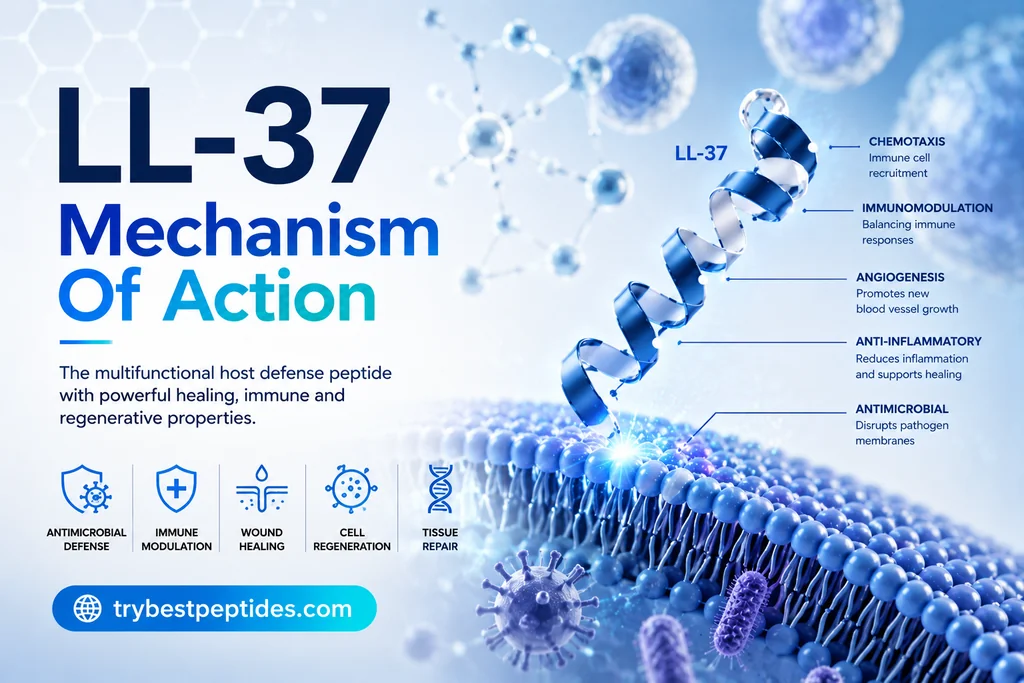
This is where LL37 becomes indispensable. Rather than simply attacking the pathogen directly, it functions like an elite reconnaissance unit combined with a private investigator. LL37 breaches biofilm barriers and identifies pockets of infection, then recruits macrophages—your immune system's specialized police force—to eliminate the threat. The peptide has been the subject of serious scientific investigation for approximately 25 years, making it one of the more thoroughly studied compounds in the antimicrobial peptide category.
A landmark 2002 study from the University of British Columbia in Vancouver, Canada, titled "Human Antimicrobial Peptide LL37 is a Multifunctional Modulator of Innate Immune Responses," demonstrated something remarkable. Researchers tested LL37 against macrophage cells exposed to lipopolysaccharides (LPS)—toxic bacterial byproducts that trigger severe inflammation. The findings revealed that LL37 simultaneously inhibited pro-inflammatory responses while upregulating chemokine receptors to recruit additional immune cells. In other words, it fought infection without creating the collateral damage typical of aggressive immune activation.
Why LL37 Earned the "Silent Assassin" Title
The nickname captures something essential about LL37's mechanism. When your body maintains adequate LL37 expression, the peptide can target problematic agents with surgical precision. It penetrates bacterial, fungal, and viral membranes like a heat-seeking missile, identifying and neutralizing threats that antibiotics might fail against—especially as antibiotic resistance accelerates globally.
Consider the current antibiotic crisis. Pharmaceutical companies invest heavily in treatments for chronic diseases because they generate long-term profits. Antibiotics, by contrast, work short-term; you take them for a few weeks and discontinue. This economic reality explains why major investments in novel antimicrobial research remain limited. Yet a Toronto-based company received a $50 million grant several years ago to explore whether LL37 could eventually replace certain classes of antimicrobial drugs. While human trials remain ongoing, the theoretical potential appears substantial.
The Dual Action: Destruction and Compassion
Here's where LL37 becomes even more interesting. The term "cathepsin" translates roughly to "universal destroyer," yet LL37 balances destruction with something unexpected: regeneration.
Beyond eliminating pathogens, LL37 prevents scar tissue accumulation and actively promotes tissue recovery. A particularly compelling study examined burn wounds treated with LL37. The results showed faster skin regeneration, significantly reduced scar formation, and fewer secondary infections—all leading to shorter recovery periods. This dual capacity—simultaneously destroying harmful agents while promoting tissue repair—positions LL37 as something closer to a battlefield medic than a conventional antimicrobial.
How LL37 Modulates Immune Response
LL37 accomplishes its dual function through an elegant mechanism: it binds to endotoxins and modulates toll-like receptors, which serve as your immune system's communication pathways. Rather than triggering the aggressive pro-inflammatory cascade that makes you feel miserable during infection (joint pain, fever, activation of old injuries), LL37 signals your body to enter regenerative mode.
Think of the difference this represents. When you experience a severe viral infection, the interferon response floods your system—you feel awful even though your body's fighting the virus effectively. LL37 avoids this collateral damage. Instead, it works more like compounds such as GHK-copper peptide, which activates collagen and elastin synthesis for superior tissue remodeling. Your body heals faster while experiencing fewer inflammatory symptoms.
LL37 and the Gut Barrier Problem
One of modern medicine's most overlooked health concerns involves intestinal permeability—what many call "leaky gut." When tight junctions between intestinal cells become inflamed, they separate. Undigested proteins and bacterial lipopolysaccharides (LPS) escape into circulation, triggering systemic inflammation and compromising immune function. This creates a vicious cycle: your body needs optimal LL37 expression to manage this endotoxin load, yet compromised gut health impairs LL37 production.
Breaking this cycle requires a comprehensive approach. First, you need immune modulation through substances like thymus alpha-1, thymus beta-4, Cordyceps mushrooms, and turkey tail—compounds that help restore proper immune signaling. Second, functional stool testing becomes essential. These tests reveal critical information:
- Whether you're adequately breaking down proteins
- Your short-chain fatty acid production (crucial for beneficial bacteria)
- Whether undigested fats appear in stool (indicating lipase insufficiency)
- Your beta-glucuronidase pathway status—important because this enzyme affects hormone metabolism and hormone balance
When beta-glucuronidase becomes impaired, you might experience hormone replacement therapy resistance or hormonal imbalance despite adequate supplementation. Calcium d-glucarate can help restore this pathway's function. Advanced stool testing also identifies pathogenic yeasts, bacterial overgrowth, eosinophilic activity markers, and secretory IgA levels—all indicators of gut terrain quality.
Creating the Right Terrain for LL37 to Thrive
As the microbiologist Louis Pasteur famously advised, "The terrain is everything; the germ is nothing." This insight captures the essential LL37 strategy. You cannot simply supplement LL37 and expect transformation—you must first optimize the internal environment where this peptide operates.
The terrain includes:
- Proper protein digestion and nutrient absorption
- Balanced gut microbiota with abundant beneficial bacteria
- Healthy intestinal barrier function with intact tight junctions
- Appropriate inflammatory tone neither excessive nor insufficient
- Efficient liver detoxification and hormone metabolism pathways
- Adequate production of antimicrobial peptides including LL37 itself
When this terrain becomes compromised by infections, dysbiosis, dietary stress, or toxin exposure, LL37 struggles to achieve its full potential regardless of supplementation. This explains why the most effective LL37 strategies focus on holistic terrain restoration rather than isolated peptide supplementation.
The Future of Signaling Medicine
LL37 represents something larger than a single therapeutic tool. It exemplifies an emerging medical paradigm shift toward "signaling medicine"—treatment approaches that restore your body's ability to send appropriate chemical signals at precise times. Rather than forcing specific outcomes with pharmaceuticals, signaling medicine asks: How can we help your body communicate correctly so your cells regenerate optimally?
This approach recognizes that peptides like LL37 don't work in isolation. They function within complex networks where timing, concentration, and context determine effectiveness. At any age, looking and feeling your best depends on whether your body can continuously signal regeneration. LL37, when properly supported through terrain restoration and immune modulation, demonstrates this regenerative capacity beautifully.
Conclusion
LL37 stands as a remarkable example of how your body manufactures sophisticated weapons against infection and degeneration. This antimicrobial peptide breaks through biofilms, recruits immune defenders, modulates inflammatory responses, and promotes tissue regeneration—all without the aggressive side effects or resistance problems associated with conventional antibiotics. However, LL37's true power emerges only when your gut terrain supports its function. By addressing intestinal permeability, optimizing digestion, restoring beneficial bacteria, and supporting immune modulation through natural compounds, you create the conditions where LL37 can truly shine. The future of medicine lies not in isolated pharmaceutical interventions but in helping your body send the right signals at the right moments. Your naturally produced LL37 peptide, when properly supported, exemplifies this regenerative medicine approach.
Key Takeaways:
-
LL37 is a naturally produced antimicrobial peptide that breaks through bacterial biofilms and recruits immune cells while simultaneously promoting tissue regeneration, earning it the title "silent assassin."
-
Unlike conventional antibiotics facing mounting resistance, LL37 modulates toll-like receptors to create an immune response without excessive inflammation, making it a potential future alternative for antimicrobial therapy.
-
Optimal LL37 expression requires addressing gut terrain through proper digestion, intestinal barrier restoration, and immune modulation—supplements alone cannot replace this foundational work.
-
LL37 exemplifies the emerging paradigm of "signaling medicine," where the goal becomes restoring your body's ability to communicate correctly for continuous cellular regeneration rather than forcing specific outcomes.
-