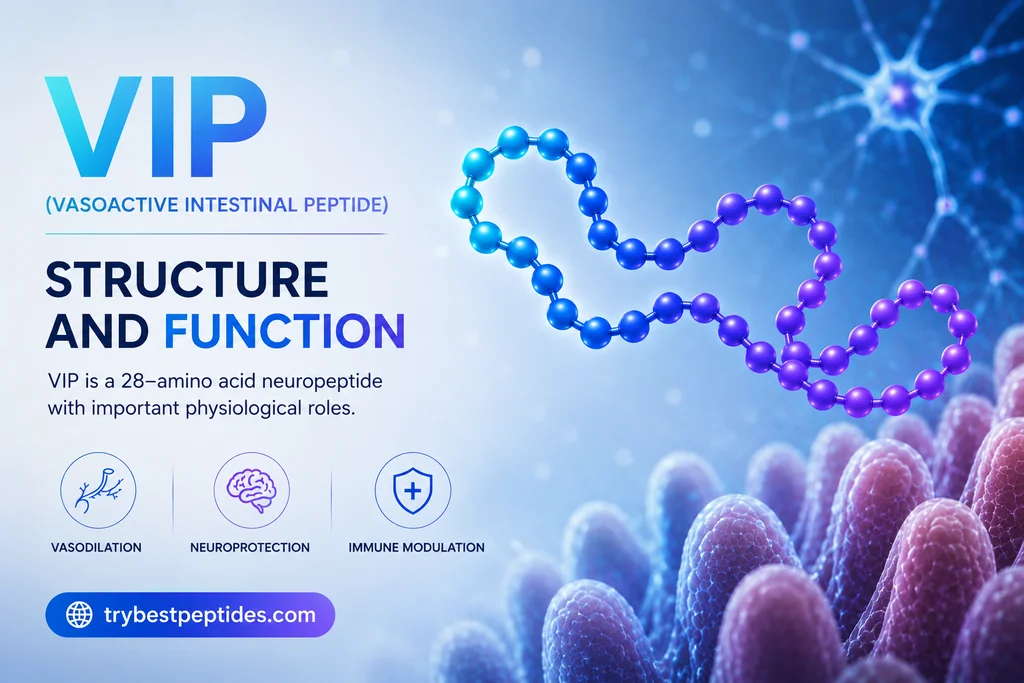
Vasoactive intestinal peptide (VIP) is a fascinating hormone that plays multiple critical roles throughout the body, particularly within the gastrointestinal tract and beyond. As a 28-amino acid polypeptide, VIP belongs to the glucagon-secretin superfamily and functions as both a local and systemic hormone with remarkable versatility. This peptide hormone operates through specific G-protein coupled receptors on target cells, exerting effects across the digestive system, cardiovascular system, and central nervous system. Understanding VIP's structure and diverse physiological functions helps explain how this relatively small molecule orchestrates complex processes from muscle relaxation to hormone secretion. Given its short half-life of just two minutes, VIP exemplifies how the body uses rapid-acting signaling molecules for precise, time-sensitive regulation.
Structural Characteristics and Biochemical Classification
VIP's identity as a 28-amino acid polypeptide chain establishes its place within an important family of regulatory hormones. What makes VIP particularly interesting is its close structural relationship to glucagon and secretin—both share fundamental similarities that define the glucagon-secretin superfamily. This chemical kinship explains why these hormones activate comparable signaling pathways despite operating in different tissues and producing distinct physiological outcomes.
The hormone's mechanism of action depends entirely on its interaction with G-protein coupled receptors found on the surface of target cells. When VIP binds to these receptors, it initiates a cascade of intracellular events that translate hormonal signals into cellular responses. This receptor-binding specificity ensures that VIP affects only tissues expressing the appropriate receptors, allowing for precise physiological regulation.
It's worth mentioning that VIP's extraordinarily brief half-life of only two minutes fundamentally shapes how the hormone operates. This temporal constraint means the hormone can only exert effects within a narrow window after secretion, making it ideal for regulating acute, short-duration physiological processes rather than long-term metabolic changes.
Distribution and Production Sites Across Vertebrate Tissues
VIP production occurs throughout the vertebrate body in a surprising variety of tissues. The hormone is synthesized in the pancreas, intestine, and brain—three anatomically distinct yet functionally interconnected systems. Within the central nervous system, the supraoptic nucleus of the hypothalamus stands out as a major VIP-producing region, highlighting the hormone's role in neuroendocrine communication.
The widespread distribution of VIP-producing cells suggests this hormone serves multiple physiological purposes rather than a single specialized function. Tissues producing VIP typically also express the appropriate receptors, establishing local signaling loops where the hormone coordinates tissue-specific responses. This arrangement allows individual organs to maintain independent control while remaining responsive to broader systemic needs.
Gastrointestinal Functions and Digestive Regulation
VIP exerts profound effects throughout the digestive tract, orchestrating a coordinated sequence of events essential for efficient nutrient processing. In the upper digestive system, VIP induces relaxation of muscles in the esophageal sphincter, stomach, and gallbladder. This muscle relaxation facilitates the smooth passage of food and allows the gallbladder to contract and release bile when needed.
Secretory Effects in the Pancreas and Intestine
The hormone powerfully stimulates secretion of pancreatic juice and bile, two substances fundamental to digestion. Pancreatic juice contains enzymes necessary for breaking down proteins, fats, and carbohydrates, while bile emulsifies dietary fats for absorption. By promoting these secretions, VIP ensures the chemical environment within the intestinal lumen remains optimal for nutrient breakdown.
Notably, VIP simultaneously inhibits gastric acid secretion—a seemingly contradictory action that actually prevents excessive acid from overwhelming the duodenum when chyme enters from the stomach. In the intestine itself, VIP stimulates secretion of water and electrolytes, facilitating the movement of intestinal contents and promoting nutrient absorption.
Protein Digestion and Chief Cell Function
VIP also stimulates peptic cells (chief cells) to secrete pepsinogen, the inactive precursor of pepsin. This indirect support for protein digestion demonstrates how VIP coordinates activities across multiple digestive compartments. The hormone essentially orchestrates a symphony of secretions and movements, each timed and positioned to advance the digestive process systematically.
Role in Inflammatory Bowel Disease and Intestinal Health
VIP's significance extends beyond normal digestive physiology into the realm of pathological conditions. The hormone appears particularly important in the context of inflammatory bowel disease (IBD), where intestinal inflammation causes significant morbidity. While a comprehensive discussion of IBD warrants separate detailed examination, VIP's protective and modulatory roles in this condition deserve mention here.
Research increasingly suggests VIP may help regulate intestinal inflammation and maintain barrier function, making it relevant to IBD management strategies. The hormone's ability to promote water and electrolyte secretion, combined with its potential anti-inflammatory effects, positions it as a molecule of therapeutic interest. Understanding VIP's protective mechanisms could eventually inform new treatment approaches for patients suffering from Crohn's disease and ulcerative colitis.
Cardiovascular Effects and Vascular Function
Beyond the gastrointestinal system, VIP demonstrates significant effects on the cardiovascular system. The hormone causes coronary vasodilation—a widening of coronary arteries that increases blood flow to the heart muscle. This vascular effect suggests VIP may play a role in matching cardiac oxygen supply to cardiac oxygen demand during varying activity levels.
Additionally, VIP exerts positive ionotropic and chronotropic effects, meaning it increases the force of cardiac contraction and accelerates heart rate. These combined actions—vasodilation plus enhanced cardiac contractility and rate—position VIP as an important regulator of cardiovascular performance. The presence of VIP-producing neurons and VIP receptors throughout cardiac tissue underscores this hormone's direct involvement in heart function.
Neuroendocrine Functions in the Hypothalamic-Pituitary Axis
Within the central nervous system, VIP produced by the supraoptic nucleus of the hypothalamus participates in neuroendocrine regulation. The hypothalamus serves as the master control center for hormonal homeostasis, and VIP neurons embedded within this region influence pituitary gland function. Specifically, VIP enhances prolactin secretion from the anterior pituitary gland.
Prolactin regulates lactation in females and possesses multiple other physiological roles in both sexes, including effects on immune function and metabolism. By stimulating prolactin release, hypothalamic VIP contributes to these broader regulatory networks. This neuroendocrine function demonstrates that VIP's importance extends well beyond local intestinal effects to influence systemic hormonal balance.
Summary of VIP's Multifaceted Physiological Roles
Vasoactive intestinal peptide exemplifies how a single hormone can orchestrate diverse physiological functions across multiple organ systems. From promoting muscle relaxation and stimulating digestive secretions to dilating coronary arteries and regulating pituitary function, VIP touches nearly every major body system. Its extremely short half-life of two minutes ensures that VIP exerts rapid, transient effects—perfect for moment-to-moment physiological adjustments rather than sustained metabolic changes.
The strategic distribution of VIP-producing cells and VIP receptors throughout the body suggests evolution has selected this peptide for roles requiring precise, localized signaling with minimal systemic spillover. Whether regulating intestinal water secretion during meal digestion, modulating cardiac output during exercise, or coordinating neuroendocrine responses to stressors, VIP operates as a sophisticated control molecule. Future research into VIP's mechanisms and therapeutic potential may reveal new approaches to treating gastrointestinal and cardiovascular disorders where VIP signaling becomes dysregulated.
Key Takeaways:
- VIP is a 28-amino acid polypeptide hormone belonging to the glucagon-secretin superfamily that operates through G-protein coupled receptors on target cells
- The hormone's two-minute half-life makes it ideal for regulating acute, short-duration physiological processes requiring rapid on-off control
- VIP coordinates multiple digestive functions including muscle relaxation, pancreatic and biliary secretion, gastric acid inhibition, and intestinal water-electrolyte secretion
- Beyond digestion, VIP exerts significant effects on the cardiovascular system (coronary vasodilation, increased contractility) and neuroendocrine function (prolactin secretion regulation)
-